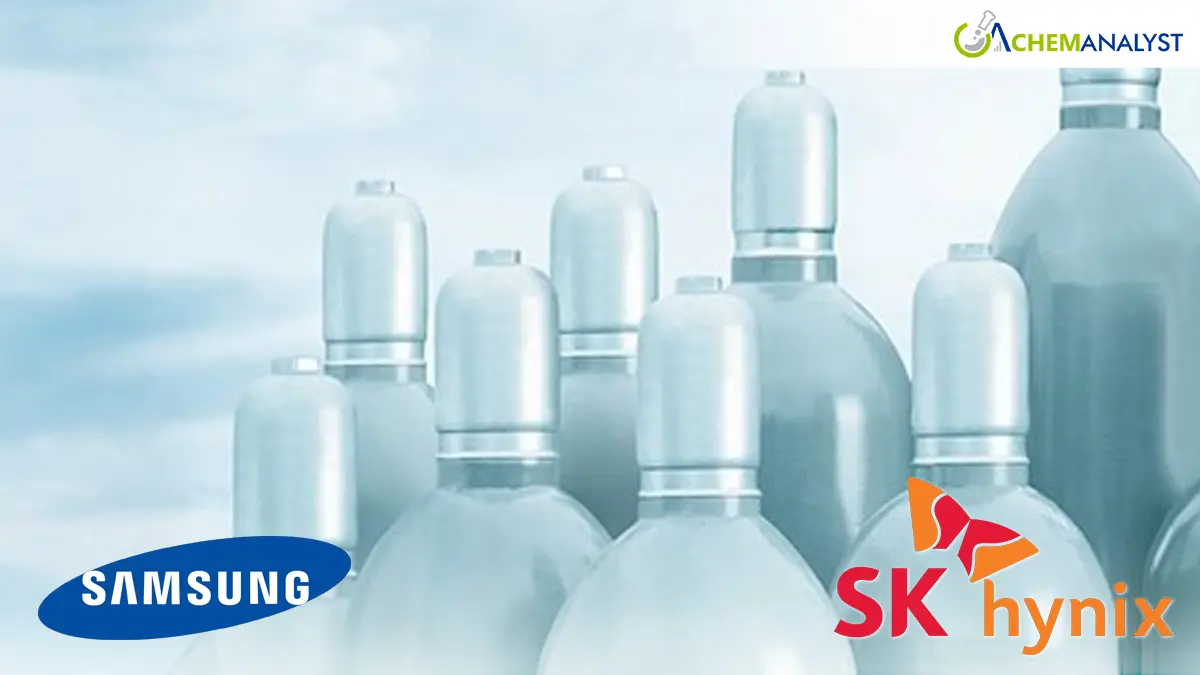
Recent concerns surrounding the availability of semiconductor-grade helium—sparked by geopolitical tensions involving Iran—have largely eased, thanks to swift actions by major industrial gas suppliers. Leading companies such as Linde and Air Products have successfully secured additional long-term helium supply agreements with South Korea’s semiconductor giants Samsung Electronics and SK hynix. These developments come as part of a broader effort to stabilize supply chains amid earlier fears of disruption.
The initial concern arose after Iran targeted Qatar’s Ras Laffan industrial complex, a critical hub for liquefied natural gas (LNG) production and a major source of global helium supply. Given that helium is a byproduct of LNG processing—and that Qatar accounts for roughly one-third of global helium output—any disruption in the region quickly triggered alarm across industries reliant on this gas, particularly semiconductor manufacturing.
In response to the perceived risk, Linde and Air Products moved decisively to mitigate any potential shortages. Both companies primarily source helium from the United States, which allowed them to avoid heavy dependence on Qatari supply chains. By leveraging this advantage, they were able not only to ensure uninterrupted supply for Samsung Electronics and SK hynix but also to negotiate new long-term contracts with these chipmakers. This strategic positioning proved beneficial, as it allowed them to capitalize on increased demand during the uncertainty.
Before the geopolitical tensions escalated, the helium market was reportedly experiencing a slight oversupply. However, as fears of supply disruptions spread during the conflict, demand surged and prices increased. Samsung and SK hynix are believed to have agreed to these higher prices in order to secure stable long-term supply, prioritizing operational continuity over cost concerns.
In contrast, other major suppliers such as Air Liquide and Iwatani were more vulnerable to the disruption due to their reliance on Qatari helium sources. This disparity has prompted industry analysts to predict a strategic shift within South Korea’s semiconductor sector toward increased reliance on U.S.-based helium supplies to reduce geopolitical risk.
Government officials in South Korea have also reassured the public and industry stakeholders. Kim Yong-beom, head of the presidential policy office, stated that the country currently holds approximately four months’ worth of helium reserves and faces no immediate supply risks in the medium term. Additional confirmation from senior officials indicates that newly secured helium volumes are being sourced from the United States, further strengthening supply stability.
Moreover, the Korea Semiconductor Industry Association has emphasized that domestic semiconductor companies maintain sufficient inventories of helium and other essential materials. They also utilize diversified procurement channels, which significantly lowers the likelihood of short-term disruptions.
Helium plays a vital role in semiconductor manufacturing processes, particularly in plasma etching, deposition, and wafer backside cooling. Given its importance, any instability in helium supply can have far-reaching implications for chip production.
Overall, the incident has highlighted the importance of supply chain diversification and geopolitical risk management. While the immediate threat has subsided, it has also accelerated strategic adjustments within the industry to ensure long-term resilience.







 About ChemAnalyst
Leave a Comment
Comments (0)