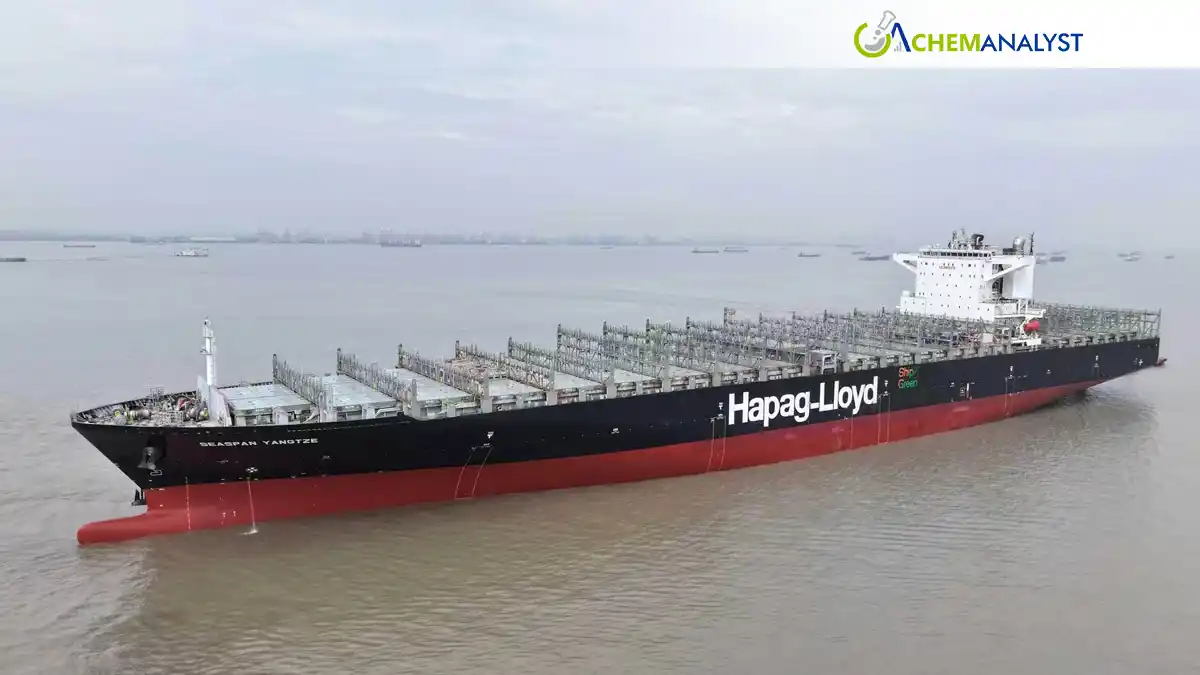
Seaspan Corporation, a global leader in maritime asset ownership and management, together with container shipping company Hapag-Lloyd, has successfully completed the first vessel conversion under their ambitious methanol retrofit initiative. The milestone was marked by the delivery of the Seaspan Yangtze, the first of five vessels scheduled for transformation under Project SAVER CleanBlue, a program designed to accelerate the decarbonization of the global shipping industry through practical and scalable solutions.
The successful retrofit of the Seaspan Yangtze represents a major technological and environmental achievement. Beyond demonstrating advanced engineering capabilities, the project highlights the shared commitment of Seaspan and Hapag-Lloyd to reducing the carbon footprint of maritime transportation. The conversion enables the vessel to operate on low-carbon methanol, a cleaner alternative fuel that is increasingly viewed as a key component in the shipping sector’s transition toward more sustainable operations.
The methanol retrofit program forms part of Seaspan’s long-standing strategy to improve vessel efficiency and support the industry's environmental goals. For more than a decade, the company has pursued initiatives aimed at reducing emissions and improving operational performance. Beginning with its SAVER (Seaspan Action for Vessel Energy Reduction) program and continuing through the current CleanBlue initiative, Seaspan has invested more than $230 million across a fleet of 86 vessels. These investments have resulted in the implementation of over 550 efficiency upgrades and retrofit projects designed to enhance vessel performance while lowering environmental impact.
Following the completion of the Seaspan Yangtze conversion, four additional vessels are scheduled to undergo similar modifications. These include the Seaspan Amazon, Seaspan Ganges, Seaspan Thames, and Seaspan Zambezi. Once converted, each vessel is expected to achieve a significant reduction in greenhouse gas emissions. When operating on low-carbon methanol, annual carbon dioxide equivalent (CO2e) emissions are projected to decrease by approximately 30,000 to 50,000 metric tonnes per vessel. In addition to lowering emissions, the retrofits are expected to extend vessel service life and provide greater operational flexibility through the use of alternative fuels.
Commenting on the achievement, Bing Chen, Chairman, President and Chief Executive Officer of Seaspan, emphasized that decarbonization requires more than simply introducing new vessels. He noted that maximizing the potential of existing fleets through retrofits and upgrades provides an immediate, practical, and cost-effective pathway toward reducing emissions. Chen highlighted Project SAVER CleanBlue as a reflection of Seaspan’s strong customer partnerships, extensive technical expertise, and integrated platform capabilities. He also pointed to the company’s collaboration with joint venture partners, including WattSpan Maritime Technology, as a key factor in successfully executing large-scale and technically complex retrofit projects.
Hapag-Lloyd also views the project as a significant milestone in its broader sustainability strategy. Silke Lehmköster, Managing Director of Fleet at Hapag-Lloyd, described the successful conversion of the Seaspan Yangtze and the planned upgrades of its sister vessels as important steps toward the company’s objective of achieving net-zero fleet operations by 2045. She emphasized that the project demonstrates how retrofitting existing ships to utilize low-carbon methanol can serve as a realistic and effective approach to reducing emissions while maintaining operational efficiency.
By leveraging its integrated capabilities across the entire vessel lifecycle—including design, engineering, retrofitting, and operational management—Seaspan continues to provide comprehensive solutions that help customers transition toward lower-emission and ultimately zero-emission shipping operations. Together, Seaspan and Hapag-Lloyd regard Project SAVER CleanBlue as a meaningful advancement in the pursuit of more sustainable global container shipping, illustrating how innovation, collaboration, and strategic investment can drive tangible environmental progress within the maritime industry.








 About ChemAnalyst
Leave a Comment
Comments (0)