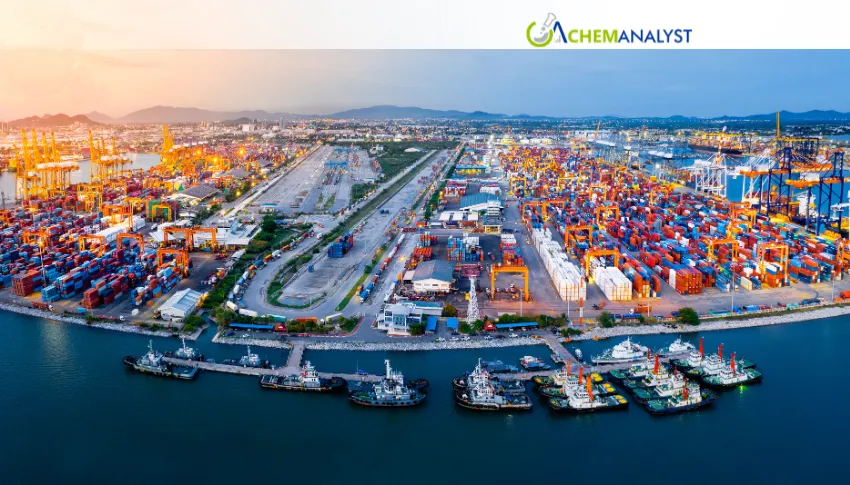
Freight News Report (30th July to 05th August)
Shanghai port resumed operations after clearing cargo backlogs created by Typhoon Bavi, achieving a record-breaking single day container throughput while reinforcing its position as one of the world’s busiest shipping hubs. At the same time, CMA CGM implemented new reefer equipment surcharges for refrigerated cargo originating from Antwerp and Rotterdam effective 1st August, while the Panama Canal Authority introduced additional restrictions for Neopanamax vessels ahead of the peak shipping season. Together, these developments highlighting the operational and cost challenges shaping the global freight market in August.
Global ocean freight markets are witnessing a combination of operational recovery, carrier surcharge adjustments, and ongoing capacity constraints across major trade routes, Following the disruption caused by Typhoon Bavi, Shanghai port recorded its highest ever single day container throughput, becoming the first port to exceed 200,000 TEUs handled in a single day. This surpassed the previous record of 187,312 TEUs set in June by nearly 9%. The exceptional throughput largely reflected the clearance of accumulated cargo after weather related disruptions rather than a structural increase in export demand. Consequently, freight activity and Shanghai export volumes may appear temporarily stronger during August as delayed shipments move through the supply chain.
Meanwhile, CMA CGM introduced new reefer equipment surcharges from Antwerp ($500 per container) and Rotterdam ($600 per container) which came into effect since 1st August, applying to most worldwide destinations excluding the following: Africa, the US, Australia, New Zealand, and some parts of Caribbean and South America. The new charges are anticipated to raise the transportation costs for exporters of temperature- sensitive products in Northern Europe, particularly those with limited alternative carrier options.
As the peak season approaches The Panama Canal Authority imposed further draft restrictions on Neopanamax vessels from mid-August, cutting limits to roughly 14.78 meters as the dry season persists, on top of the cuts already made earlier this summer. Along with the ACP suspending daily booking auctions and lowering available transit slots, this usually pushes some carriers toward the Suez Cape routing or the US west coast plus a rail alternative, which adds up transit days as well as costs, the practical sign to watch for is transit wait times and slot auction premiums over the next few weeks, a sustained price pressure building on the Asia-US East Coast lane specifically showing a distinct from the broader Asia- Europe softness seen through July.
Short Outlook
The global freight market enters August with mixed fundamentals. The temporary increase in Shanghai throughput is likely to normalize as backlog clearance is completed, while new carrier surcharges and Panama Canal draft restrictions could provide upward cost pressure on selected trade lanes. Freight movements during the remainder of the month will largely depend on the strength of peak season demand, carriers’ capacity management, and the duration of operational constraints rather than on temporary disruptions or one-off congestion events.







Leave a Comment
Comments (0)