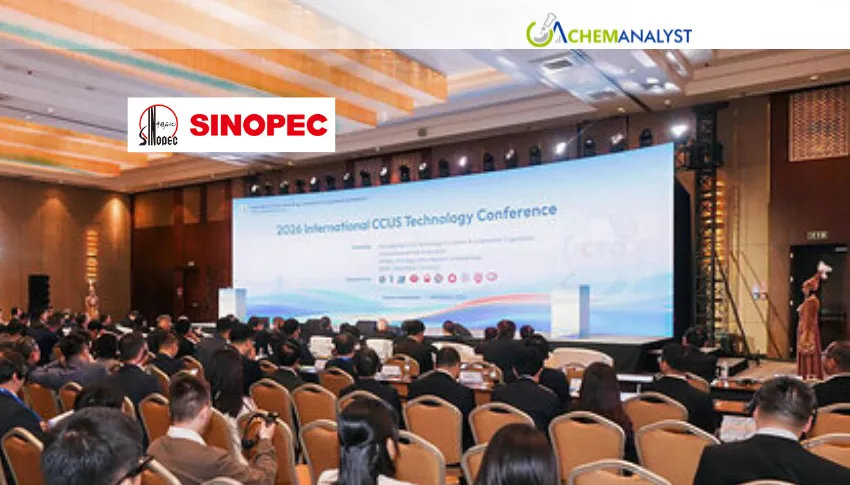
China Petroleum & Chemical Corporation (Sinopec), alongside the International Organization for Cooperation in Technological Innovations in CCUS (ICTO), Kazakhstan’s Ministry of Energy, and Nazarbayev University’s Institute of New Materials and Energy Technologies, has launched a new international initiative aimed at accelerating cooperation in carbon capture, utilization and storage (CCUS) and low-carbon energy technologies.
The initiative was announced during the International CCUS Technology Conference 2026, held in Astana, Kazakhstan, on September 1–2. It is designed to strengthen international collaboration on CCUS technology development, establish and advance technical standards, and facilitate greater knowledge sharing among specialists working across the carbon-management industry.
The conference attracted more than 230 participants representing governments, energy companies, research organizations, and international institutions from China, Kazakhstan, the United Kingdom, the United States, Canada, and other countries and regions. Discussions focused on key areas of CCUS development, including carbon capture, geological storage, carbon mineralization, and the creation of large-scale CCUS hubs.
Participants also examined the commercial and regulatory conditions required to expand CCUS deployment globally. Topics included business models, supportive policy frameworks, investment requirements, technology cooperation, and cross-border partnerships. Such collaboration is increasingly important as industries seek to reduce carbon dioxide emissions while maintaining energy production and industrial activity.
Tian Hongbin, Vice President of Sinopec Group, said global climate action has entered a critical stage and highlighted CCUS as an important technology for achieving emissions-reduction objectives. He noted that Sinopec was involved in establishing the ICTO and remains committed to supporting the organization as it develops into a global network connecting CCUS experts and stakeholders.
Sinopec has already established several major CCUS projects in China. The company has built the country’s first 100-kilometer dense-phase CO2 pipeline and commissioned China’s first integrated CCUS demonstration project with an annual capacity of 1 million tonnes.
The company is also working with Shell, BASF, and China Baowu on a study for China’s first open-access CCUS cluster with a planned annual capacity of 10 million tonnes. In addition, Sinopec is preparing a 1-million-tonne CCUS demonstration project at the Shengli oil field targeting lower-concentration CO2 sources.
Together, these initiatives cover CO2 capture from sources with different concentrations, enhanced oil recovery, and permanent geological storage.
Established in July 2025, ICTO has 60 founding members comprising companies, research institutions, and industry experts from more than 20 countries and regions. Sinopec plans to continue working with ICTO members to combine engineering capabilities with international research and accelerate the commercialization and deployment of CCUS technologies.
Impact on Product and Chemical Commodity Prices
The initiative is positive for the CCUS, carbon capture equipment, CO2 transportation and storage technology markets, as international standardization and collaboration could accelerate project development and technology adoption. Increased CCUS investment may support demand for solvents, adsorbents, catalysts, membranes, specialty chemicals, steel, cement and industrial gases used across capture and storage infrastructure. However, the immediate effect on commodity prices should remain limited because most projects are still in development and require substantial investment before reaching commercial scale. Over the medium to long term, stronger CCUS deployment could increase demand for chemical inputs, potentially providing modest upward price support for relevant specialty chemicals and industrial materials.








 About ChemAnalyst
Leave a Comment
Comments (0)