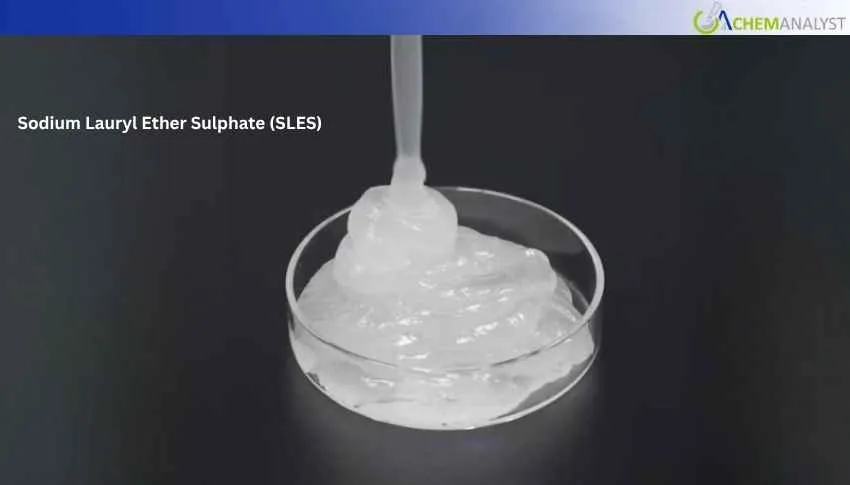
The United States Sodium Lauryl Ether Sulphate (SLES 28%) market at DEL Texas recorded a gain of +2.86% during the week ending April 3, 2026. The price increase reflected steady but firm upward cost transmission from the ongoing US-Israel war on Iran, which has sustained extraordinary crude oil and energy price levels that directly inflate the two core production inputs for SLES — ethylene oxide and fatty alcohol.
Ethylene oxide, a direct product of the oil and gas industry, is highly sensitive to global energy costs. When crude oil and natural gas prices are high, the cost of producing ethylene oxide rises significantly, and the entire chemical manufacturing process for SLES is energy-intensive, with high electricity and fuel costs adding substantial overhead ultimately passed on in the final product price. With Brent crude having surged approximately 74% from pre-conflict levels to an intraday peak of USD 119 per barrel since the February 28 onset of hostilities, ethylene oxide feedstock costs at US Gulf Coast surfactant manufacturing facilities remained firmly elevated throughout the week.
Getting SLES from the factory to the customer has become more expensive and unpredictable, with longer shipping routes, higher insurance premiums, and port congestion all contributing to rising freight costs stemming from the Middle East conflict and the near-total paralysis of the Strait of Hormuz. The closure of this critical maritime chokepoint — through which approximately 20% of global oil supply normally transits — has severely disrupted international surfactant and chemical freight logistics, adding war-risk surcharges to all inbound and outbound cargo movements affecting US Gulf Coast SLES producers.
Demand fundamentals provided firm underlying support for the SLES price advance. Steady demand from the personal care and household cleaning sectors sustained consistent downstream consumption, with spring restocking activity from detergent formulators and personal care manufacturers adding incremental buying pressure to an already supply-constrained market. Trading activity during the week for SLES was partially subdued by the Good Friday exchange holiday, with market participants widely expecting the full reflection of elevated costs to be priced into Tuesday's post-Easter opening session.
Market participants are now closely watching whether OPEC+'s anticipated output increase of 206,000 barrels per day for May 2026 and expanding non-OPEC+ production from the US Permian Basin can ease crude oil and ethylene oxide cost pressures in the coming weeks. Until meaningful Hormuz shipping resumption is confirmed, SLES prices in the US are expected to remain at elevated levels heading into mid-April 2026.







 About ChemAnalyst
Leave a Comment
Comments (0)