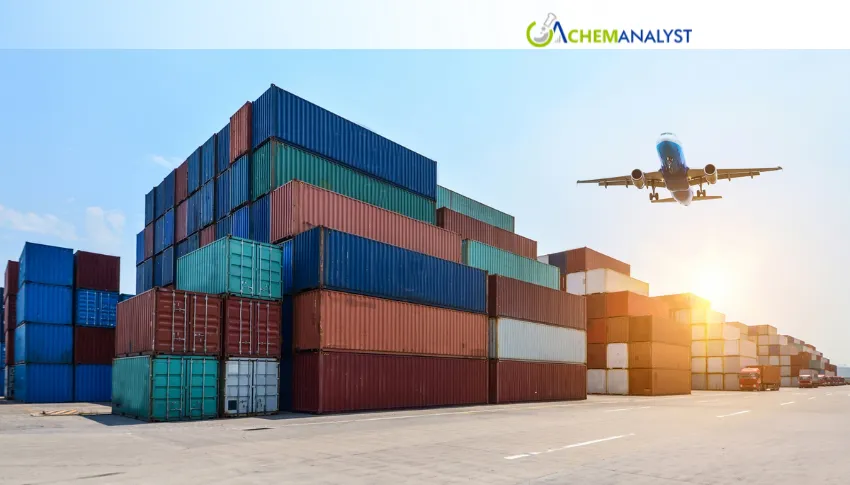
The maritime security situation in the Middle East has gone from being critically risky to highly volatile with kinetic events taking place in both the Strait of Hormuz and the Red Sea. The operators are now working in an insecure environment that is broken down into two different layers of security.
The commercial movement in the Strait of Hormuz has been disrupted due to attacks on several vessels over the weekend. On 31st July, the Bermuda-registered LNG carrier Gaslog Shanghai, which was carrying Qatari gas, was attacked by some projectiles and rendered inoperative around 11 nautical miles off the coast of Oman.
This act of aggression was soon followed by another. The IRGC Navy made the Liberian flagged bulk carrier Minoan Glory turn back midway in its journey and announced itself responsible for intimidating other ships that attempted to use the southern route. In the meantime, on August 2, two very large crude carriers, Egypt Prosperity and On Pride (aframax), under the management of Anglo-Eastern, reported close calls and radio threats from Iranian Naval forces. As a result, traffic through the Hormuz Strait has drastically reduced.
In the Red Sea, the embargo enforced by Houthis against the shipping linked to Saudi Arabia has resulted in the development of an operational dichotomy. During the period from July 28 until August 2, the Houthis attacked four Saudi-linked tankers, namely, the Encelia and Layla. Such attacks compelled Saudi-flagged very large crude carriers (VLCCs) to reroute through the Cape of Good Hope, making their journeys twice longer, and also made the ports such as Yanbu King Fahd port go "dark".
In sharp contrast, over 20 Chinese-linked vessels successfully transited the Bab el-Mandeb strait and called at Saudi ports during the same window without a single incident, underscoring a highly selective targeting profile.
To counter the escalating threats, regional governments are mobilizing. On July 30, Saudi Arabia announced the formation of a new 14-country multinational maritime coalition headquartered in Riyadh, mandated to protect the Red Sea and Gulf of Aden. Concurrently, Sudan and Yemen have agreed to bolster shared security protocols to protect international shipping lanes.
Middle Eastern ocean freight will continue to be highly fragmented until early August. The huge discrepancy in terms of risk levels in accordance with ship nationality is likely to cause ocean freight to move on two parallel lines, with Western ships and those belonging to the Saudis continuing to be diverted via the costly Cape route for an extended period of time, while ships not linked to any side can continue to take advantage of the shorter Suez route.







Leave a Comment
Comments (0)