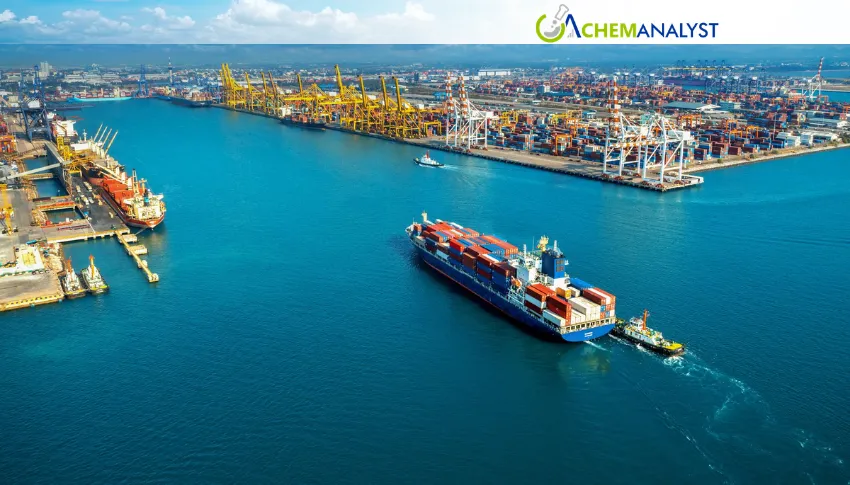
A Pocket of Stability Amidst Global Maritime Chaos
While Geopolitical tension in the Middle East and disruptions across the Strait of Hormuz have increased volatility across several global shipping corridors, the Transatlantic trade lane between Europe and North America has remained comparatively stable. Supply- demand fundamentals have remained relatively balanced; however, the market continues to experience indirect pressure from elevated bunker costs, global vessel repositioning, and broader logistics uncertainty.
Rates Hold Steady Despite Global Spikes
While other lines such as those on the Asia-Europe and Transpacific routes, which are going through major rate explosions due to premature peak seasons, Transatlantic spot rates are witnessing marginal hikes. The current rates of shipping 40-feet equivalent unit (F EU) from Northern Europe to the U.S. East Coast range around $2,300 to $2,600 per FEU. Though this is only a marginal increase of about 1% from the previous week’s level, it is important to know that rates have been increasing at a pace of more than 50% over the last month compared to February 2026.
Blank Sailings and Schedule Reliability
The capacity management in the Transatlantic route continues to show high levels of predictability this week. The global shipping route data collected during the first half of June indicates that the share of blank sailings in the Transatlantic trade represents merely 15% of all blank sailings in the key east-west trade routes. Unlike the irregularity in the Transpacific route, about 95% of the ships scheduled for the next five weeks along the Transatlantic route will sail according to the schedule without any changes.
The Ripple Effects of Fuel and Tariffs
Despite being shielded from the effects of Red Sea and Gulf diversions, the Europe-US route is not totally impervious to macroeconomic factors. High fuel price increases across the globe caused by the exhaustion of oil resources and long trips through the Cape of Good Hope route will compel carriers to impose fuel surcharges on the Transatlantic shipments. Moreover, the ambiguity of U.S. tariff policies that expire at the end of this summer has forced some North American shippers to load up their cargo in Europe before June.
Short-Term Outlook
The Transatlantic trade route will continue to be the most stable of all major ocean routes in the coming month of June. However, prices are anticipated to be high throughout this period. Although it is improbable that any emergency charges will reach the levels charged on the Asia trade route, it is recommended that shipowner’s book two to three weeks in advance in order to avoid disruption.






Leave a Comment
Comments (0)