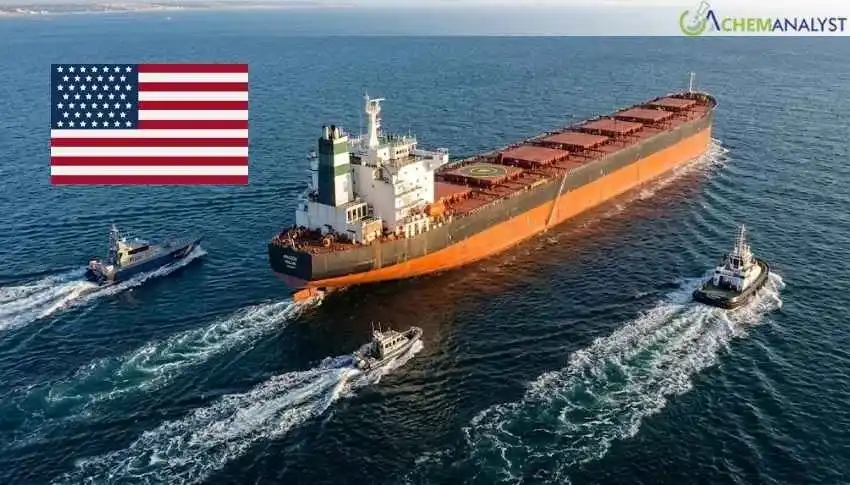
Tensions in the Middle East have intensified after former U.S. President Donald Trump issued a stark warning to Iran over any attempt to block the strategically vital Strait of Hormuz, a passage responsible for transporting nearly 20% of the world’s oil supply. The warning comes as geopolitical risks continue to rise following a new military campaign targeting Iranian nuclear facilities and allied groups.
The military operation, reportedly launched around March 1 under the name “Operation Epic Fury,” has focused on Iran’s nuclear infrastructure, missile capabilities, and proxy forces operating in the region. The developments have triggered heightened fears that the conflict could expand into a wider regional confrontation, particularly if the Strait of Hormuz becomes a flashpoint.
Responding to the escalating situation, Trump issued a strongly worded message on his Truth Social platform. In his post, he warned Iran of severe consequences if the country interferes with oil shipments through the crucial waterway.
“If Iran does anything that stops the flow of Oil within the Strait of Hormuz, they will be hit by the United States of America TWENTY TIMES HARDER than they have been hit thus far,” Trump stated. He further warned that the United States could strike targets that would make it “virtually impossible for Iran to ever be built back, as a Nation, again,” adding that “Death, Fire, and Fury will reign upon them,” though he expressed hope that such an escalation would not occur.
Trump also suggested that maintaining open shipping routes through the strait benefits major oil-importing nations, particularly China and other economies heavily dependent on Middle Eastern crude. He described the protection of oil flows through the waterway as a “gift” to these nations and expressed hope that it would be recognized as such.
Meanwhile, Iran’s powerful Islamic Revolutionary Guard Corps (IRGC) responded defiantly. Officials indicated that Iran holds the power to determine when the conflict ends and signaled potential leverage over maritime traffic in the region. In a provocative statement, the IRGC suggested that countries expelling U.S. and Israeli diplomats could receive safe passage for their ships through the strait.
The confrontation has already rattled global energy markets. Oil prices surged past $100 per barrel amid fears that shipping disruptions could choke off supplies from the Persian Gulf. The surge has also pushed gasoline prices higher in the United States and triggered volatility in financial markets worldwide.
Energy analysts warn that any prolonged disruption in the Strait of Hormuz would have far-reaching consequences for global energy security. As diplomatic and military tensions rise, governments and markets alike are closely monitoring the situation, recognizing that the narrow waterway remains one of the most critical chokepoints in the global oil trade.








 About ChemAnalyst
Leave a Comment
Comments (0)