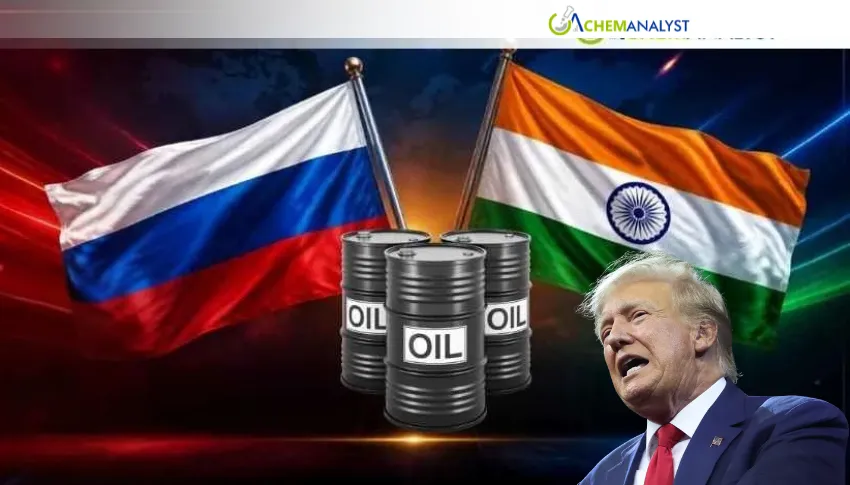
The strategic relationship between India and the United States faces significant challenges, potentially leading to its collapse, if a future Trump administration implements proposed Russian oil sanctions and Section 301 tariffs. These actions could disrupt India's energy security and economic stability.
A potential Trump administration might pursue an "America First" foreign policy, prioritizing domestic economic interests over established strategic partnerships. This approach could manifest in two key policy shifts impacting India directly.
The article highlights that a Trump administration could impose sanctions aimed at significantly reducing Russia's oil revenues to pressure Moscow regarding the Ukraine conflict. India currently benefits from discounted Russian crude oil, which is crucial for its energy security and managing domestic inflation. If forced to halt these purchases, India would need to seek more expensive alternative energy sources, leading to higher import bills, increased inflation, and economic instability. The US previously imposed a 25% tariff on India last year for buying Russian oil, though it later reversed the measure. A new bipartisan Senate bill, supported by Trump, proposes up to a 100% tariff on goods from the top five purchasers of Russian oil and gas, including India and China. This bill, revised from an earlier 500% tariff proposal, also allows the US President to waive sanctions if it serves national interest.
Another major concern is the potential reintroduction or expansion of Section 301 tariffs. Section 301 of the US Trade Act of 1974 allows Washington to impose tariffs or other trade actions against countries engaging in practices deemed unfair or discriminatory to American businesses, without requiring Congressional approval. The Office of the US Trade Representative (USTR) has proposed additional duties of up to 12.5% on imports from 60 economies, including India, citing a failure to enforce bans on goods made with forced labor. India has challenged this, arguing a lack of evidence and flawed analysis. These tariffs would significantly impact Indian exports to the US, hurting the manufacturing sector, export growth, and job creation. India has recently amended its Foreign Trade Policy to prohibit the import of goods produced using forced labor, aiming to mitigate its exposure to these tariffs.
These potential US policy shifts carry significant geopolitical and economic ramifications for India and the broader global landscape.
Economists estimate that a scenario involving substantial tariffs, such as a 500% tariff, could reduce India's Gross Domestic Product (GDP) by up to 0.5%. Higher global energy prices resulting from Russian oil sanctions would increase India's annual oil import expenditure by an estimated $6-7 billion. This would lead to inflationary pressures across various sectors and could cause the Indian rupee to depreciate. Key Indian export earners like pharmaceuticals, textiles, and IT services face immediate disruption from potential tariffs.
The current US administration has largely accommodated India's Russian oil purchases due to a shared strategic interest in countering China. However, a Trump administration might prioritize economic nationalism, potentially straining this strategic alignment. Such actions could weaken India's strategic autonomy, compelling it to seek closer ties with other nations like Russia or China. This could disrupt defense cooperation and technology transfers between India and the US, impacting regional stability. India continues to engage with the US, viewing current tensions as a transitional phase in the bilateral relationship.
Impact & Effect on Chemical Commodities Tracked by ChemAnalyst
If implemented, these measures could raise India's oil import bill by $6-7 billion annually, pushing up feedstock costs for petrochemicals, polymers, and downstream derivatives reliant on crude-linked inputs. Higher energy prices would inflate production costs across chemical value chains, squeezing margins for manufacturers. Section 301 tariffs could disrupt exports of chemical-intensive sectors like textiles and pharmaceuticals, dampening demand for dyes, intermediates, and specialty chemicals. Rupee depreciation would further raise import costs for chemical raw materials. Overall, ChemAnalyst-tracked commodities—especially crude-derivatives, aromatics, and textile chemicals—could see price volatility, cost-push inflation, and softer export-driven demand across affected segments.








 About ChemAnalyst
Leave a Comment
Comments (0)