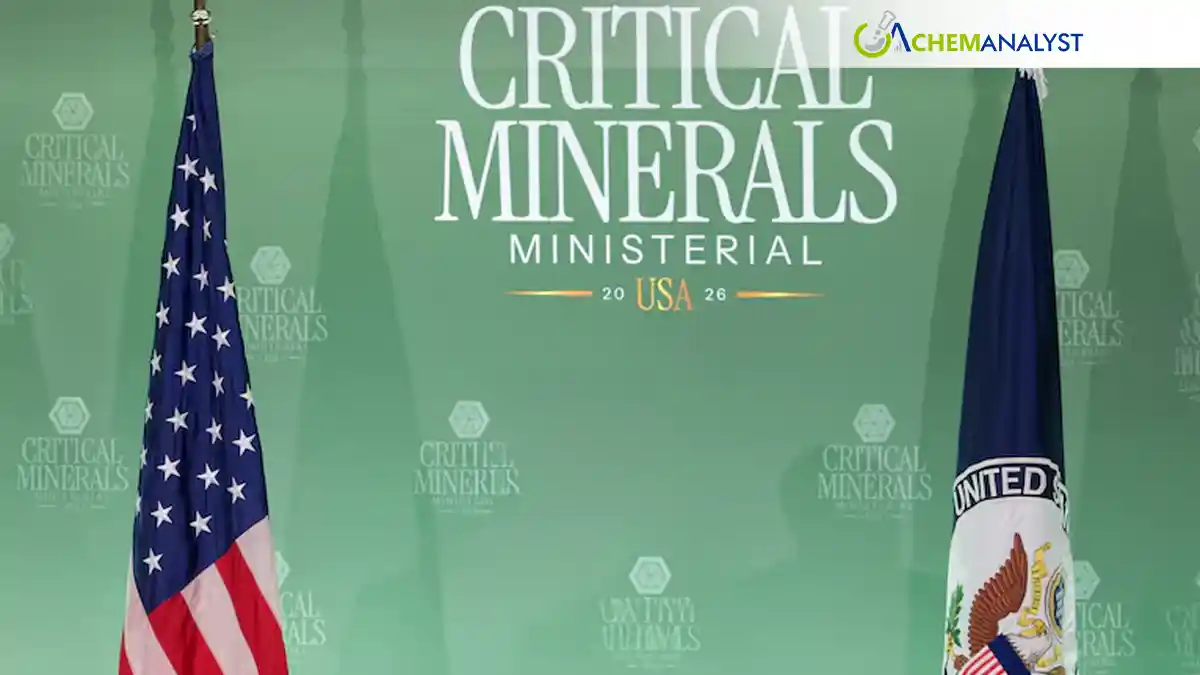
Trump administration’s proposal to strengthen the Western critical minerals supply chain through a regulated pricing mechanism is encountering resistance from both G7 allies and sections of the global mining industry, according to several media reports. The initiative, originally introduced by U.S. Vice President JD Vance in February, seeks to establish a new Western critical minerals trading framework that would reduce dependence on China, which currently dominates global production and pricing of numerous strategic minerals essential for advanced technologies, clean energy systems, and defense applications.
China’s long-standing advantage in the critical minerals market has been built partly on its ability to maintain low production costs and, at times, operate with reduced profit margins, resulting in lower global prices for minerals such as cobalt, lithium, nickel, graphite, and rare earth elements. These lower prices have created significant challenges for Western mining companies, as many projects have become economically difficult to sustain. As a result, investment in new mines has slowed, some producers have exited the market, and Western countries have struggled to establish alternative supply chains independent of China.
The proposed trading bloc would attempt to address these challenges through a combination of policy measures, including minimum price supports, subsidies, standardized market rules, and long-term government-backed purchase agreements. The Trump administration has also suggested the possible use of adjustable tariffs to preserve pricing stability and prevent artificially cheap mineral imports from undermining Western production capabilities. The broader objective is to create a commercially viable environment that encourages increased mining, refining, and processing activities across allied nations.
However, according to several media reports, private discussions between the United States and other G7 members have revealed substantial concerns regarding the practical implementation of the pricing strategy. Several allies have expressed reservations about relying on a pricing model developed using artificial intelligence technology from the Pentagon’s Defense Advanced Research Projects Agency (DARPA). Questions remain regarding the transparency of the model, the methodology used to determine fair mineral prices, and the authority responsible for overseeing and enforcing the proposed system.
European officials have reportedly raised concerns about the financial burden associated with the initiative, particularly regarding who would absorb the cost of paying higher prices for critical minerals. There are also debates over whether financial incentives should be limited to mining companies or extended further along the supply chain to processors, manufacturers, and end-product producers. These concerns highlight the complexity involved in redesigning the global critical minerals marketplace, especially given the current dependence on Chinese production and pricing benchmarks.
The issue is expected to become a major discussion point during the upcoming G7 meetings in France, where member nations will examine strategies to develop a complete supply chain covering mineral extraction, refining, manufacturing, and final product development. A draft proposal prepared by the United States using the DARPA-developed AI pricing system has already been submitted to the White House and the National Security Council, and American officials are expected to provide further details to G7 partners during diplomatic discussions.
While the United States is pushing for rapid implementation, many European governments and industry participants prefer a more cautious approach, seeking comprehensive assessments of the medium- and long-term economic consequences of artificial price support mechanisms. Differences have also emerged regarding the structure of the proposed alliance. France and Canada support the creation of a G7-led multilateral framework with a permanent administrative body under organizations such as the International Energy Agency (IEA) or the OECD to coordinate mineral initiatives. In contrast, Washington favors a faster bilateral strategy, negotiating individual agreements with strategic partners before expanding the arrangement.
This evolving approach indicates a shift from the broader multilateral vision initially presented by JD Vance. The United States now intends to pursue binding bilateral agreements with Japan and the European Union before the end of June. The first phase of these agreements is expected to cover five to ten strategically important minerals, including heavy rare earth elements, antimony, graphite, and tungsten—materials that have become increasingly important due to China’s export restrictions and their critical role in modern technology, renewable energy, and defense systems.
Impact on Products and Industries and Future Anticipation
The proposed critical minerals pricing framework could have widespread implications across multiple industries that depend on strategic materials such as lithium, cobalt, nickel, graphite, rare earth elements, antimony, and tungsten. In the short term, potential price support mechanisms and supply chain restructuring may increase raw material costs, leading to higher production expenses for electric vehicle batteries, EVs, semiconductors, smartphones, servers, data centers, and other consumer electronic products. Renewable energy technologies, including wind turbines, solar equipment, energy storage systems, and grid infrastructure, may also face temporary cost pressures due to higher prices of essential minerals. Similarly, defense and aerospace sectors, which rely heavily on rare earths and specialized metals for military systems, satellites, advanced sensors, aircraft components, and precision technologies, could witness changes in procurement costs while benefiting from improved supply security outside China. Industrial manufacturing sectors, including specialty alloys, catalysts, permanent magnets, advanced machinery, and chemical products, may also experience increased input costs initially. However, the long-term impact could be positive as increased investment in Western mining, refining, and processing capabilities creates more diversified and resilient supply chains.
Looking ahead, the future of the Trump administration’s critical minerals strategy will depend on its ability to reconcile geopolitical security objectives with economic feasibility and market acceptance among allies and industry participants. The immediate focus is expected to shift toward bilateral agreements between the United States and key partners such as Japan and the European Union, targeting a limited number of highly strategic minerals rather than establishing a comprehensive G7-wide trading bloc. Over the long term, increased government incentives, new mining projects, expanded refining infrastructure, and advancements in mineral recycling technologies are anticipated to reduce Western dependence on China. While the transition may result in elevated mineral prices and higher manufacturing costs in the initial stages, it is likely to strengthen global supply chain resilience and reshape the critical minerals market into a more geographically diversified and strategically controlled ecosystem.






Leave a Comment
Comments (0)