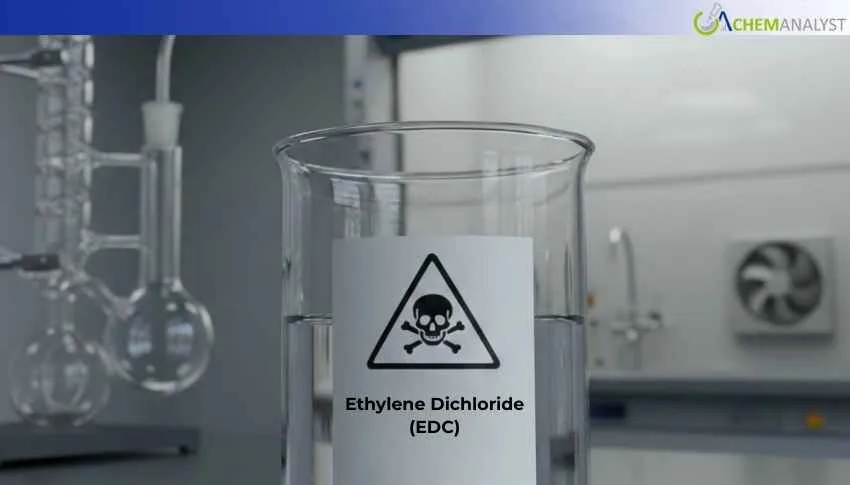
The Ethylene Dichloride (EDC) market in the US appears to be on an encouragingly stable run into 2026, with prices experiencing low price instability after several months of minor daily price fluctuations. The current trend indicates an even balance between supply and demand in the marketplace as EDC is being consumed largely by PVC manufacturers, builders, and the industrial manufacturing community. Most EDC market sources indicate that EDC prices in North America have not changed very much in the past year, which differs from many other countries that have seen higher levels of price volatility during the same period.
Furthermore, many EDC companies throughout North America believe that the regular flow of products between suppliers and consumer companies has provided continuous levels of product consumption, resulting in a very stable EDC marketplace throughout 2025. The quarterly data throughout the calendar year have also demonstrated that while prices decreased from the previous quarter(s), the price stability of EDC is due to domestic supply/demand factors that have created a sufficient balance between supply and production and consumption of EDC throughout the entire calendar year.
According to industry analysts, the estimated spot prices for domestic EDC in Q3 fell into a lower, more stable price range compared to their significant increase from Q2, due to an increase in stable demand from PVC converters and a steady increase in infrastructure-related projects. Downstream demand from domestic PVC producers, who are the largest consumers of EDC as a feedstock, has played a large role in continuing to support this price stability, while demand from certain sectors, such as residential construction, continues to be impacted by affordability challenges.
The financial results of major U.S. chemical producers, like Dow Inc., for the 3rd quarter of 2025 mirror the state of the overall market, showing those same trends. Dow's net sales for the quarter were approximately $10 Billion, down approximately 8% from the previous year, with most operating segments declining due to lower prices in commodity chemicals and polymers. Though Dow's financial results denote stress throughout the broader chemical industry, it does show resilient volumes in the industrial intermediate and infrastructure sectors. There is still an intact demand for the basic building blocks of materials into which EDC goes domestically, although their margins are being pressured.
According to analysts, producers continued to feel the impact of feedstock pricing, particularly ethylene, on EDC costs of production through 2025; however, there were no major shifts in EDC pricing during this same time frame, primarily because of the combination of stable producer and distributor operations and proactive inventory management. While other global EDC markets experienced substantially lower quarter-to-quarter pricing declines in certain regions, the United States was able to minimize the severity of such declines by more closely matching upstream supply to downstream demand.







Leave a Comment
Comments (0)