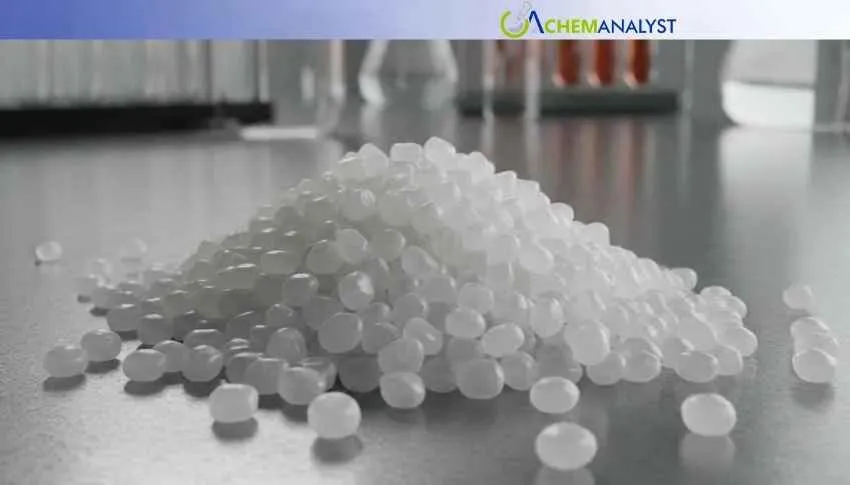
Linear Low-Density Polyethylene (LLDPE) prices in the United States declined by 2.94% during the week ending 15 May 2026, reflecting weakening spot demand and cautious procurement behaviour across key downstream sectors. Broader macroeconomic uncertainty and global trade realignments further weighed on buying interest.
Ethylene feedstock costs held stable throughout the reference week, providing LLDPE producers with consistent production economics but removing any cost-side justification for defending elevated price levels. With no feedstock-driven pricing floor available, the LLDPE market's supply configuration was shaped entirely by producer strategy divergence: a subset of producers restricted spot offerings in a deliberate attempt to sustain prices at higher levels, while others maintained full market availability to preserve export flow and trading momentum. This bifurcated producer posture widened spot price ranges and reduced transactional clarity, creating a market environment in which buyers had little incentive to bid urgently for supply.
Domestic demand conditions weakened materially during the reference week as LLDPE buyers, wary of near-term market uncertainty and still carrying inventory accumulated during the preceding crisis-driven procurement phase, scaled back purchases and adopted a cautious, need-based buying posture. Film and flexible packaging converters — the primary consuming segment for LLDPE — reduced spot enquiry volumes, electing to draw down existing stock rather than refresh at current offer levels. Export demand provided partial support, especially from Latin America, but it was not strong enough to offset slower domestic consumption. Additionally, LLDPE buyers continued to delay replenishment cycles, preferring to draw down existing inventories rather than enter the market at prevailing price levels. This hesitancy contributed to reduced spot liquidity and lower transaction volumes.
The near-term price outlook for U.S. LLDPE is assessed as cautiously bearish through late May, shaped by three converging dynamics. First, with ethylene costs stable, LLDPE producers lack the cost-push narrative required to push through price increases, leaving market direction entirely subject to demand-pull forces — which currently favour buyers. Second, the domestic inventory overhang built during Q1's export-driven tightness cycle is expected to take a further two to three weeks to deplete to lean levels, sustaining downward pressure on LLDPE spot offers until buyers are compelled to return to the market for replenishment. Third, the producer strategy split — between volume restriction and open market participation — is likely to persist in the near term, widening price ranges and preventing a clean price floor from forming.
Stabilisation is projected for early June as inventory positions normalise and export demand continuity provides a demand floor preventing any sharp further deterioration. The primary upside risk is a resurgence of export demand intensity, particularly if geopolitical supply disruptions redirect further offshore volumes toward U.S. Gulf Coast suppliers and restoring LLDPE producer pricing leverage. Market participants are advised to monitor ethylene contract settlements, export order book developments, and domestic converter inventory depletion signals as primary directional indicators through June 2026.







 About ChemAnalyst
Leave a Comment
Comments (0)