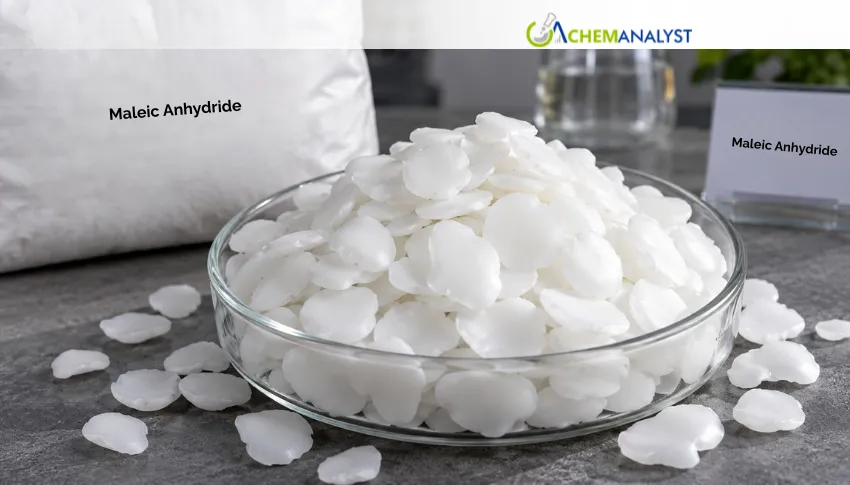
US Maleic Anhydride liquid prices are expected to remain under downward pressure in September as abundant n-butane availability, elevated NGL output, and softer upstream fuel costs continue to weigh on production economics. Although late-August assessments showed stability after several weekly declines, the Maleic Anhydride market remains exposed to restrained construction demand and cautious procurement. Any disruption to hydrocarbon flows or logistics could temporarily limit the decline.
In July and early August, Maleic Anhydride values were pressured by comfortable upstream supply and weaker downstream consumption. Expanded NGL production and greater n-butane availability reduced feedstock costs, while softer benzene and fuel prices encouraged producers to lower offers. Normal operating rates and the absence of major shutdowns kept material availability sufficient. Construction-related demand remained particularly weak, while general manufacturing provided only moderate support for Maleic Anhydride consumption.
During August, Maleic Anhydride prices followed a mixed trajectory. Early-month trading was largely range-bound as buyers purchased only against immediate requirements. Values then declined by slightly more than 2% in consecutive assessments through mid-to-late August as abundant feedstock and limited restocking weighed on spot transactions. By the late-August assessment, Maleic Anhydride prices were stable, suggesting sellers had adopted a more defensive position despite the broader bearish fundamentals. Buyers continued to defer larger inventory commitments while monitoring demand signals and downstream activity.
For September, Maleic Anhydride prices are expected to soften further as feedstock availability remains comfortable and operating conditions support steady production. Persistent n-butane supply, strong NGL output, and lower energy costs are likely to preserve competitive seller economics and encourage lower quotations. Construction-linked consumption is unlikely to provide significant support unless downstream purchasing improves. The Maleic Anhydride market could therefore remain supply-led during the month.
Demand is expected to stay uneven across end-use sectors. Alkyd resins and construction-related polymers may continue to face pressure from weak building activity and restrained procurement, while industrial applications should maintain routine offtake. Section 301 duties on certain imports could add cost pressure for selected buyers, potentially limiting sourcing flexibility without creating broad-based demand growth. Meanwhile, elevated inventories relative to the five-year norm are likely to keep Maleic Anhydride availability comfortable.
Logistics remain an important counterweight to the bearish outlook. Reduced vessel transits through the Strait of Hormuz could periodically disrupt regional LPG and butane flows, potentially tightening feedstock availability and slowing further price declines. Changes in benzene markets could also influence production economics. Overall, September is anticipated to remain a softer month for Maleic Anhydride, with demand recovery needed to reverse the trend. The Maleic Anhydride outlook remains conditional on feedstock flows, producer utilization, logistics, and downstream buying behavior.








 About ChemAnalyst
Leave a Comment
Comments (0)