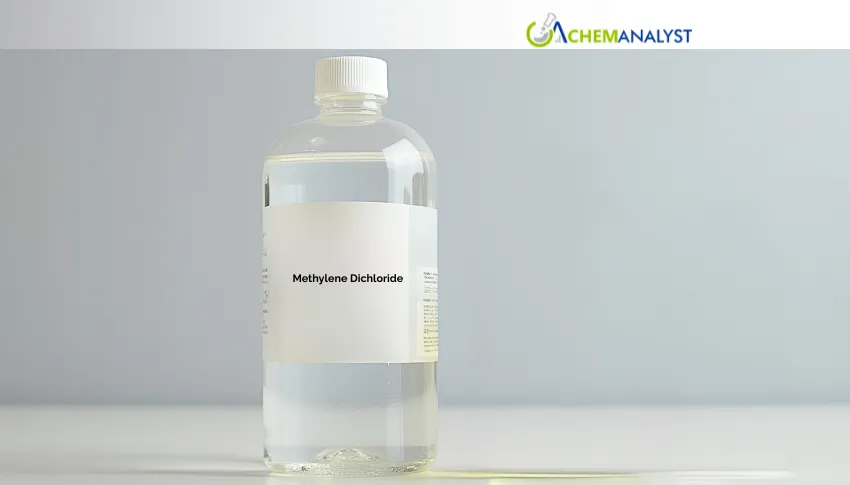
US methylene dichloride prices declined 1.6% during the week of September 4, 2026, as a 1.1% fall in feedstock methanol costs reduced the production cost baseline for Gulf Coast methylene dichloride manufacturers, while subdued seasonal demand from paint stripping, metal cleaning, and foam-blowing application sectors and ongoing regulatory substitution pressure maintained a cautious downstream buying environment that translated into a clear weekly price decline.
Methanol is a critical feedstock in the production of methylene dichloride through the chlorination route, where the cost of methanol input directly influences the variable production economics of US methylene dichloride manufacturers. The 1.1% weekly methanol cost reduction reflected the continuing normalization of Atlantic Basin methanol markets following the US-Iran conflict de-escalation, with methanol prices at Henry Hub-linked production facilities easing as Middle Eastern supply flows partially restored through improved Strait of Hormuz navigation. The September feedstock easing therefore represents a meaningful reversal of the cost dynamics that had elevated methylene dichloride prices through the conflict period, providing producers with room to adjust offer levels downward without compressing margins below acceptable thresholds.
On the supply side, US methylene dichloride production — concentrated at Occidental Chemical and Ineos Chlor's Gulf Coast facilities, with the US standing as the world's third-largest producer at 122,000 tonnes annual output — continued at broadly stable run rates during the week. Current market conditions are characterized by a complex interplay of stable domestic production, targeted international trade flows, and evolving price pressures.
The regulatory environment continued to weigh on the demand-side trajectory of the US methylene dichloride market. The U.S. Environmental Protection Agency extended compliance deadlines under its methylene chloride rule, easing implementation challenges for non-federal laboratories, allowing them more time to adopt required safety measures as part of the national phase-down of methylene chloride. While the compliance deadline extension provided some breathing room for industrial users, the broader phase-down narrative continues to encourage substitution in non-critical applications, gradually eroding demand from paint stripping and metal cleaning end-use channels. Despite tighter regulations, U.S. methylene chloride consumption remains high at more than 260 million lb/year, reinforcing the need for industrial users to invest in compliance infrastructure before enforcement-driven retrofits become unavoidable.
The pharmaceutical sector provided the most resilient demand support during the week. Pharmaceutical-grade methylene dichloride procurement from active pharmaceutical ingredient manufacturers in New Jersey, Puerto Rico, and other US drug production centers maintained consistent purchasing schedules, providing a demand floor that prevented a steeper price decline. Methylene Dichloride Demand Outlook remains supported by pharmaceuticals, coatings restocking and Latin American export demand.
Looking ahead, US methylene dichloride prices are expected to remain under mild downward pressure through September 2026 while feedstock methanol costs hold at reduced levels and the regulatory substitution narrative continues to constrain non-pharmaceutical demand recovery. Any meaningful price rebound would require either a significant tightening of domestic production availability or an acceleration in pharmaceutical sector procurement ahead of year-end drug batch manufacturing cycles — the latter of which represents the most plausible near-term positive demand catalyst for the US methylene dichloride market.








 About ChemAnalyst
Leave a Comment
Comments (0)