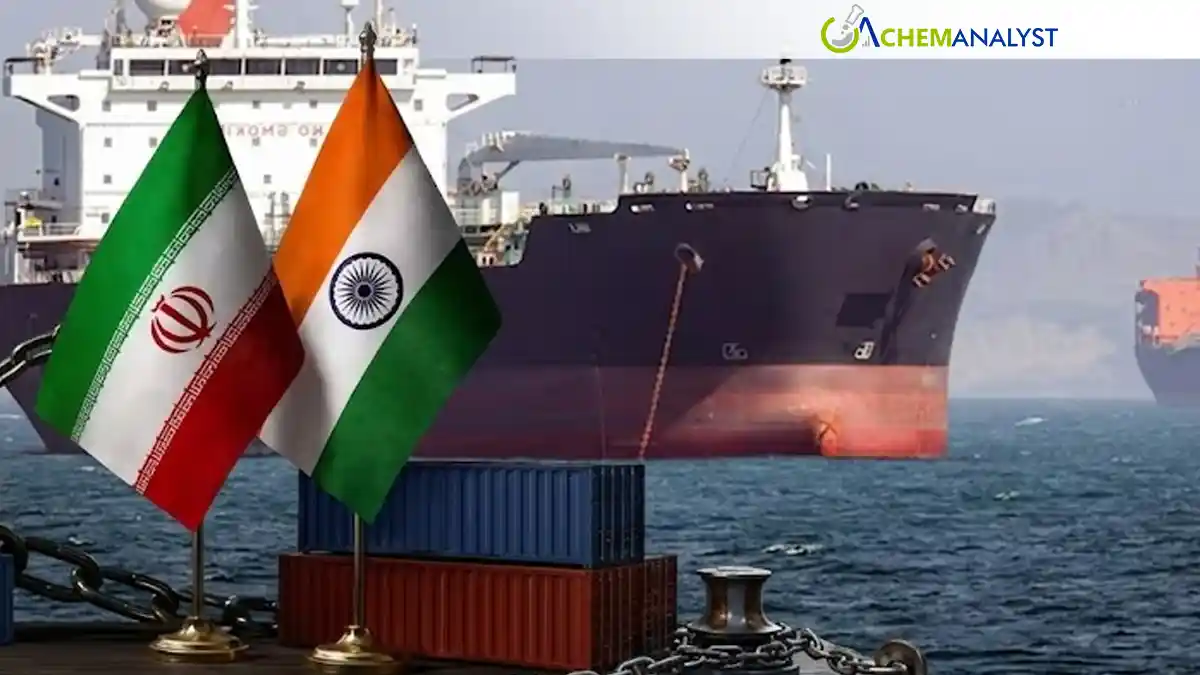
The United States has launched a fresh sanctions campaign against Iran, raising concerns over India’s trade with Tehran, energy costs, shipping routes and strategic infrastructure projects such as Chabahar Port. The latest measures target Iran’s petroleum, petrochemical, shipping, financial and related networks, while also putting countries and companies trading with Tehran under greater compliance pressure.
The impact comes at a difficult time for India-Iran trade, which has already declined sharply from its peak. Bilateral trade reached nearly USD 17 billion in fiscal 2018-19, largely because of Iranian crude oil imports. However, after US sanctions waivers ended in 2019, India stopped regular crude purchases from Iran, causing trade to fall by more than 90%. By FY2025-26, Indian exports to Iran were around USD 1.2 billion, while imports were below USD 375 million.
Despite the smaller trade base, several Indian export sectors remain exposed. Rice is among the biggest concerns. India exported USD 383.11 million worth of rice to Iran during the first half of 2026, making the country an important market for premium long-grain basmati rice. Any disruption to payment channels, shipping or insurance could make shipments more difficult and create pressure on Indian exporters and farmers.
Tea exporters are also vulnerable. Indian tea exports to Iran reached USD 14.34 million during the first half of 2026. A significant portion of this trade has traditionally moved through UAE-based intermediaries. The UAE’s tightening of trade and financial activities involving Iran therefore creates an additional hurdle for Indian exporters seeking payment settlement and reliable trade routes.
Pharmaceuticals and essential goods may technically remain covered by humanitarian exemptions, but banks and financial institutions could adopt stricter compliance policies. Such “over-compliance” can make legitimate transactions, letters of credit and shipping documentation more difficult to process. Higher insurance premiums and payment delays could consequently raise exporters’ operating costs.
Shipping is another major risk. Indian businesses have increasingly relied on Dubai-based traders, free-zone entities and re-export channels because direct financial links with Iran became difficult. The latest sanctions threaten this intermediary network. At the same time, shipping companies and insurers may become more reluctant to serve Iranian ports, increasing freight costs and war-risk premiums.
India’s energy market could also feel indirect effects. Direct Indian dependence on Iranian crude remains limited because refiners have diversified supplies toward Russia, Saudi Arabia, Iraq, the UAE and the United States. However, if sanctions significantly restrict China’s purchases of Iranian crude, global demand could shift toward alternative supplies and push crude prices higher. Higher oil prices would increase India’s import bill, widen pressure on the current account and potentially raise domestic transportation and logistics costs.
Chabahar Port and the International North-South Transport Corridor could face additional uncertainty. India’s long-term involvement in Chabahar is strategically important because the port provides access to Afghanistan and Central Asia while bypassing Pakistan. However, tighter US enforcement could make it harder to obtain equipment, financing, shipping services and other international support for the project. The INSTC could similarly face delays because its route depends on Iranian ports, railways and logistics infrastructure.
For New Delhi, the challenge will be to protect existing trade while limiting exposure to US secondary sanctions. India may need to pursue diplomatic discussions over strategic exemptions, develop alternative payment and trade corridors, strengthen sanctions-compliance guidance for exporters and diversify agricultural exports toward other markets.
Overall, the latest US measures may not immediately eliminate India-Iran trade, but they could make it significantly more expensive, slower and more complicated. The biggest near-term risks are likely to emerge in basmati rice, tea, pharmaceuticals, shipping, crude oil prices and infrastructure-linked trade.








 About ChemAnalyst
Leave a Comment
Comments (0)