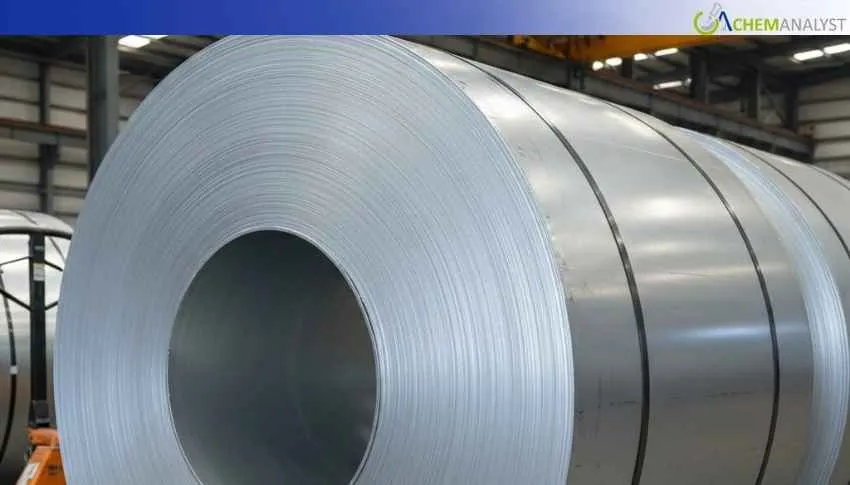
Cold Rolled Coil (CR Coil) prices in the USA increased in mid January 2026, reflecting a persistent bullish undertone as transactional activity picked up through the month. Early January experienced largely range-bound CR Coil prices with normal operating rates and muted market action, while mid-month saw prices gain momentum and late-January activity kept offers firm. Overall market conditions were characterized by steady procurement and contract booking activity that maintained upward price pressure despite ample upstream inputs. The month closed with an entrenched 12-week bullish trend that underpinned seller confidence and supported firmer offers from CR Coil mills and distributors, according to ChemAnalyst data.
Demand-side dynamics were driven by market-channel activity rather than abrupt end-user shocks. Mills and distributors across the Midwest were central to the upward move, keeping offers firm in the latter part of the month; residual momentum from earlier contract bookings sustained transactional volumes through mid-January. In contrast, general transactional demand in early January was steady but lackluster, with operating rates described as normal and procurement largely range-bound. This mix — stronger contract and distributor-led demand mid- to late-month versus steady early-month activity — helped consolidate gains and sustain the broader bullish pattern noted by our analysts.
On the supply and production front, upstream inputs were largely supportive of stable output costs. The availability of prime scrap, pig iron and Hot Rolled Coil remained stable, easing upstream constraints and tempering upside pressure on CR Coil production costs. Additionally, electricity and natural-gas costs were flat, limiting energy-driven margin compression for producers. Logistics and labor factors showed no notable disruptions, and no major plant outages were reported during the month, per ChemAnalyst data. Together, these supply-side conditions reduced the risk of pronounced cost-driven spikes even as CR Coil market offers remained firm.
Weekly trends showed a clear progression: CR Coil prices were steady in the opening weeks, then moved higher through mid-January before edging up modestly at month-end. Per weekly assessment data and ChemAnalyst reporting, CR Coil spot prices advanced by roughly 1.07% around mid-January and then climbed a further small increment in the final week, sustaining the 12-week positive trajectory. Rather than wild swings, the CR Coil market exhibited measured gains driven by disciplined seller behavior and underlying contract and distribution activity, with movements staying within an orderly range as mills and distributors managed offers.
Looking ahead to early February 2026, the near-term outlook appears broadly stable, based on current market trends. The entrenched 12-week bullish trend and firm offers from mills and distributors should continue to support prices, while plentiful feedstock availability and flat energy costs limit upside risk to production-driven inflation. Our analysts expect price direction to be influenced by ongoing contract rollovers and any sudden shifts in transactional demand; forecasts remain subject to market conditions and could change if procurement patterns or upstream availability deviate from current norms, according to ChemAnalyst data.







Leave a Comment
Comments (0)