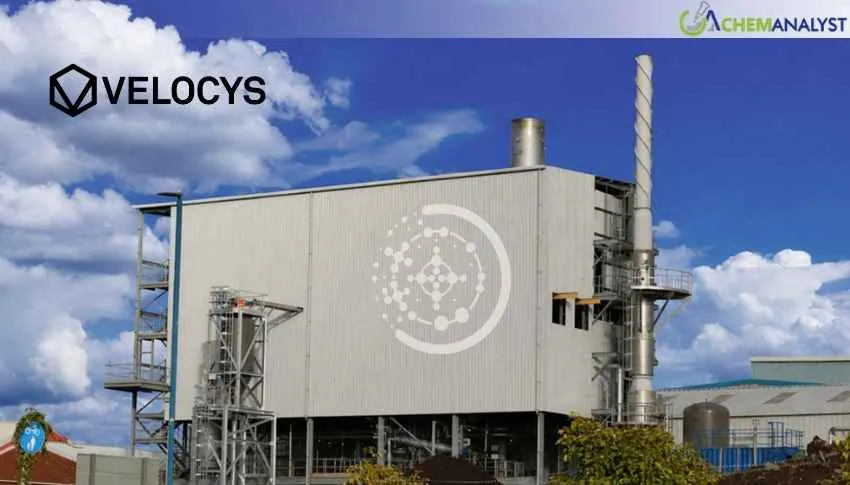
Velocys has confirmed the successful start-up and commissioning of a Fischer–Tropsch (FT) system at the Sustainable Molecules Facility (SMF) operated by Sustainable Molecules Ltd (SuMo) in Wednesbury, England. The system is now fully operational and performing in line with expectations, representing a meaningful milestone in demonstrating how advanced gasification can be effectively integrated with FT synthesis within a waste-to-fuels production pathway.
The commissioning marks an early but important validation of Velocys’ microchannel FT technology in a real-world, site-based environment. By pairing this technology with upstream waste conversion processes, the project illustrates how different components of the waste-to-sustainable aviation fuel (SAF) value chain can function together efficiently. This achievement provides practical insight into how modular fuel production systems can be deployed at scale.
Installed and brought online within a relatively short period, the FT unit is currently operating under stable and controlled conditions. Early performance data indicates that the reactor is meeting key operational benchmarks, including maintaining precise temperature control and achieving carbon monoxide conversion rates consistent with its design specifications. These results reinforce confidence in the system’s reliability and readiness for further development.
This milestone builds upon Velocys’ prior experience in deploying Fischer–Tropsch technology. The company has already demonstrated commercial-scale operations, notably at its ENVIA Energy facility in Oklahoma City, as well as through integrated SAF production initiatives in Japan. The Wednesbury project represents the extension of this proven expertise into the UK market, specifically targeting waste-derived fuel production.
The commissioning activity is closely aligned with the broader ClearSkies initiative, which has received financial support from the UK Department for Transport under its Advanced Fuels Fund. The ClearSkies project is designed to showcase a fully integrated waste-to-SAF production system, combining advanced gasification, FT synthesis, product upgrading, and carbon capture technologies within a single facility. The goal is to demonstrate a viable pathway for producing sustainable aviation fuel from waste streams.
Leadership from both organizations emphasized the significance of this development. SuMo’s Chief Executive Officer, Kamal Kalsi, described the commissioning as a major step forward for both companies and for the UK’s ambitions in sustainable aviation fuel production. He highlighted that integrating SuMo’s gasification technology with Velocys’ FT system strengthens confidence in the scalability and commercial potential of the waste-to-SAF pathway.
Similarly, Velocys CEO Matthew Viergutz noted that the successful operation of the FT system at a customer site underscores the robustness of the company’s technology. He added that this progress demonstrates tangible movement toward deployable, real-world solutions for converting waste into low-carbon fuels.
SuMo’s SMF facility has already demonstrated its gasification technology at Technology Readiness Level 8 (TRL8), indicating near-commercial maturity. Velocys contributes its microFTL™ platform, which includes modular microchannel reactors and proprietary catalysts designed to efficiently convert syngas into liquid hydrocarbons such as SAF.
Looking ahead, both companies intend to expand demonstration activities at the Wednesbury site, with the aim of achieving a fully integrated SAF production system. The modular design of the combined solution enables deployment at existing waste management sites, potentially reducing infrastructure costs and improving scalability compared to traditional centralized production models.
Overall, the ClearSkies project supports the UK’s broader strategic objectives of developing domestic SAF capacity, enhancing energy security, and promoting circular economy principles as part of the transition to a low-carbon energy system.







 About ChemAnalyst
Leave a Comment
Comments (0)