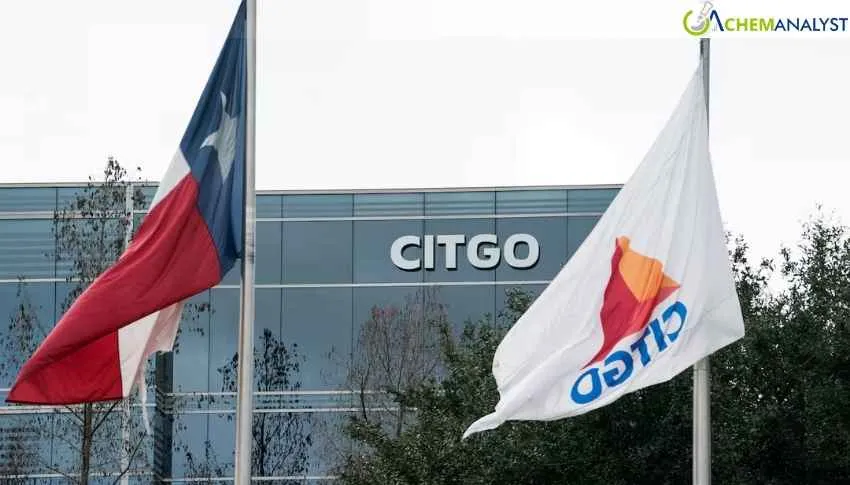
Venezuela is intensifying efforts to halt the court-ordered sale of its prized U.S. refiner, Citgo Petroleum, arguing that the company's value has significantly increased and that the sale process is tainted by conflicts of interest. The South American nation's legal team is challenging a U.S. court's approval of a $5.9 billion bid from Amber Energy, an affiliate of Elliott Investment Management, for Citgo's parent company, PDV Holding.
The ongoing legal battle stems from an eight-year-old case initiated by Canadian miner Crystallex, which found Citgo's parent company liable for Venezuela's debts and past expropriations. This ruling paved the way for over a dozen creditors, including major companies like ConocoPhillips and Gold Reserve, to pursue compensation totaling nearly 19 billion to 23 billion for expropriations and debt defaults under the administrations of late President Hugo Chavez and current President Nicolas Maduro.
Venezuela views the impending sale as a "vulgar and barbaric dispossession" and a "gigantic theft" of a sovereign asset. Officials in Caracas contend that the Venezuelan state and its oil company, PDVSA, were intentionally and illegally excluded from the legal proceedings, thereby denying them the right to defend themselves. The government has also blamed the Venezuelan opposition, which has controlled Citgo's board since 2019 following the U.S. refusal to recognize Maduro's administration, for the potential loss of the asset.
The sale, approved by a Delaware federal judge, still requires a "specific license" from the U.S. Treasury Department's Office of Foreign Assets Control (OFAC) to be fully executed. OFAC has previously extended protections for Citgo from creditors, reflecting the complex geopolitical dynamics at play. The U.S. government has recently eased some sanctions on Venezuela and gained control of the country's oil sales proceeds, further complicating the situation.
Economically, the loss of Citgo, which has been valued at up to 13 billion and is Venezuela's most significant overseas asset, would be a catastrophic blow to the nation. Venezuela, grappling with foreign debt estimated around 150 billion, argues that Citgo's assets should be used to restructure its broader debt rather than satisfy a few creditors. For the creditors, despite the large claims, it's unlikely all will be fully compensated, as the total value of offers in the bidding rounds has remained below the total claims.
From an industry-specific perspective, Citgo is a crucial player in the U.S. refining sector, operating three refineries with a combined capacity of 829,000 barrels of oil per day. Its ownership and operational stability are significant for U.S. energy security. Geopolitically, the sale underscores the strained relationship between the U.S. and Venezuela, with the U.S. government's actions influencing Venezuela's economic sovereignty and its ability to manage its international assets and debts. The current Venezuelan government has appealed to the Trump administration to keep Citgo in Venezuelan hands.







Leave a Comment
Comments (0)