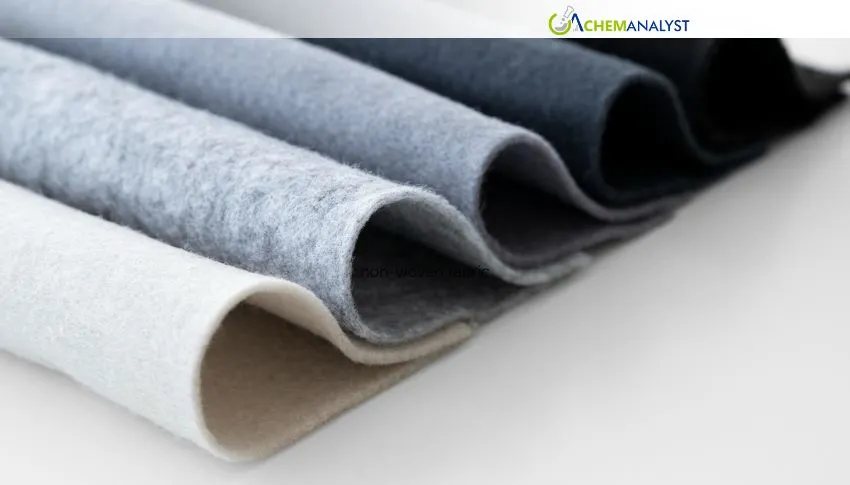
China’s non-woven fabric market entered July on a broadly subdued footing after prices declined through June, with monthly assessments falling 0.56% during June 2026, while early-July weekly assessments remained unchanged. According to ChemAnalyst data, the market continued to face weak domestic and export demand, particularly from hygiene-related applications. Early June witnessed a gradual decline in non-woven fabric prices, followed by a more pronounced correction during mid-June as downstream demand weakened further. By the latter part of the month, non-woven fabric trading became largely range-bound, with buyers adopting a cautious wait-and-watch approach amid sufficient product availability and subdued consumption. Overall, the non-woven fabric market remained under mild bearish pressure despite temporary price stabilization at the beginning of July.
Demand conditions remained the primary challenge for the non-woven fabric market throughout the assessment period. Consumption from hygiene applications, including diapers and spunbond products, remained weak, limiting procurement activity across both domestic and export markets. Market intelligence indicated no meaningful improvement in order volumes for these major downstream sectors, highlighting the continued softness in non-woven fabric demand. Inventory inquiries remained sporadic through mid-June as many buyers postponed purchases due to widening domestic-export arbitrage and cautious market sentiment. Toward the end of June, procurement activity became relatively stable, while balanced spot availability helped establish temporary equilibrium. Nevertheless, overall non-woven fabric demand remained below expectations, preventing any significant recovery in market sentiment.
Supply-side fundamentals also contributed to the weakness in the non-woven fabric market. Falling polypropylene feedstock prices significantly influenced pricing strategies, with ChemAnalyst data showing a sharp decline in polypropylene values during mid-June. Lower feedstock costs reduced production expenses for manufacturers but simultaneously compressed conversion margins, prompting producers to reduce FOB Shanghai offers to maintain cash flow and remain competitive. At the same time, normal operating rates across production facilities ensured adequate non-woven fabric availability throughout the period.
According to weekly assessment data, mid-June recorded a significant weekly decline of approximately 3.68%, after which market activity moderated and non-woven fabric prices remained unchanged into early July. Smaller price corrections during the middle of the month were followed by flat trading in the final assessment weeks, indicating that the non-woven fabric market had reached temporary equilibrium as producers moderated offers and buyers continued to delay discretionary purchases.
Looking ahead, the near-term outlook for the non-woven fabric market remains slightly bearish based on prevailing market conditions. Continued weakness in downstream demand, a lower polypropylene feedstock cost base, and competitive producer pricing are expected to keep non-woven fabric prices under pressure in the coming weeks. However, any improvement in procurement activity or stronger export demand could help stabilize the non-woven fabric market, although the overall outlook remains subject to evolving market conditions and changes in feedstock pricing.








 About ChemAnalyst
Leave a Comment
Comments (0)