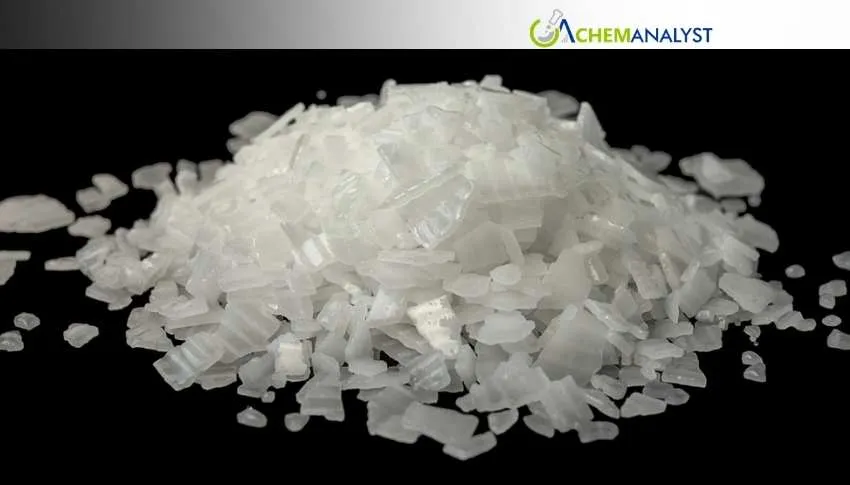
The US caustic soda market witnessed a decline in sentiment during the last week of May 2026 as weak domestic demand and growing concerns over industrial consumption outweighed the impact of global supply disruptions. Although prices had earlier received support from logistical challenges linked to the Strait of Hormuz, underlying market fundamentals remained bearish.
The global chemical industry faced significant uncertainty after disruptions in the Strait of Hormuz affected shipments of crude oil, naphtha, and liquefied natural gas. These issues triggered nearly three dozen force majeure declarations across Asia and the Middle East. While such developments initially supported caustic soda values in North America, market participants noted that the effect began to fade as demand conditions remained weak.
One of the key factors weighing on the US caustic soda market was sluggish downstream consumption. Several major consuming sectors, including pulp and paper, textiles, soaps, and water treatment, maintained cautious purchasing activity amid broader economic uncertainty. Buyers largely relied on existing inventories and avoided aggressive spot purchases.
In addition, abundant supply from Asia continued to pressure global market sentiment. China maintained chlor-alkali operating rates of around 83-84%, significantly higher than the 60-70% operating levels reported in Japan, South Korea, and Taiwan. The continued oversupply of caustic soda from China limited the possibility of sustained price gains in international markets and indirectly influenced buyer expectations in the United States.
The aluminum sector, a major consumer of caustic soda, also presented mixed signals. While aluminum prices surged due to global supply concerns and trade disruptions, US smelters continued to face challenges related to electricity availability and long project development timelines. Industry analysts noted that despite efforts to revive domestic aluminum production through tariffs and reshoring initiatives, immediate demand growth for caustic soda remained limited.
Furthermore, trade flows in North America continued to adjust following higher US tariffs on aluminum imports. Although domestic production investments were announced, new smelting capacity is expected to take years to become operational. As a result, the anticipated increase in caustic soda consumption from the aluminum industry has yet to materialize.
Freight rates and bunker surcharges remained elevated globally, increasing transportation costs for chemical products. However, rising logistics expenses were not sufficient to offset the weak demand outlook for caustic soda in the United States. Market participants reported that purchasing decisions continued to be driven by consumption needs rather than supply concerns.
As per ChemAnalyst, the US caustic soda market may remain under pressure unless downstream industries increase operating rates. While geopolitical disruptions and tighter European capacity could provide occasional support, weak domestic fundamentals and abundant global availability are expected to keep caustic soda demand subdued. Consequently, market participants anticipate that caustic soda prices could continue to face downward pressure in the near term.








 About ChemAnalyst
Leave a Comment
Comments (0)