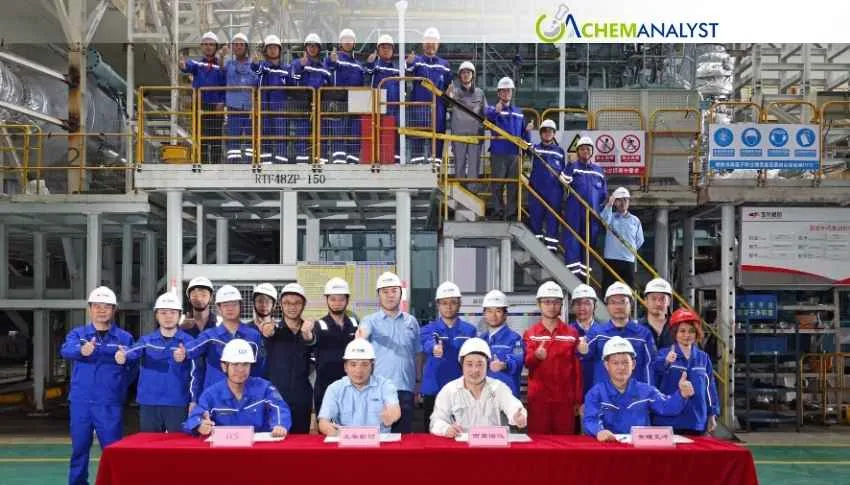
Swiss marine power specialist WinGD has achieved another important milestone in the development of ammonia-fuelled marine propulsion systems after successfully completing a new Factory Acceptance Test (FAT) for its ammonia-powered two-stroke engine platform. The latest achievement further strengthens the company’s efforts to accelerate the commercial deployment of ammonia propulsion technology and support the shipping industry’s transition toward zero-carbon operations.
The recently completed FAT follows a series of earlier successes for the company’s ammonia engine programme. Earlier this year, WinGD successfully carried out both Type Approval Testing (TAT) and the first FAT of its ammonia-fuelled engine platform in South Korea. Together, these milestones demonstrate steady progress in validating the safety, performance and operational reliability of ammonia-powered marine engines as the maritime industry intensifies efforts to decarbonise global shipping.
The engine tested during the latest FAT was the X52DF-A-1.0 model, manufactured by Yuchai Marine Power Co., Ltd. Testing was conducted in April 2026 under the supervision of China Classification Society, ensuring compliance with key operational and safety standards required for commercial marine applications.
Following successful testing, the engine is scheduled for installation aboard the first vessel being built for Tianjin Southwest Maritime. The vessel forms part of a series of four LPG/ammonia carriers currently under construction at CSSC Huangpu Wenchong Shipbuilding Company Limited in China. The project represents another major step toward integrating ammonia-fuelled propulsion systems into commercial shipping fleets, particularly within the gas carrier segment where alternative fuels are increasingly gaining attention.
According to WinGD, the testing programme focused on evaluating the 52-bore engine’s operational stability, emissions profile and overall performance. The engine is intended for use on a 25,000m³ LPG/ammonia carrier and demonstrated stable combustion and reliable load handling during ammonia operation. Results from the testing also highlighted significant environmental benefits. Nitrogen oxide (NOx) emissions generated during ammonia-fuelled operations were considerably lower compared with conventional marine fuels, while nitrous oxide (N2O) emissions remained minimal. These outcomes contribute to a more favourable greenhouse gas emissions profile and reinforce ammonia’s potential as a low-carbon marine fuel.
Peter Krähenbühl, Vice President of Product Center at WinGD, stated that the successful completion of the Factory Acceptance Testing in China provides additional confirmation of the X-DF-A platform’s performance across essential safety and operational parameters. He noted that the latest results reflect continued advancement in the development and validation of ammonia-fuelled propulsion systems for commercial shipping applications.
Krähenbühl also emphasised the importance of collaboration across the maritime supply chain in bringing ammonia propulsion into mainstream service. He explained that close coordination between engine developers and manufacturing partners is essential to ensure reliable production, testing and deployment of next-generation propulsion technologies. Partnerships with companies such as YCMP are helping transform research and development achievements into commercially viable engine solutions capable of supporting safe and efficient maritime operations.
Industry confidence in ammonia as a future marine fuel continues to strengthen, with WinGD reporting an orderbook exceeding 30 X-DF-A engines across multiple vessel categories. These include gas carriers, bulk carriers, tankers and container ships. The growing number of orders reflects increasing momentum behind ammonia-powered shipping as shipowners seek scalable pathways to reduce carbon emissions while maintaining operational flexibility.
The X-DF-A engine platform incorporates high-pressure ammonia injection technology combined with a small pilot fuel requirement of approximately five per cent at full engine load. WinGD says the engine delivers operational characteristics, fuel efficiency and dynamic response comparable to its conventional diesel-fuelled X-Engines in both ammonia and diesel modes. This dual-fuel capability offers shipowners flexibility during the ongoing transition toward cleaner marine fuels.
The latest testing milestone also highlights broader global investment in ammonia propulsion technology. Alongside advancements in engine development, parallel progress is being made in ammonia fuel production, bunkering infrastructure and vessel design. Studies conducted by WinGD and Envision continue to underline ammonia’s long-term economic viability and competitiveness as a scalable carbon-free fuel option for the maritime sector.







 About ChemAnalyst
Leave a Comment
Comments (0)