Global Sodium Methyl Paraben Market Report (2025-2036):
Global Sodium Methyl Paraben Market Size and Growth Forecast
Global Sodium Methyl Paraben Market is projected to grow from USD 286 million in 2025 to USD 513 million by 2036, registering a CAGR of 5.5% during the forecast period. Serving as a highly effective, broad-spectrum antimicrobial preservative, this compound is commercially manufactured via the esterification of p-hydroxybenzoic acid with methanol followed by rigorous alkaline neutralization utilizing sodium hydroxide, mirroring the production of standard methyl paraben but replacing the terminal phenolic proton with a hydrophilic sodium cation. This critical structural modification grants the material distinct competitive advantages over its traditional insoluble counterparts, most notably exceptional processing benefits such as instantaneous cold-water solubility that eliminates the necessity for energy-intensive heating phases during large-scale industrial compounding. Furthermore, the compound exhibits remarkable thermal resistance that preserves its molecular efficacy throughout high-temperature formulation processes, while functioning as a reliable biochemical barrier against microbial, fungal, and bacterial degradation. The robust acceleration in global consumption is fundamentally catalyzed by shifting macroeconomic variables, particularly the rapid expansion of the pharmaceutical, cosmetics, and food manufacturing sectors across the Asia-Pacific and Latin American corridors. Within these emerging economic zones, escalating urbanization, rising middle-class disposable incomes, and heightened consumer awareness are driving an unprecedented demand for premium, long-lasting personal care and therapeutic formulations, compelling regional manufacturers to aggressively adopt advanced stabilization agents to ensure stringent regulatory compliance and extended shelf-life security.
Sodium Methyl Paraben Applications in Packaging and Construction Industries
The dominant end-use application for sodium methyl paraben lies within the cosmetics and personal care industry, where it is extensively utilized as a highly efficient, broad-spectrum preservative in aqueous formulations such as lotions, creams, and shampoos. This material is specifically selected for these water-rich applications due to its exceptional cold-water solubility and potent antimicrobial efficacy, which allow it to effectively disrupt the cellular mechanisms of bacteria and fungi to prevent product degradation and maintain long-term structural integrity. The market demand for this compound is primarily driven by its technical superiority in industrial manufacturing workflows, particularly its unique capability to be readily incorporated during the cold phase of production without the need for pre-dissolving or thermal heating, thereby drastically reducing energy consumption, streamlining processing times, and lowering operational costs for formulators. Furthermore, consistent consumer preference for premium, long-lasting grooming and beauty products that offer extended shelf-lives and uncompromising safety from microbial spoilage continuously accelerates the requirement for such reliable preservation systems. Driven by these intersecting industrial efficiencies and consumer expectations, the compound is experiencing robust expansion and growing market penetration globally as diverse formulation sectors increasingly prioritize high-performance, energy-efficient ingredients to optimize their mass-market production capabilities.
Global Sodium Methyl Paraben Market Segmentation by Resin Type and End-Use Application
The global Sodium Methyl Paraben market is primarily segmented by end-user industry into cosmetics and personal care, pharmaceuticals, and food and beverages, alongside categorization by application into broad-spectrum antimicrobial preservatives and antifungal agents. The cosmetics and personal care segment currently holds the leading position in the market, capturing the dominant share due to the chemical's exceptional cost-effectiveness, prolonged environmental stability, and widespread industrial adoption in high-volume, everyday formulations such as lotions, shampoos, and facial cleansers. Meanwhile, the pharmaceutical sector has emerged as the fastest-growing segment with the highest expansion potential, heavily fueled by escalating manufacturing demands for specific end-products like pediatric liquid suspensions, oral syrups, and sterile ophthalmic solutions. This rapid growth is fundamentally driven by the compound's highly advantageous technical property of superior cold-water solubility, which allows formulators to seamlessly integrate the antimicrobial agent into temperature-sensitive, aqueous drug therapies without the need for destructive heat processing, thereby ensuring uniform molecular dispersion and safeguarding the clinical efficacy of delicate active ingredients over an extended shelf-life.
Asia Pacific's Dominant Role in the Global Sodium Methyl Paraben Market
Asia-Pacific currently holds the leading position in the global Sodium Methyl Paraben landscape, dominating overall geographical demand and production. This undisputed leadership is primarily attributed to a confluence of robust regional drivers, including highly favorable regulatory frameworks such as the "Make in India" initiative and specialized manufacturing subsidies that aggressively propel domestic chemical production. Concurrently, prevailing market sentiment—characterized by rapid industrialization, a surging middle-class demographic, and rising disposable incomes—has dramatically escalated the regional appetite for long-shelf-life consumer goods. Furthermore, the region exhibits a profound commitment to investment and research and development, channeling substantial capital into optimizing production efficiency and pioneering high-purity synthesis methods to meet increasingly stringent international quality mandates. Empowered by this robust innovation ecosystem, the region is actively driving the diversification of the chemical’s applications, successfully expanding its utility beyond traditional preservation boundaries into emerging sectors such as advanced nutraceuticals and specialized agriscience formulations, thereby redefining the compound's commercial trajectory through localized development.
Recent Developments and Strategic Initiatives (2025)
The global sodium methyl paraben market remains resilient through early 2026, characterized by sustained capital expenditure (CapEx) and strategic Brownfield Expansions. Major manufacturers are responding to steady global consumption across the pharmaceutical, food, and personal care sectors by focusing on increasing the capacity of existing portfolios rather than constructing entirely new facilities. To meet sustained demand, key industry players are heavily prioritizing process innovation to optimize production economics, enhance yield, and improve overall operational efficiencies. This continued investment reflects a robust market sentiment where producers are dedicated to debottlenecking current assets and scaling up output to align with the stringent quality and safety standards required for premium preservative formulations.
Key Players in the Global Sodium Methyl Paraben Market
Major players in the Global Sodium Methyl Paraben market are Labeyond Chemicals Co.,Ltd, Quzhou Ebright Chemicals Co.,Ltd, Sinofi, Zhejiang Shengxiao Chemical Co., Ltd., Others ( Ataman Chemicals, Ami Organics,etc)
Years considered for this report:
Historical Period: 2015-2024
Base Year: 2025
Estimated Year: 2026
Forecast Period: 2026-2036
This report will be delivered through an online digital platform with a one-year subscription, along with quarterly updates.
Objective of the Study:
• To assess the demand-supply scenario of the Sodium Methyl Paraben, covering production, demand, and supply at the global level.
• To analyze and forecast the market size of Sodium Methyl Paraben
• To classify and forecast the Global Sodium Methyl Paraben market based on end-use industries and regional distribution.
• To examine competitive developments in the global Sodium Methyl Paraben market, such as expansions, mergers & acquisitions, and other strategic initiatives.
Research Methodology: How Was the Sodium Methyl Paraben Market Data Collected?
To extract data for the Global Sodium Methyl Paraben market, primary research surveys were conducted with Sodium Methyl Paraben manufacturers, suppliers, distributors, wholesalers, and traders. During the interviews, respondents were also asked about their competitors.Through this approach, ChemAnalyst was able to identify and include manufacturers that could not be captured through secondary research due to its limitations.Moreover, ChemAnalyst analyzed various market segments and projected a positive outlook for the Global Sodium Methyl Paraben market over the coming years.
ChemAnalyst calculated the global demand for Sodium Methyl Paraben by analyzing the volume consumed by end-user industries. The forecast was developed based on the growth rates of these end-use industries. These values were obtained from industry experts and company representatives and were externally validated by analyzing the historical sales data of respective manufacturers to determine the overall market size. Additionally, various secondary sources, such as company websites, association reports, and annual reports, were reviewed by ChemAnalyst.
Key Target Audience for This Report
• Sodium Methyl Paraben manufacturers and other industry stakeholders
• Organizations, forums, and alliances related to Sodium Methyl Paraben distribution
• Government bodies, including regulatory authorities and policymakers
• Market research organizations and consulting firms
The study provides insights into several critical ques tions relevant to industry stakeholders, including Sodium Methyl Paraben manufacturers, customers, and policymakers. It also helps identify high-growth segments over the coming years, thereby supporting stakeholders in making informed investment decisions and facilitating strategic expansion.
Report Scope and Market Segmentation Framework
In this report, the Global Sodium Methyl Paraben market has been segmented into the following categories. In addition, key industry trends have been detailed below:
Attribute
Details
Market size Value in 2025
USD 286 Million
Market size Value in 2036
USD 513 Million
Growth Rate
CAGR of 5.5% from 2026 to 2036
Base year
2025
Estimated year
2026
Historical Data
2015 - 2024
Forecast period
2027 - 2036
Quantitative units
Demand in thousand tonnes and CAGR from 2026 to 2036
Report coverage
Industry Market Size, Capacity by Company, Capacity by Location, Operating Efficiency, Production by Company, Demand by End- Use, Demand by Region, Demand by Sales Channel, Demand-Supply Gap, Company Share.
Segments covered
By End-Use: (Food & Beverage, Pharmaceuticals, Cosmetics & Personal Care, and Others) By Sales Channel: (Direct Sale and Indirect Sale)
Regional scope
North America, Europe, Asia Pacific, Middle East and Africa, and South America.
Market Data & Insights
Table of Content
1. Industry Market Size
It is an essential metric for market analysis, as it provides insights into the overall size and growth potential of Sodium Methyl Paraben market in terms of value and volume.
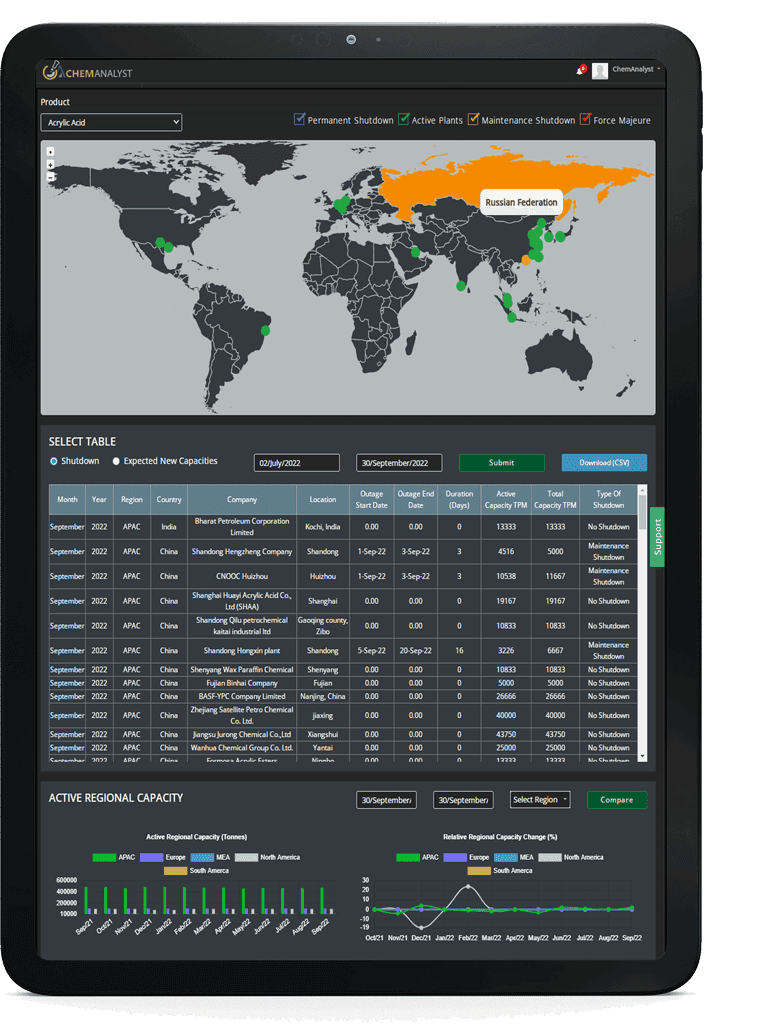
2. Capacity By Company
On our online platform, you can stay up to date with essential manufacturers and their current and future operation capacity on a practically real-time basis for Sodium Methyl Paraben.
3. Capacity By Location
To better understand the regional supply of Sodium Methyl Paraben by analyzing its manufacturers' location-based capacity.
4. Plant Operating Efficiency
To determine what percentage manufacturers are operating their plants or how much capacity is being currently used.
5. Production By Company
Study the historical annual production of Sodium Methyl Paraben by the leading players and forecast how it will grow in the coming years.
6. Demand by End- Use
Discover which end-user industry (Food & Beverage, Pharmaceuticals, Cosmetics & Personal Care, and Others) are creating a market and the forecast for the growth of the Sodium Methyl Paraben market.
7. Demand by Region
Analyzing the change in demand of Sodium Methyl Paraben in different regions, i.e., North America, Europe, Asia Pacific, Middle East and Africa, and South America, that can direct you in mapping the regional demand.
8. Demand by Sales Channel (Direct and Indirect)
Multiple channels are used to sell Sodium Methyl Paraben. Our sales channel will help in analyzing whether distributors and dealers or direct sales make up most of the industry's sales.
9. Demand-Supply Gap
Determine the supply-demand gap to gain information about the trade surplus or deficiency of Sodium Methyl Paraben.
10. Company Share
Figure out what proportion of the market share of Sodium Methyl Paraben is currently held by leading players across the globe.
I am satisfied with overall performance of ChemAnalyst. Weekly updates before the final report were especially helpful and reassuring. Additional requests on the interim and/or final reports were handled in a swift and professional manner
Mr.Shin Dosho
Member - Board of Directors
Osaka Gas Co. Ltd
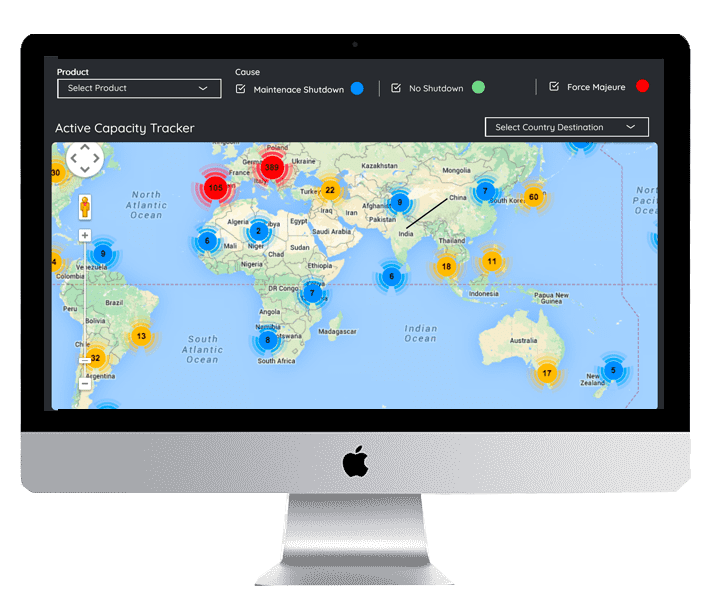
Disruption Tracker
Disruption Tracker reflect the major shutdown on monthly basis which will help you in
tracking the inventory management and smooth functioning of business. Unforeseen shutdowns and disruptions
resulting in a loss of production capacity to impact the bottom line. The capacity tracker provides industries
with a global view of production and consumption capacity loss that reflects the corresponding conversion factors.
It also highlights the immediate impact on supply due to planned and unplanned outages as well as upcoming start-up
of new capacities. Additionally, it emphasizes how each shutdown—whether due to a maintenance turnaround or a case
of force majeure, affects the plant's operating rate for the given duration. Disruption tracker gives a clear insight
into the worldwide outages affecting the commodity of interest. With every shutdown, it also reflects the impact on
supply of the product in the market at a Global level.
The Global Sodium Methyl Paraben Market was valued at USD 286 million in 2025 and is projected to reach USD 513 million by 2036, growing at a CAGR of 5.5% during the forecast period.
The report covers market sizing and forecasting (2015–2036), segmentation, regional analysis, competitive landscape, and recent strategic developments. It also offers solutions including Custom Research for tailored business strategies.
Our Solutions
Custom Research
We at ChemAnalyst provide tailor-made solutions to our clients based on their requirements which help them in building and expanding their business by developing customized strategy such as sales strategy, GTM Strategy, product portfolio and new product development. Our dedicated team helps clients in getting the best solution for their requirements. We at ChemAnalyst look forward to serving our clients for long term association.
Techno Economic Feasibility Report (TEFR)
ChemAnalyst provide TEFR reports which include market sizing, plant cost (ISBL and OSBL units), financial modelling, covering all the major financial calculations and ratios including production cost, IRR, major technology, licensing fee (if required), and others fixed and variable costs. TEFR reports will help the client to build greenfield project as well as brownfield expansion for a specific geography. Our Team of experts have delivered multiple TEFR reports which help clients in moving ahead of their business competition by grabbing the opportunity and expanding their business portfolio.
Price Benchmarking
Pricing benchmark report provides real-time data perpetuating current market scenarios, in a world that is changing at a rapid pace, having real-time prices is an imperative to make impactful insights and thereby informed decisions. The Price Benchmarking report provides pricing data for an individual market, or group of markets, which can be converted into localized insights and comparable listings. Benchmarking Reports help clients to make informed decisions by construing the data on several filters: region, country, category, grade and subsequently increasing their brand presence. Clients majorly require pricing benchmarks when they opt for a competitive pricing strategy.
We use cookies to deliver the best possible experience on our website. To learn more, visit our
Privacy Policy.
By continuing to use this site or by closing this box, you consent to our use of cookies.
More info.