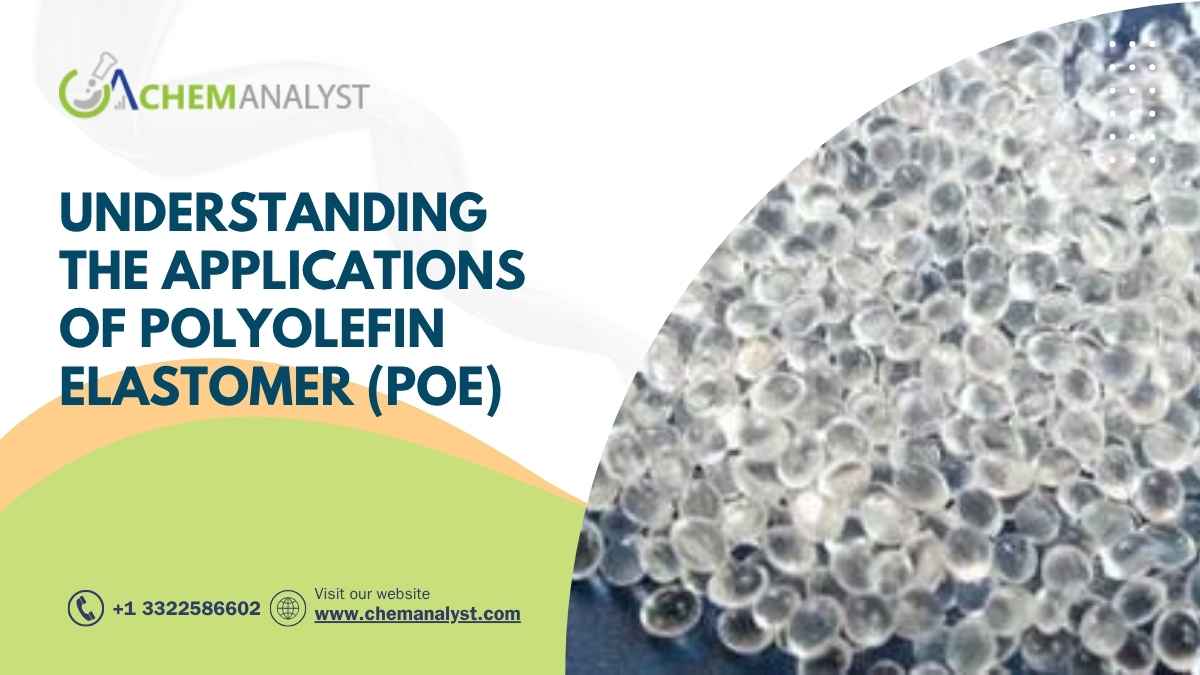
Polyolefin Elastomer (POE) is a flexible, lightweight material offering rubber-like properties with plastic processability. Widely used in automotive, healthcare, and packaging, it supports weight reduction and durability. Its compatibility and sustainability make it ideal for modern engineering applications.
I. Introduction
Polyolefin Elastomer (POE) is a thermoplastic elastomer that is a blend of ethylene and alpha olefin comonomers. It provides tremendous flexibility, light weight, and excellent impact-resistance. POE is one of the easiest thermoplastic elastomers to blend or work with other polyolefins like polyethylene and polypropylene. The compatibility of POE with other polyolefin polymers makes it particularly attractive to formulators working on new and advanced polymer blends or modifying polymers for specific applications. POE continues to penetrate various industries where automotive and healthcare innovations revolve around performance, reduced weight, and ease of processing.
II. Industrial Applications by Sector
Automotive & Transportation
Because of its light weight, flexibility, and superior impact strength, POE is widely used in bumpers, seals, weatherstrips, and interior panels. POE's compatibility with polypropylene allows for practical blending in vehicle applications, contributing to design flexibility and improved fuel economy.
Construction & Infrastructure
POE offers UV resistance and thermal stability in roofing membranes, waterproofing sheets, and window gaskets. In construction applications, it enhances durability and flexibility, especially in environments with expansion and contraction cycles.
Electronics & Electricals
POE is used in wire and cable insulation, because of its excellent dielectric properties, heat resistance, and ease of processing. It provides a safer, halogen-free solution for low-voltage cable applications, including consumer electronics and home appliances.
Agriculture & Fertilizers
POE offers great puncture resistance and durability in films, mulch, and irrigation applications. It is ideal for enclosing outdoor applications where usage cycles will expand in duration, resulting in reducing plastic in the environment, as well as reducing maintenance costs for users.
Healthcare & Pharmaceuticals
POE is used in medical tubing, drug packaging films, and disposable gloves. Its non-toxic, flexible characteristics, and registration to FDA/USP standards make it an excellent solution for medical or non-medical applications involving skin contact or fluid transfer.
Food & Beverage
In flexible food packaging and bottle caps, POE provides toughness and sealing efficiency. Its non-migratory nature ensures product safety, and it blends well with polyethylene to enhance clarity and softness in films.

III. Market Demand and End-User Industries
The worldwide demand for Polyolefin Elastomer is rapidly multiplying because of its multifunctional application throughout end-user markets. The automotive industry remains the largest consumer, taking advantage of the lightweighting character of POE to meet demanding emissions requirements. The electrical and electronics sectors are using POE for safer and flexible insulating materials. Packaging, especially flexible and sustainable, is another key factor led by the development of e-commerce and consumer product safety. New sectors such as renewables and sportswear are also using advanced grades of POE for thermal and mechanical performance. As the industries focus more on recyclability and performance, POE continues to grow rapidly as a material for functional and ecological innovation.
IV. Product Grades and Specifications
Various grades of POE can be obtained based upon density, melt index, and comonomer content. High-impact and low-temperature grades are for automotive and packaging applications, while soft-touch and transparent grades are used for consumer goods and health care. Additionally, manufacturers offer reactor-grade POE having narrow molecular weight distribution and customized crystallinity to optimize processing and mechanical properties. Specialty POE that provide enhanced UV- and flame-retardant, or food-safe, performance features have been developed for applications with strict regulatory and consumer needs. Suppliers can craft varieties of POE and provide properties specific to the end use, by modifying the molecular structure of the POE during the polymerization process to modify flexibility, thermal behavior, and bonding.
V. Substitutes and Limitations
Alternatives to POE are Styrenic Block Copolymers (SBCs), Thermoplastic Polyurethane (TPU), and Ethylene-Vinyl Acetate (EVA). These materials may provide more elasticity or better thermal resistance for a given application, however they may be too expensive or difficult to recycle, as with TPU, which can be labor intensive to recycle and while they have high levels of abrasion resistance, they are often not 100% compatible in polyolefin blends. POE also has moderate heat resistance; however it remains a solid option due to its relative lightness, low processing costs, and broad formulation latitude. POE will remain competitive in any market where processability and recyclability are highly valued.
VI. Innovations in Applications
The most developed application of POE innovation is in the area of sustainable and high-performance design, and many of the leading chemical companies have produced bio-based POE alternatives in order to replace the use of fossil-based feedstocks, thus lowering the carbon footprint. In terms of packaging applications, ultra-thin multilayer films with POE cores allow for high strength and reduced material consumption. It is also being utilized in areas such as sportswear and flexible solar panels, where elastic properties and high durability and resistance to environmental stress are required.
A prime example is Company X, which has designed 3D printed wearable components, made from a high-performance POE blend, to ensure that both comfort and mechanical performance are achieved in the customized orthotics. R&D has also taken steps to investigate dynamic cross-linking approaches to improve thermal stability and extend the use of POE into under-the-hood automotive parts and power tool enclosures. This reflects a greater emphasis in the industry toward greener, more intelligent materials.
VII. Conclusion
Polyolefin elastomer has become a widely chosen material across all sectors for its versatility, processing efficiency, and recyclability. It can be applied to various needs from automobile parts used under the hood, to flexible medical packaging. Its broad benefits are directly related to the changing demands in manufacturing today. As industry requires lightweight, durable, and more sustainable materials, POE will increasingly be relevant. New bio-based versions and high-performance formulations remain viable for POE's prospects. The future will likely require additional innovations in circular economy practices and legislation on sustainability to bolster the importance of POE in the making up industrial materials.
FAQs
1. How does Polyolefin Elastomer (POE) compare to Polypropylene (PP)?
POE is an elastomer that is flexible with impact resistance, and polypropylene (PP) is a rigid thermoplastic. POE is commonly used with PP to enhance toughness and low-temperature performance in applications like automotive and packaging.
2. Is POE suitable for food contact applications?
Yes, certain grades of POE are FDA-compliant grades of material and are suitable for food contact applications including packaging films, bottle caps, and sealant layers. These grades are formulated to be non-toxic, odourless, and migration free.
3. Can POE be recycled?
POE can be recycled, and blends with other polyolefins like polyethylene and polypropylene. The recyclability of POE will depend on the application and any additives or fillers that are introduced in the final product.
4. In what industries are you seeing emerging use of POE?
In addition to automotive and packaging, industries that are increasingly adopting POE for its lightweight, flexible, and high-performance properties are emerging sectors like renewable energy, wearables, and sporting goods.





 About ChemAnalyst