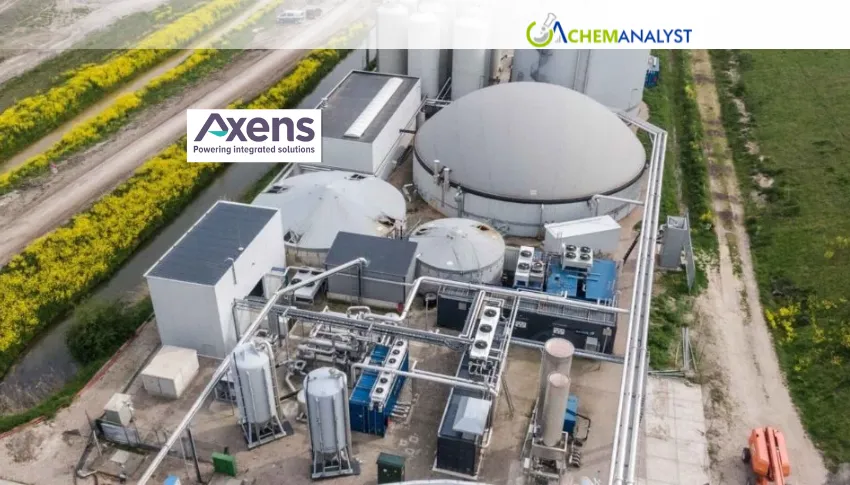
Axens has announced the launch of the ERA (Ethanol to Refuel Aviation) project, marking France’s first industrial-scale Sustainable Aviation Fuel (SAF) production facility based on advanced bioethanol. The project represents a significant milestone in the country's efforts to decarbonize aviation and strengthen domestic renewable fuel production. The planned facility, which will have an annual production capacity of 50,000 metric tons of SAF, is currently undergoing site selection in France and is expected to begin commercial operations by 2030.
The ERA initiative reinforces Axens’ broader commitment to supporting low-carbon mobility and sustainable industrial development. It complements the company’s other strategic projects, including the NACRE advanced bioethanol production plant at Lacq, which has already secured its construction permit, and the MACARON battery materials production project in Valenciennes, for which permit applications have recently been submitted.
As global aviation seeks to reduce greenhouse gas emissions, demand for Sustainable Aviation Fuel is rising rapidly. Current SAF production relies heavily on the Hydroprocessed Esters and Fatty Acids (HEFA) pathway, which uses feedstocks such as used cooking oil and animal fats. However, limited feedstock availability has highlighted the need for alternative production routes. The ERA project addresses this challenge by utilizing advanced bioethanol derived from biomass residues, expanding the range of sustainable feedstocks available for SAF production while enhancing France’s and Europe’s energy independence.
The project is currently in the engineering phase and will be developed through a dedicated project company named Safiris. Production will utilize JETANOL® technology, jointly developed by Axens and IFP Energies nouvelles (IFPEN). This Alcohol-to-Jet (AtJ) process converts advanced bioethanol into SAF and bio-naphtha through three integrated stages—dehydration, oligomerization, and hydrogenation. The technology has already demonstrated strong performance in petrochemical applications and has been optimized to maximize aviation fuel yields.
The initiative also aligns with Europe’s expanding SAF ambitions under the ReFuelEU Aviation regulation. By 2035, flights departing from France are expected to require more than one million tons of SAF annually, creating substantial opportunities for domestic production based on European resources and technologies.
Axens is currently assessing several potential industrial locations across France while finalizing financial and industrial partnerships within Safiris. With technologies spanning HEFA, Alcohol-to-Jet, lignocellulosic biomass, e-SAF, and methanol-based production pathways, Axens continues to strengthen its position as a leading technology provider in the rapidly growing global sustainable aviation fuel industry.
Impact on Chemical Commodity Prices Tracked by ChemAnalyst
The project is expected to have a moderately bullish long-term impact on advanced bioethanol demand, supporting higher consumption of renewable ethanol and biomass-derived feedstocks across Europe. Increased demand may gradually strengthen prices for bioethanol, while boosting consumption of intermediates used in dehydration and hydrogenation processes. Demand for hydrogen could also increase as additional SAF capacity comes online. In contrast, conventional fossil-derived jet fuel demand may face incremental pressure over the long term. Overall, the project is unlikely to create immediate price movements but should provide positive long-term support for renewable fuel value chains and bio-based chemical commodities tracked by ChemAnalyst.








 About ChemAnalyst
Leave a Comment
Comments (0)