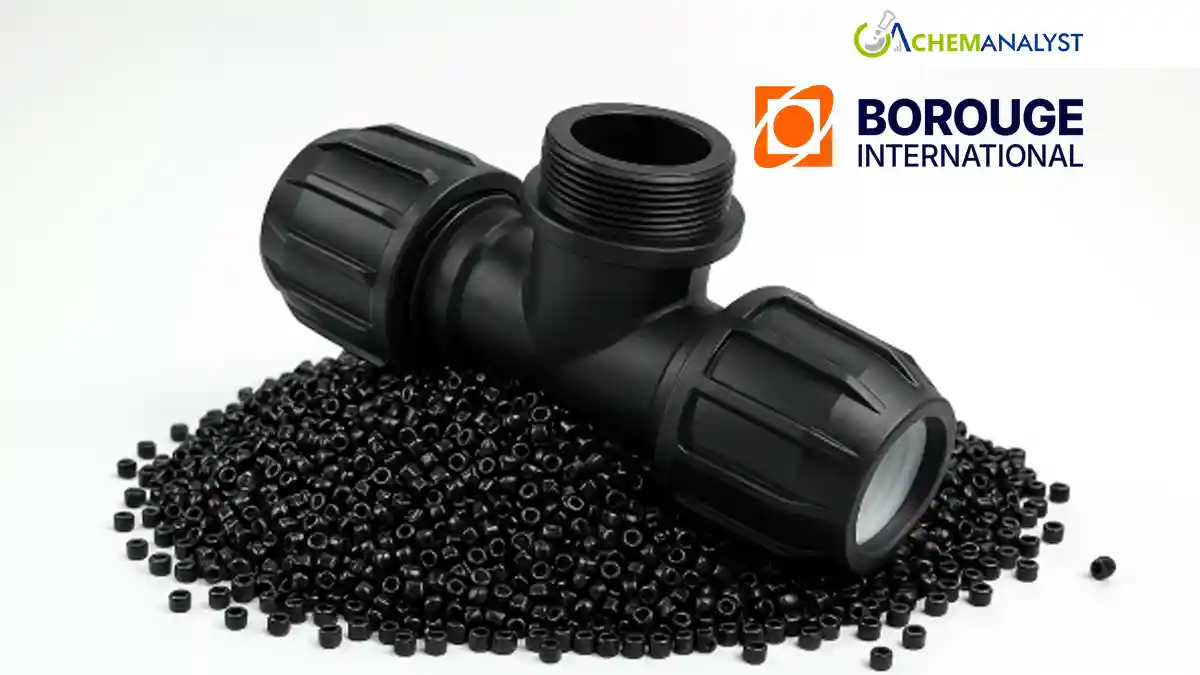
Borouge International has expanded its portfolio of sustainable materials with the launch of a bio-based version of one of its established polypropylene (PP) grades used in drinking water and irrigation infrastructure. The development represents an important milestone in the company's efforts to support lower-carbon solutions for essential infrastructure applications while maintaining the high-performance standards required for water distribution systems.
The newly introduced grade, designated BA160E-8229-01, is widely utilized in the production of pipe compression fittings and mechanical joints that play a critical role in modern water supply networks. Borouge International has announced that this material will now be manufactured using 10% certified bio-based feedstock sourced from waste and residual materials. By incorporating renewable raw materials into the production process, the company aims to reduce the environmental footprint associated with plastic infrastructure products.
The bio-based grade has been included in Borouge International’s Bornewables product portfolio, a range specifically developed to provide customers with more sustainable polymer solutions. Through this initiative, the company seeks to help industries reduce greenhouse gas emissions and support circular economy objectives without sacrificing product quality, durability, or operational efficiency.
Plastic piping systems remain an indispensable component of global water infrastructure. They are widely recognized for their reliability, long service life, and ability to ensure the safe transportation of drinking water. As governments, utilities, and infrastructure developers increasingly prioritize sustainability and carbon reduction goals, demand is growing for advanced materials that can deliver both environmental and performance benefits. Manufacturers are therefore looking for solutions that not only meet stringent technical requirements but also contribute to sustainability targets.
BA160E-8229-01 is a fully formulated polypropylene compound approved for drinking water applications. It is based on a beta-nucleated heterophasic PP block copolymer technology, which provides enhanced mechanical performance and processing advantages. The material has been specifically designed for injection molding applications and offers optimized strength, toughness, and durability characteristics.
One of the key benefits of the grade is its controlled crystallization behavior. This property allows manufacturers to operate at higher demolding temperatures and achieve shorter cooling cycles during production. As a result, processors can improve manufacturing efficiency, reduce cycle times, and increase overall productivity while maintaining consistent product quality.
According to Borouge International, the bio-based version serves as a direct substitute for the conventional fossil-based grade. Customers can adopt the new material without modifying their existing manufacturing processes or equipment. The renewable version delivers the same mechanical properties, processing performance, and drinking water approvals as the traditional material, ensuring a seamless transition toward more sustainable production practices.
The renewable feedstock used in the material is certified under the internationally recognized ISCC PLUS certification scheme. Through a mass balance methodology, the certification verifies the responsible sourcing and traceability of renewable raw materials throughout the entire value chain, from feedstock origin to finished product.
Borouge International emphasized that integrating bio-based feedstock into a proven drinking water infrastructure material enables customers to reduce carbon emissions without introducing additional complexity or performance compromises. The company views this innovation as a practical and scalable approach to supporting sustainability objectives in essential infrastructure sectors.
The launch comes at a time when water utilities, infrastructure developers, and industrial manufacturers are facing increasing pressure to meet ambitious environmental targets while continuing to comply with strict regulatory and performance requirements. By incorporating renewable content into a trusted and widely used polypropylene grade, Borouge International is providing customers with a practical pathway to lower-carbon infrastructure solutions while preserving the reliability and efficiency demanded by critical water distribution systems.
Market Impact: The introduction of Borouge International’s bio-based polypropylene (PP) grade BA160E-8229-01 is expected to strengthen the company's position in the sustainable infrastructure materials segment. Since the new grade contains 10% certified bio-based feedstock while maintaining identical mechanical properties, processing characteristics, and drinking water approvals as the conventional product, adoption barriers for pipe fitting and irrigation component manufacturers are likely to remain low. This could accelerate demand from customers seeking to reduce the carbon footprint of their products without investing in new processing equipment or manufacturing modifications.
From a market perspective, the launch is more strategic than volume-disruptive. The product enhances Borouge’s sustainability portfolio and may encourage greater use of renewable-content polymers in water infrastructure projects, particularly in regions where environmental regulations and procurement standards increasingly favor lower-carbon materials.
Regarding ChemAnalyst-tracked commodities, the immediate price impact on polypropylene and its upstream feedstocks such as propylene is expected to be limited. The bio-based feedstock share represents only a small portion of the overall product composition and is unlikely to materially alter global PP supply-demand balances. Therefore, PP prices are expected to remain primarily influenced by crude oil, naphtha, propylene costs, and regional demand trends. However, over the longer term, growing adoption of bio-based polymers could support a modest premium for certified sustainable PP grades, while conventional PP prices are likely to remain largely unaffected by this launch alone.







Leave a Comment
Comments (0)