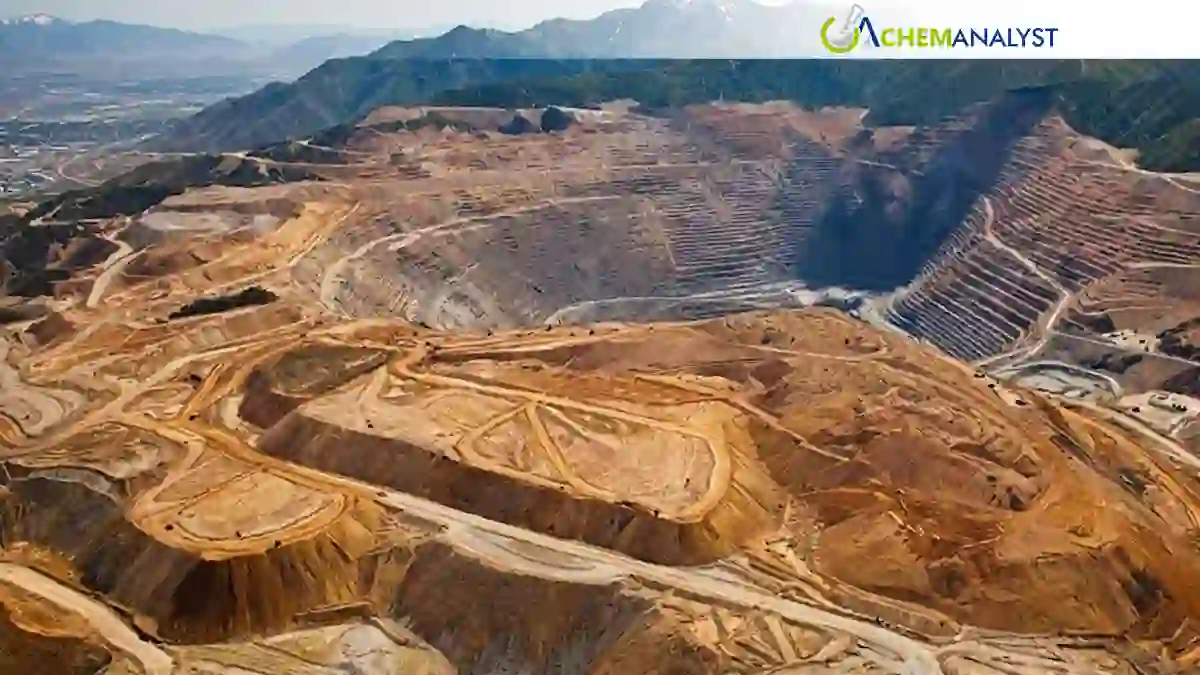
The U.S. Department of Energy (DOE) has awarded a $100 million federal grant to Waterleaf P1 HoldCo, a subsidiary of California-based Lilac Solutions, to develop a commercial lithium extraction and refining facility near the northeastern shore of Utah’s Great Salt Lake.
The project is among seven initiatives selected under a broader $500 million DOE funding program designed to expand critical mineral and material processing, battery manufacturing, and recycling capacity across the United States. According to the department, the initial phase of these projects is expected to help double current U.S. lithium production while creating a foundation for additional capacity in the future.
The investment comes as Washington seeks to strengthen domestic supply chains for critical minerals and reduce the country’s dependence on overseas suppliers, particularly China. Utah has emerged as an important part of this strategy because of its mineral resources and growing state-level support for domestic extraction and processing.
Utah Gov. Spencer Cox launched the “Mission Critical” initiative in January to reduce U.S. dependence on China for materials considered essential to national security. The state also aims to establish itself as a major center for critical mineral extraction and processing.
China currently maintains a dominant position across several critical mineral supply chains. Industry data indicates that the country accounts for more than 90% of global refining capacity for several key materials used in electronics. China also represents roughly 70% of global rare earth element production and more than 60% of worldwide titanium mining and aluminum smelting capacity.
Utah has continued building its institutional infrastructure around the sector. In April, the University of Utah’s board of trustees approved the creation of the Institute for Critical and Strategic Minerals, supporting research and development related to domestic mineral resources.
DOE Deputy Secretary James Danly said the broader strategy is to increase the extraction, processing and commercial availability of critical minerals within the United States. He identified lithium as one of the most important minerals, noting the country’s historical challenges in establishing a fully domestic supply chain.
Utah could play a significant role because approximately 80% of the minerals on the U.S. critical minerals list are believed to occur in deposits within the state.
However, the proposed facility’s location near the Great Salt Lake has raised questions about water consumption and potential environmental contamination. The DOE said the project is designed to return processed brine to the lake without creating a net loss of water.
Environmental Protection Agency Deputy Administrator David Fotouhi said federal and state authorities are working together to address environmental considerations associated with the project. The development therefore represents both an opportunity to expand U.S. lithium production and a test of how critical mineral projects can balance industrial growth with environmental protection.
Product and Chemical Commodity Price Impact
The project is bullish for lithium-related products because the $100 million grant accelerates U.S. extraction and refining capacity, potentially improving long-term domestic supply and reducing import dependence. However, the immediate price impact should remain limited because commercial production will take time. In the near term, expectations of additional lithium supply could exert modest downward pressure on lithium carbonate and lithium hydroxide prices if market participants anticipate greater future availability. For Chemanalyst-tracked chemical commodities, increased lithium refining could support demand for industrial chemicals, solvents and processing reagents, while stronger domestic mineral processing may improve supply-chain stability and gradually reduce logistics-related cost pressures.







 About ChemAnalyst
Leave a Comment
Comments (0)