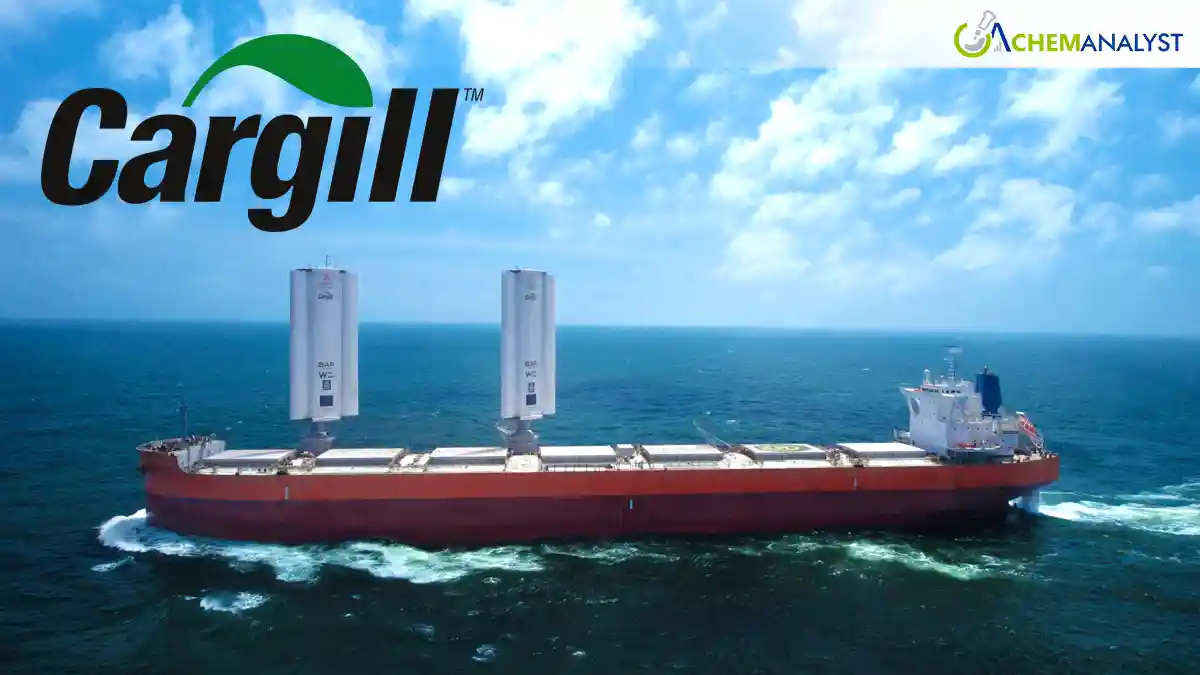
Cargill has taken a significant step forward in its maritime decarbonisation journey with the commencement of the maiden voyage of Brave Pioneer, its first green methanol dual-fuel dry bulk vessel. This vessel is the first of five such ships that will be chartered by Cargill, underscoring the company’s commitment to reducing greenhouse gas emissions from ocean transportation while advancing practical, scalable solutions for the global shipping industry.
The entry of Brave Pioneer into active service represents an important milestone within Cargill’s long-term decarbonisation strategy, which places strong emphasis on innovation, experimentation, and continuous learning. By working closely with customers, shipowners, fuel suppliers, and other industry partners, Cargill aims to test emerging technologies in real operating conditions and gather insights that can inform future investment and deployment decisions—both for its own fleet and for the broader maritime sector.
The vessel was constructed by Tsuneishi Shipbuilding Co., Ltd. and is owned by Mitsui & Co. Ltd.. It has been designed to operate on both conventional marine fuels and green methanol, offering flexibility as the availability of low-carbon fuels continues to develop. When operated on green methanol, Brave Pioneer is expected to achieve carbon dioxide emission reductions of up to 70% compared with traditional fossil-based marine fuels, making it a meaningful contributor to near-term emissions reduction efforts.
The ship’s inaugural journey begins in the Philippines, from where it will sail to Singapore to bunker green methanol. Following this, the vessel will travel onward to Western Australia before continuing its voyage to Europe. Throughout this maiden voyage, Cargill will conduct a series of operational trials aimed at evaluating the readiness of green methanol bunkering infrastructure, assessing vessel performance, and understanding the practical challenges associated with using alternative fuels at scale.
In parallel, the company will examine how the environmental attributes of green methanol can be accurately traced, verified, and reported within existing carbon accounting frameworks. Another key objective is to gauge customer interest and market demand for low-carbon freight solutions, helping Cargill refine commercial offerings that align sustainability goals with operational realities.
Commenting on the development, Jan Dieleman, President of Cargill’s Ocean Transportation business, emphasized that decarbonising global shipping will require a diverse mix of technologies and a willingness to act before all supporting systems are fully mature. According to Jan Dieleman, fuels such as green methanol, along with innovations like wind-assisted propulsion, involve uncertainty. However, he noted that industry leaders have a responsibility to test these solutions in real-world conditions, openly share lessons learned, and help shape the standards and frameworks that will enable broader adoption.
The deployment of Brave Pioneer also sets the foundation for the four additional dual-fuel vessels that will be introduced into Cargill’s chartered fleet in the coming years. These ships will further strengthen the company’s multi-pathway approach to decarbonisation, which already includes wind-assisted propulsion systems, voyage optimization tools, energy-efficiency retrofits, and the exploration of alternative fuels such as biofuels and ethanol.
Each new vessel represents another incremental step toward embedding sustainability into global ocean supply chains while offering customers practical options to reduce the carbon footprint of their freight movements. Cargill has stressed that the concept behind the new fleet is flexibility and adaptability—ensuring that ships perform at best-in-class levels using conventional fuels today, while remaining capable of transitioning to greener fuels as supply and infrastructure improve.
As one of the world’s largest charterers of dry bulk vessels, Cargill’s actions send a strong demand signal to fuel producers, shipbuilders, and infrastructure providers. The company has positioned this initiative as an open invitation for other maritime stakeholders to collaborate in accelerating the transition toward more sustainable shipping.
Ultimately, green methanol-enabled vessels, combined with the gradual expansion of renewable fuel supply chains, are expected to play an increasingly important role in reducing maritime emissions over the next decade, supporting Cargill’s broader ambition to lower supply chain emissions and contribute to a more sustainable global food system.







Leave a Comment
Comments (0)