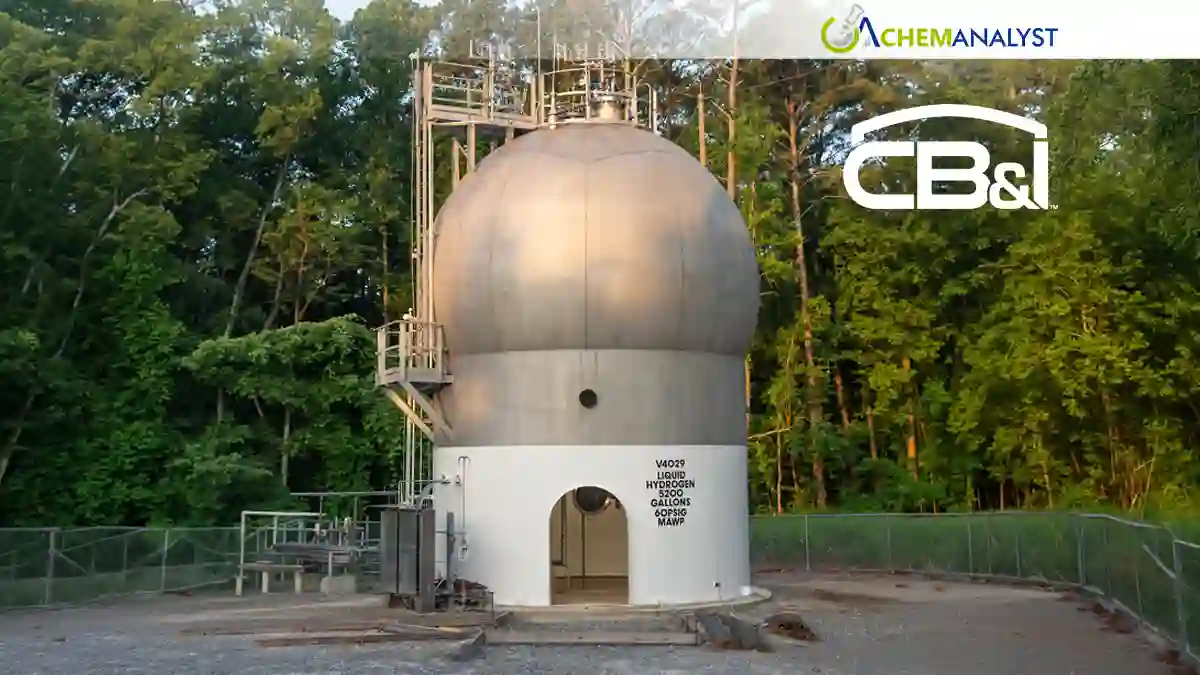
CB&I is advancing the development of lower-cost, large-scale liquid hydrogen (LH2) storage by applying more than six decades of experience in cryogenic insulation and hydrogen storage infrastructure. The company is developing an innovative non-vacuum insulation technology designed to reduce capital costs and improve the scalability of LH2 storage systems for high-throughput applications.
The program, announced in 2025, brings together CB&I, Shell, NASA, GenH2, and the University of Houston to develop and validate affordable and scalable liquid hydrogen storage solutions under real-world operating conditions. As part of the initiative, CB&I has designed and constructed a 20 m³ demonstration tank that is integrated into NASA's Hydrogen Test Facility (HTF).
The successful first fill of the demonstration tank represents an important milestone in the effort to commercialize non-vacuum insulation technology. The tank increases the total LH2 storage capacity of NASA's HTF by approximately three times and can potentially be refilled as often as once per day. This capability will allow researchers to conduct repeated thermal cycles, creating an accelerated testing environment for evaluating the performance and durability of the insulation system.
The demonstration unit is fully connected to the facility's existing liquid hydrogen infrastructure, allowing NASA and its partners to assess the technology under practical operating conditions. Over the coming months, NASA, CB&I, and Shell will monitor the insulation system and generate performance data that can support future commercial deployment.
According to CB&I Vice President of Engineering Yogesh Meher, the successful first fill represents a significant step toward validating a more economical approach to large-scale LH2 storage. The project could help accelerate the adoption of hydrogen infrastructure by addressing one of the key challenges associated with storing liquid hydrogen: maintaining extremely low temperatures while controlling infrastructure and operating costs.
CB&I's involvement builds on its extensive history in hydrogen storage and the U.S. space program. The company constructed its first LH2 storage sphere for NASA's Gemini and Apollo programs in 1960. Since then, CB&I has built more than 130 liquid hydrogen storage spheres globally.
The company's portfolio also includes the world's largest LH2 storage sphere, completed in 2022 to support NASA's Artemis program. The latest demonstration further strengthens CB&I's position in hydrogen storage technology and could contribute to the development of more economical infrastructure as demand for hydrogen grows across industrial, transportation, aerospace, and energy applications.
Impact on Product and Chemical Commodity Prices
The successful demonstration is positive for liquid hydrogen (LH2) storage technology, as non-vacuum insulation could lower capital costs and make large-scale hydrogen infrastructure more economical. Wider commercialization could support greater hydrogen production, transportation, and storage capacity, potentially increasing long-term demand for hydrogen-related equipment and materials. For chemical commodities tracked by ChemAnalyst, the immediate price impact is likely limited because the project remains at the demonstration stage. However, successful commercialization could gradually increase demand for specialty insulation materials, cryogenic-grade metals, engineering polymers, and other advanced materials. Higher infrastructure investment may provide modest upward price support for these materials over the medium to long term.







Leave a Comment
Comments (0)