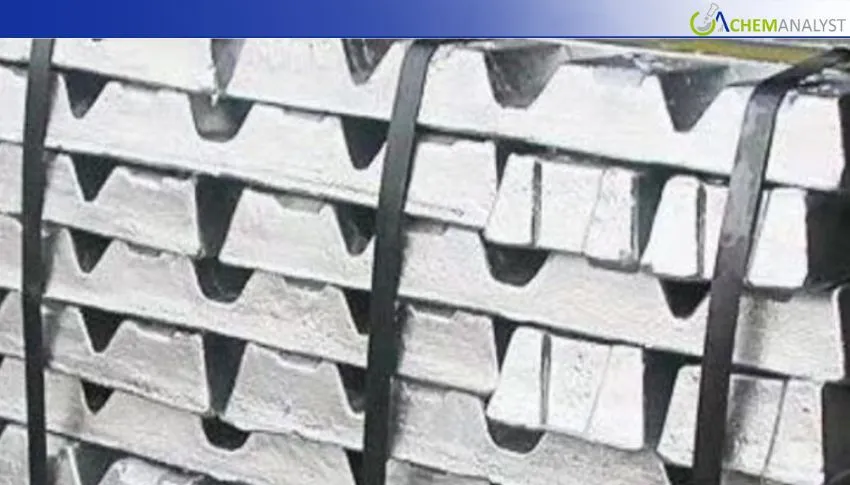
The Chinese market for aluminium alloy ingot has entered December with a stable trend. This week, the prices showed no fluctuation, reflecting a balance between cautious supply-side pricing and resilient demand. Based on data from the industry, registered volumes of cast aluminium alloy warrants showed regional fluctuations with notable increases in Chongqing while Shanghai, Jiangsu, and Zhejiang remained steady. Guangdong saw a slight decline, which reflected variations in inventory levels.
On the cost side, aluminium scrap continues to dominate the pricing structure, accounting for nearly 90% of aluminium alloy ingot production costs. Scrap supply has been tight, and the reluctance of traders to sell has supported costs. While primary aluminium prices rebounded earlier in November before pulling back —scrap quotations remained high—putting sustained pressure on aluminium alloy ingot producers. Silicon metal prices were generally stable throughout major regions, moving upward only modestly in Tianjin. Auxiliary costs rose, including copper and natural gas, further complicating finances for producers as losses grew wider when finished aluminium alloy ingot prices failed to keep pace with input costs.
In the aluminium alloy ingot market, production activity got better in November, with the operating rates higher than the previous month and year. The driving force for its recovery has been resumed post-holiday production and stronger automotive demand. However, capacity release is still bottlenecking due to high raw material costs and tight scrap supply. Policy uncertainties, especially regarding fiscal subsidies in provinces such as Jiangxi and Henan, have led some enterprises to adopt cautious production strategies like temporary halts or cuts.
Demand conditions for aluminium alloy ingot showed divergence, with the automotive sector providing a crucial buffer against the general softness. Year-end policy expectations around new energy vehicle purchase tax adjustments spurred concentrated buying. Automakers' push to meet sales targets also supported robust order books for secondary aluminium enterprises. However, export demand remained weak, and price volatility for aluminium alloy ingot at the start of November prompted downstream buyers to adopt a cautious procurement strategy. Prices stabilized later in the month, allowing transactions to stage a modest recovery, and year-end stockpiling is likely to offer additional support in December.
Moving forward, prices of aluminium alloy ingots will likely stay high through December. Though scrap traders are more willing to sell, thus improving liquidity, overall supply remains tight. Demand from end-use sectors, such as automotive, will continue to provide resilience, though the upside potential is capped by high costs and weaker seasonal consumption. With low inventories offering a price floor, there is likely to be a narrow-traded range in aluminium alloy ingot prices until such times as stronger-than-expected demand or further cost-driven increases can achieve a breakthrough.







Leave a Comment
Comments (0)