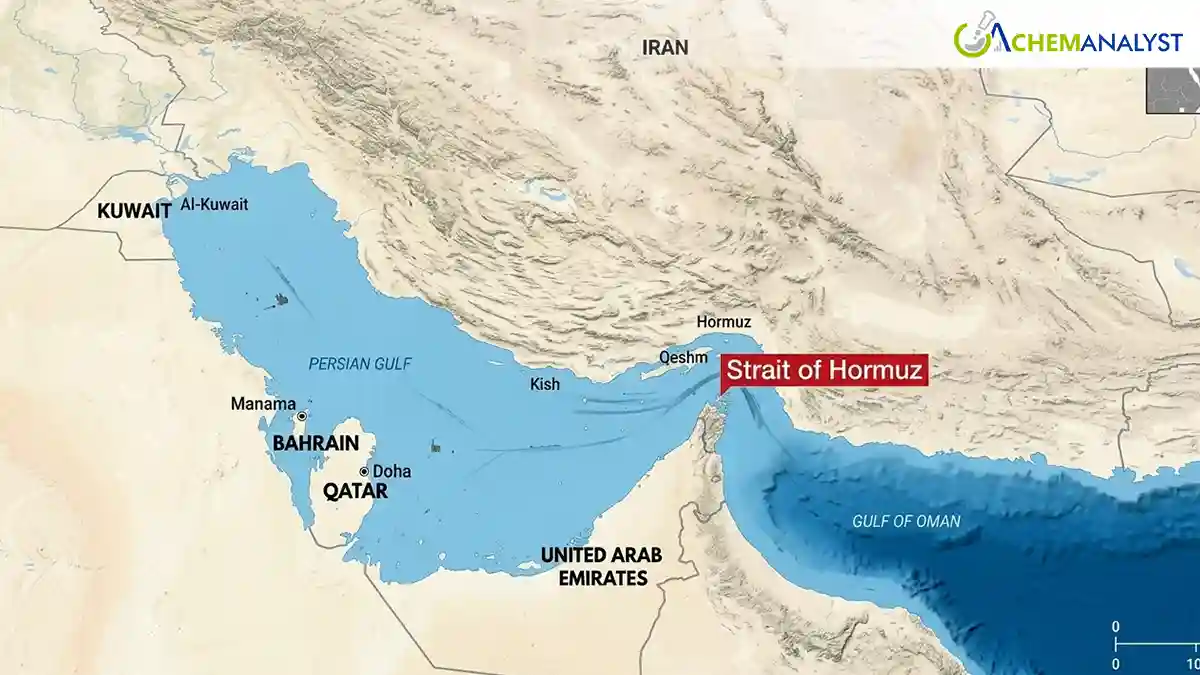
The prolonged closure of the Strait of Hormuz, initiated by Iran's Islamic Revolutionary Guard Corps on February 28, 2026, following US and Israeli airstrikes, has triggered far-reaching economic, geopolitical, and industry-specific repercussions extending significantly beyond traditional oil markets. The conflict, now in its eleventh week, has been exacerbated by a diplomatic deadlock, with US President Donald Trump rejecting Iran's peace proposal as "totally unacceptable."
Economically, the most immediate and pronounced impact has been on global energy markets. The closure has led to an estimated loss of approximately 100 million barrels of oil every week. Brent crude futures have surged by 45% since the strikes, climbing to $103 per barrel, and even reaching $104.47 per barrel after Trump's rejection of Iran's peace terms. US retail gasoline prices have seen a 27% year-to-date increase. Beyond crude oil, the Strait, a crucial conduit for liquefied natural gas (LNG) from Qatar, has also disrupted global LNG supply, intensifying energy security concerns for importing nations. The ripple effects are felt across broader supply chains; about 8% of the global aluminum supply, previously transiting Hormuz, has largely halted, and petrochemical feedstock availability has tightened, driving up fertilizer costs. Energy-intensive manufacturing sectors in Asia and Europe are facing compounding pressures from elevated energy prices.
The geopolitical landscape has been significantly reshaped. While Iran, Oman, and Saudi Arabia have reaped financial windfalls from soaring oil prices due to their ability to bypass the Strait, countries like Iraq, Kuwait, and Qatar, lacking alternative export routes, have suffered billions in losses. Iraq's oil export revenues, for instance, plummeted by 76% in March. China, maintaining ties with Iran and being a major consumer of its oil, is now under pressure to mediate a resolution between Tehran and Washington to reopen the vital waterway. The conflict has paradoxically strengthened Tehran in some respects and deepened the US's long-term geoeconomic challenges as nations accelerate their shift towards clean energy solutions.
Crucially, the crisis extends to industry-specific impacts, particularly threatening China's burgeoning electric vehicle (EV) sector. Despite EVs initially being perceived as beneficiaries due to reduced reliance on fossil fuels, the Hormuz closure directly impacts them through disruptions in metal processing essential for EV batteries and components. This has resulted in a significant 15-25% cost surge for Chinese auto exports. However, in a paradoxical long-term twist, the global energy crisis is accelerating the adoption of clean energy technologies like solar, wind, and EVs worldwide. China, already a dominant force in these industries, stands to emerge as a "clear winner" in the post-war global energy order, further cementing its leadership in renewable energy, batteries, and electrical infrastructure, despite the immediate challenges to its EV exports. The far-reaching consequences underscore the Strait of Hormuz's critical role as a global economic pressure valve, with its closure impacting economies and industries far beyond the immediate energy sector.







Leave a Comment
Comments (0)