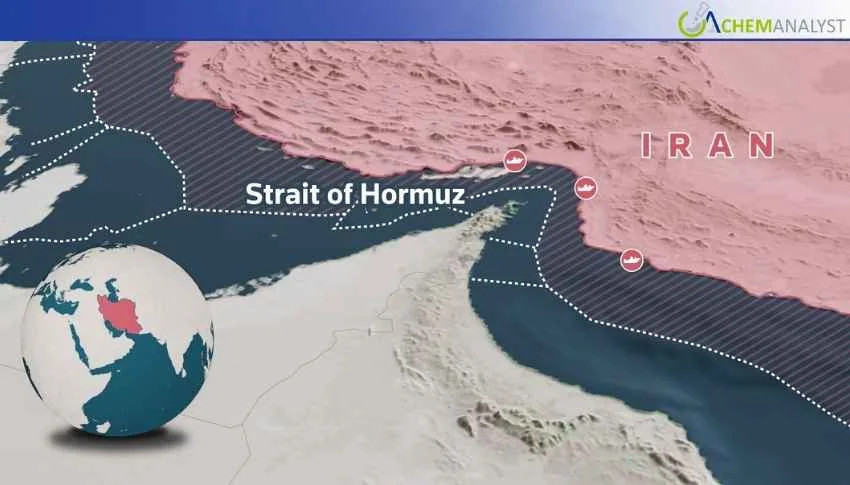
The warning, widely circulated through regional media channels and security monitoring groups, has heightened global anxiety over energy security, maritime safety, and supply chain stability. The Strait of Hormuz, a narrow maritime chokepoint between Oman and Iran, handles roughly 20% of global oil consumption and around one-third of the world’s seaborne crude trade, according to data from the International Energy Agency (IEA) and the U.S. Energy Information Administration (EIA). Any disruption to this corridor would reverberate across global energy markets.
The immediate market reaction has been swift. Benchmark crude prices have already surged amid the escalating rhetoric and military developments. Brent crude futures have climbed sharply, as per the data Brent Crude oil prices inclined to USD 71.32/barrel, breaching psychologically important resistance levels as traders price in a geopolitical risk premium. Insurance premiums for tankers operating in the Gulf have reportedly risen, while freight rates for Very Large Crude Carriers (VLCCs) have strengthened amid fears of rerouting or delays. Analysts warn that even the perception of heightened risk in Hormuz can lift oil prices by several dollars per barrel due to the corridor’s strategic importance.
A potential blockage or sustained disruption of the Strait of Hormuz would disproportionately affect major Asian economies. Countries such as India, China, Japan, South Korea, and Pakistan rely heavily on crude imports from Gulf producers including Saudi Arabia, Iraq, the UAE, Kuwait, and Qatar. China alone imports more than 10 million barrels per day of crude oil, a substantial share of which transits through Hormuz. India imports over 85% of its crude oil requirements, with a significant portion sourced from the Middle East. Pakistan’s energy system is similarly dependent on Gulf supplies, particularly from Saudi Arabia and the UAE.
In response to escalating tensions, several major importing nations have reportedly activated contingency planning. India maintains strategic petroleum reserves (SPR) equivalent to roughly 9–10 days of net imports, with plans to expand capacity further. China has built one of the world’s largest strategic reserves, estimated at over 90 days of import cover when commercial inventories are included. Japan and South Korea also maintain significant emergency stockpiles under IEA obligations. These reserves are designed to cushion short-term supply shocks but would not fully offset a prolonged closure of Hormuz.
China has continued diversifying supply routes, increasing pipeline imports from Russia and Central Asia to reduce maritime vulnerability. India has strengthened crude sourcing from Russia and the United States over the past two years, partially lowering exclusive dependence on Gulf barrels. Pakistan, facing foreign exchange constraints, may encounter heightened exposure due to limited diversification options. Meanwhile, Gulf producers themselves have invested in bypass infrastructure. Saudi Arabia operates the East-West Pipeline (Petroline), which can transport crude from the Eastern Province to the Red Sea port of Yanbu, partially avoiding Hormuz. The UAE’s Abu Dhabi Crude Oil Pipeline similarly allows exports from Fujairah outside the Strait. However, combined bypass capacity cannot fully compensate for total Hormuz flows.
If tanker attacks materialize or shipping halts escalate, global crude prices could spike significantly beyond current levels. Historical precedents, including past tanker wars in the 1980s and attacks on Saudi facilities in 2019, triggered sharp but temporary price surges. Analysts suggest that a sustained closure could potentially push crude well above recent highs, intensifying inflationary pressures globally. Higher oil prices would directly impact transportation fuels, petrochemicals, aviation, power generation in oil-dependent regions, and fertilizer production, cascading into food and manufacturing costs.
The broader concern extends beyond oil. The Strait of Hormuz also facilitates large volumes of liquefied natural gas (LNG), particularly from Qatar, one of the world’s largest LNG exporters. Disruptions could tighten global gas markets, especially in Asia and Europe, where LNG remains critical for energy security following supply realignments in recent years. Shipping risks could also strain marine insurance markets and global freight supply chains.
Financial markets are closely monitoring developments. Energy equities have rallied, while airlines and heavy fuel-consuming sectors face downward pressure. Central banks may face renewed inflation risks if energy prices remain elevated. Global policymakers are expected to coordinate closely through diplomatic and naval channels to safeguard maritime transit.
The evolving situation underscores the structural vulnerability of global energy supply chains to geopolitical chokepoints. While strategic reserves and alternative pipelines provide temporary buffers, the Strait of Hormuz remains irreplaceable in the short term. Any sustained disruption would not only impact Middle Eastern exporters but also send shockwaves across Asia, Europe, and North America, reinforcing calls for accelerated energy diversification, renewable investments, and supply chain resilience.
As tensions persist, markets remain on edge, with energy security once again at the center of global geopolitical risk.








 About ChemAnalyst
Leave a Comment
Comments (0)