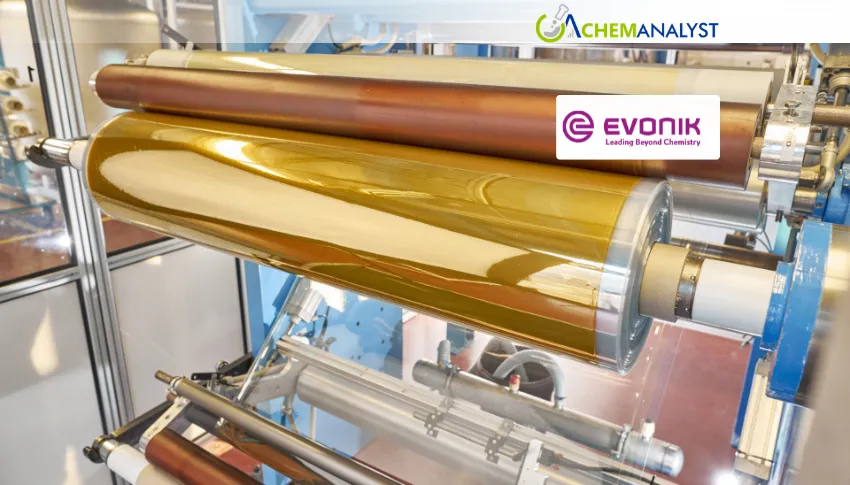
Evonik has taken a significant step toward advancing the green hydrogen economy by commencing production of its high-performance polymer membrane at a newly established pilot plant located in Marl, North Rhine-Westphalia, Germany. The innovative membrane technology is designed to make green hydrogen production more affordable and efficient, supporting the global transition toward a climate-neutral and sustainable energy system. The facility marks an important milestone for Evonik, as it enables the company to manufacture its advanced membranes at a commercial scale, with an annual production capacity sufficient for electrolysis systems totaling up to 2.5 gigawatts. This output represents approximately one-fourth of Germany’s targeted electrolysis capacity planned for 2030.
Green hydrogen is expected to play a crucial role in the future energy landscape as industries seek alternatives to fossil fuels. It can be utilized as a clean energy carrier and as a critical raw material for sectors such as chemicals, steel manufacturing, and other energy-intensive industries. The hydrogen is generated through electrolysis, a process that uses renewable electricity to split water into hydrogen and oxygen. Despite its environmental advantages, green hydrogen remains significantly more expensive than conventional gray hydrogen produced from fossil resources, with production costs currently estimated to be two to four times higher depending on the region. Besides electricity prices, the cost and efficiency of electrolysis technologies are major factors affecting the competitiveness of green hydrogen.
To overcome these challenges, Anion Exchange Membrane (AEM) electrolysis has emerged as a promising next-generation technology. Evonik has developed a critical component for this process: the DURAION® anion-conducting membrane. The company’s innovation teams, including specialists from its High Performance Polymers business division, engineered the membrane specifically to enhance the performance and economic viability of AEM electrolysis. According to Evonik, the membrane combines superior operational efficiency with lower investment requirements, helping accelerate the widespread adoption of this emerging hydrogen production technology.
AEM electrolysis has gained increasing attention across Europe and Asia due to its potential to reduce costs and improve operational flexibility. Unlike some conventional electrolysis methods that depend on expensive precious metals, AEM systems operate in alkaline conditions, allowing the use of more cost-effective, precious-metal-free materials. Economic assessments suggest that this approach could lower capital investment requirements by more than 25 percent. Furthermore, AEM technology can generate hydrogen directly under pressure, eliminating the need for additional compression equipment and reducing overall system complexity and costs. Its ability to adapt rapidly to variable renewable electricity sources, such as wind and solar energy, also makes it highly suitable for supporting renewable-based energy systems.
The DURAION® membrane is a key factor in unlocking the full capabilities of AEM electrolysis. It delivers high ion conductivity while maintaining excellent chemical resistance and mechanical durability, ensuring long-term reliability and improved process efficiency. Additionally, the membrane provides effective separation between hydrogen and oxygen gases, minimizing the risk of dangerous explosive mixtures. It is designed to operate efficiently under high current densities and elevated pressures, meeting the demanding requirements of industrial-scale hydrogen production. Another important environmental advantage is that no PFAS substances are added during the membrane manufacturing process.
The newly inaugurated production facility in Marl represents Evonik’s successful transition from laboratory research to continuous industrial manufacturing. The nearly 20-meter-long coating system is among the largest of its kind worldwide and can produce membranes up to one meter wide, making them suitable for large-scale electrolyzer applications. Evonik’s integrated production approach, extending from raw molecular components to finished membrane rolls, enables the company to maintain high product quality while delivering substantial manufacturing volumes. The membrane can also be reinforced with specialized fabric when required, enhancing its suitability for larger industrial systems.
Several early manufacturers of AEM electrolyzers are already implementing DURAION® membranes in pilot and demonstration projects, demonstrating the technology’s growing market acceptance. The global momentum behind large-scale AEM deployment is particularly strong in China, where investments in hydrogen infrastructure are rapidly expanding. To strengthen its presence in this strategic market, Evonik has also launched the Evonik AEM Center Shanghai, its first technology-oriented application center in Asia dedicated exclusively to AEM electrolysis. The center enables experts to evaluate membranes produced in Marl under practical operating conditions while collaborating closely with regional customers and technology partners. Through its production expansion in Germany and research activities in China, Evonik aims to accelerate the commercialization and global adoption of efficient AEM hydrogen technology.


 About ChemAnalyst
Leave a Comment
Comments (0)