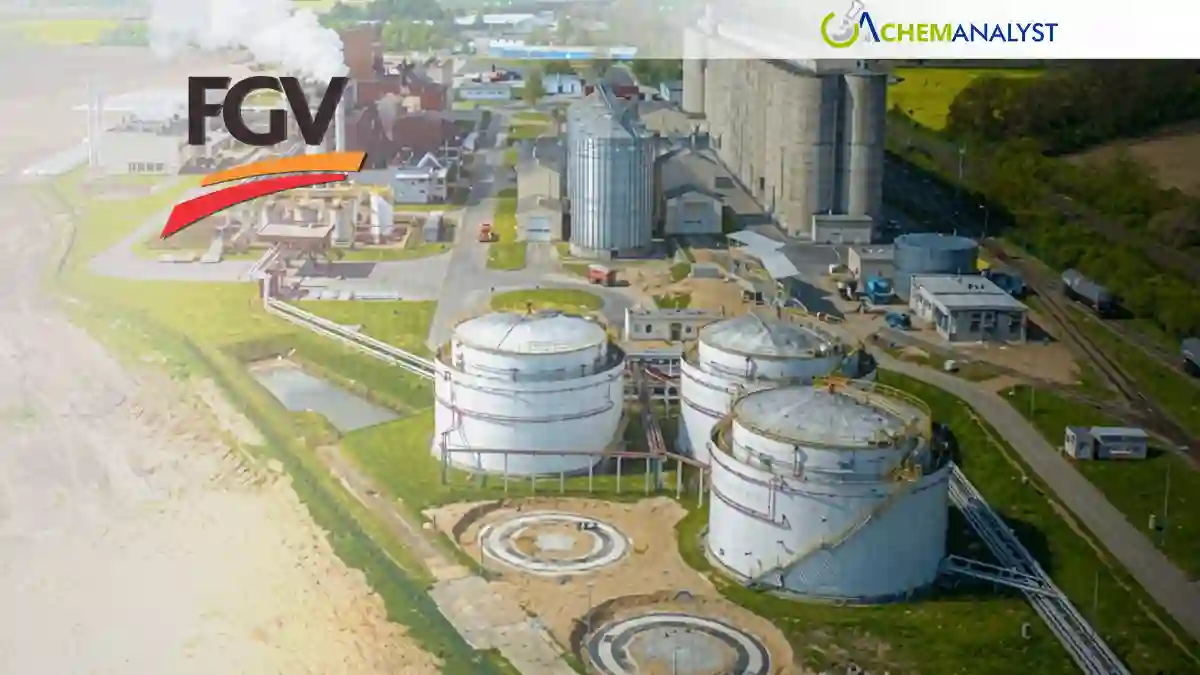
FGV Holdings Berhad (FGV) has initiated the next stage of its B100 biodiesel pilot programme in Malaysia by extending testing beyond road vehicles to include plantation operations. The expanded initiative is intended to evaluate the technical capabilities, operational efficiency, and long-term practicality of using 100% palm oil-based biodiesel in heavy-duty agricultural environments. Through this effort, FGV aims to gather detailed operational data that will help determine whether B100 biodiesel can be deployed more widely across plantation activities.
The six-month trial will be conducted at the Tun Abdul Razak Agricultural Research Centre (PPPTAR) estate located in Jerantut. Around 17 different machines and vehicles will participate in the evaluation, representing the types of equipment commonly used in daily plantation operations. These include tractors, agricultural machinery, power generators, and four-wheel-drive vehicles that support field maintenance, harvesting, transportation, and other estate-related activities.
This latest initiative follows an earlier pilot programme in which FGV tested B100 biodiesel in conventional road vehicles. While the previous phase focused on transportation applications, the current programme shifts attention to plantation equipment, where machinery typically operates under harsher environmental conditions, extended working hours, and heavier mechanical loads. These more demanding operating environments will provide valuable information on the biodiesel’s ability to perform reliably under continuous and intensive use.
The biodiesel being tested is produced entirely from locally sourced palm oil and contains no fossil fuel component. By relying solely on renewable palm-based feedstock, B100 represents one of the value-added downstream products developed from Malaysia’s palm oil industry. FGV sees this initiative as part of its broader strategy to diversify the commercial applications of palm oil while supporting the country's renewable energy and sustainability objectives.
As one of Malaysia’s leading agribusiness companies and a producer of palm-based biodiesel, FGV is taking a measured and research-oriented approach before considering any broader deployment of B100 across its operations. Rather than immediately implementing the fuel on a larger scale, the company is focusing on collecting comprehensive operational evidence to understand both the benefits and any technical challenges associated with long-term usage.
The pilot programme will be introduced in stages, allowing individual machines and vehicles to be closely monitored throughout the testing period. Engineers and technical teams will assess several important performance indicators, including fuel consumption efficiency, engine output, equipment reliability, maintenance frequency, and overall fuel quality. These parameters will provide insights into how B100 affects machinery performance compared to conventional fuels.
Before entering the trial, each participating asset will undergo detailed inspections and maintenance servicing to establish baseline operating conditions. These initial assessments will create reference benchmarks that can be compared with performance data collected during the six-month evaluation. By maintaining standardized monitoring procedures, FGV aims to generate reliable and scientifically supported findings that can guide future operational decisions.
The initiative also reflects the growing interest in expanding renewable fuel usage within the agricultural sector, where machinery traditionally depends on petroleum-based diesel. Successful implementation of B100 could contribute to lowering greenhouse gas emissions while increasing the utilization of domestically produced renewable resources. In addition, the programme supports efforts to strengthen Malaysia's palm oil value chain by creating additional industrial applications for locally produced palm-based products.
According to Datuk Abu Huraira, extending the B100 assessment into plantation operations demonstrates FGV’s commitment to exploring new opportunities for the palm oil industry through innovation supported by practical evidence and responsible implementation. He emphasized that the company remains focused on ensuring that any future adoption of B100 is based on comprehensive technical evaluation and operational data rather than assumptions. The findings from this pilot programme are expected to provide valuable guidance for future biodiesel applications within plantation operations and potentially across other sectors where renewable fuels can play a larger role.
Impact on Product and Chemical Commodity Prices
The expansion of FGV’s B100 biodiesel pilot into plantation operations could strengthen the commercial prospects of palm oil-based biodiesel by validating its performance in demanding agricultural applications. If the trial proves successful, wider adoption may increase domestic demand for crude palm oil (CPO) and biodiesel feedstocks, supporting growth in Malaysia’s renewable fuels sector. From a ChemAnalyst pricing perspective, stronger biodiesel consumption could provide upward pressure on CPO and palm methyl ester (PME) prices due to higher feedstock demand. However, the pilot remains limited in scale, so any immediate impact on biodiesel or related chemical commodity prices is expected to be minimal.








 About ChemAnalyst
Leave a Comment
Comments (0)