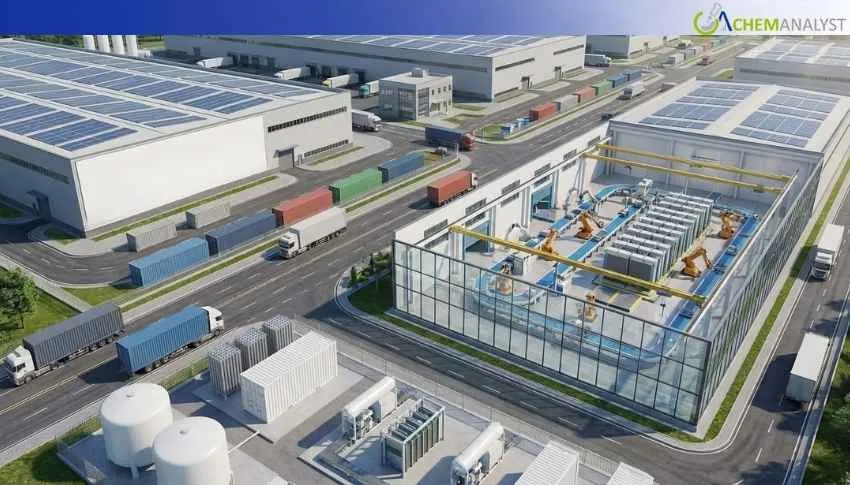
A German–Chinese joint venture is preparing to establish a significant foothold in Europe’s green hydrogen manufacturing landscape, with plans to launch a 250MW electrolyser production facility in Germany by the first quarter of 2026. The venture aims to begin manufacturing 5MW pressurised alkaline electrolysers, positioning itself to supply equipment for early-stage industrial green hydrogen projects across the continent.
The initiative is being led by RCT GH Hydrogen, a partnership between Chinese electrolyser manufacturer Guofu Hydrogen—also known in the market as Guofuhee or Guofu HEE—and German engineering and technology firm RCT Group. While the joint venture has emphasised its ambition to build a strong European manufacturing presence, industry observers widely interpret the move as a strategic channel for introducing Chinese electrolyser technology into the European market.
The new factory will be located in Konstanz, a city in southern Germany near the Swiss border. This location is seen as particularly strategic, as it enables Guofu to navigate regulatory and market barriers that have limited the deployment of Chinese-made electrolysers in Europe. Notably, projects backed by the European Hydrogen Bank are effectively restricted from using electrolysers manufactured in China. By shifting production to Germany, the joint venture can classify its equipment as locally manufactured, thereby improving eligibility for European-supported green hydrogen initiatives.
In a recent LinkedIn update, RCT GH Hydrogen confirmed that preparations for scaling up operations are already underway. The company highlighted that transitioning to local manufacturing represents a critical milestone in supporting cost-efficient and dependable green hydrogen production across Europe. The post also revealed that the company plans to introduce a “hydrogen-as-a-service” commercial model, an approach designed to lower financial barriers for project developers.
Under this model, hydrogen developers would not need to make large upfront investments in electrolyser equipment. Instead, the electrolysis systems would be provided at no initial cost, with developers paying RCT GH Hydrogen through fixed monthly or annual fees, or alternatively based on a predetermined price per kilogram of hydrogen produced. This structure mirrors financing models that have gained traction in the solar power sector, where asset ownership and long-term service contracts replace traditional capital-intensive procurement.
The adoption of a hydrogen-as-a-service framework also suggests that the company will supply not only electrolyser stacks but the entire balance of plant (BoP) required for hydrogen production. Guofu already manufactures several key BoP components in China, including hydrogen purification systems and gas–liquid separators, which are essential for ensuring output quality and system efficiency. According to the joint venture, its initial production will focus on megawatt-scale projects aimed at serving industrial hydrogen consumers.
Although RCT GH Hydrogen has not yet disclosed details of confirmed customer orders or project contracts, it has indicated that further announcements and development milestones are expected in the near future. The scale and layout of the Konstanz facility also point to longer-term ambitions. Images released by the company show substantial unused space, reinforcing the view that the initial 250MW annual capacity could be expanded as demand grows.
These plans build on an earlier announcement made in October 2023, when Guofu and RCT outlined intentions to develop a 1GW electrolyser manufacturing facility in Germany. The upcoming Konstanz plant appears to be a first phase of that broader strategy, aligning with Europe’s accelerating push to localise clean energy supply chains and scale up green hydrogen deployment.







Leave a Comment
Comments (0)