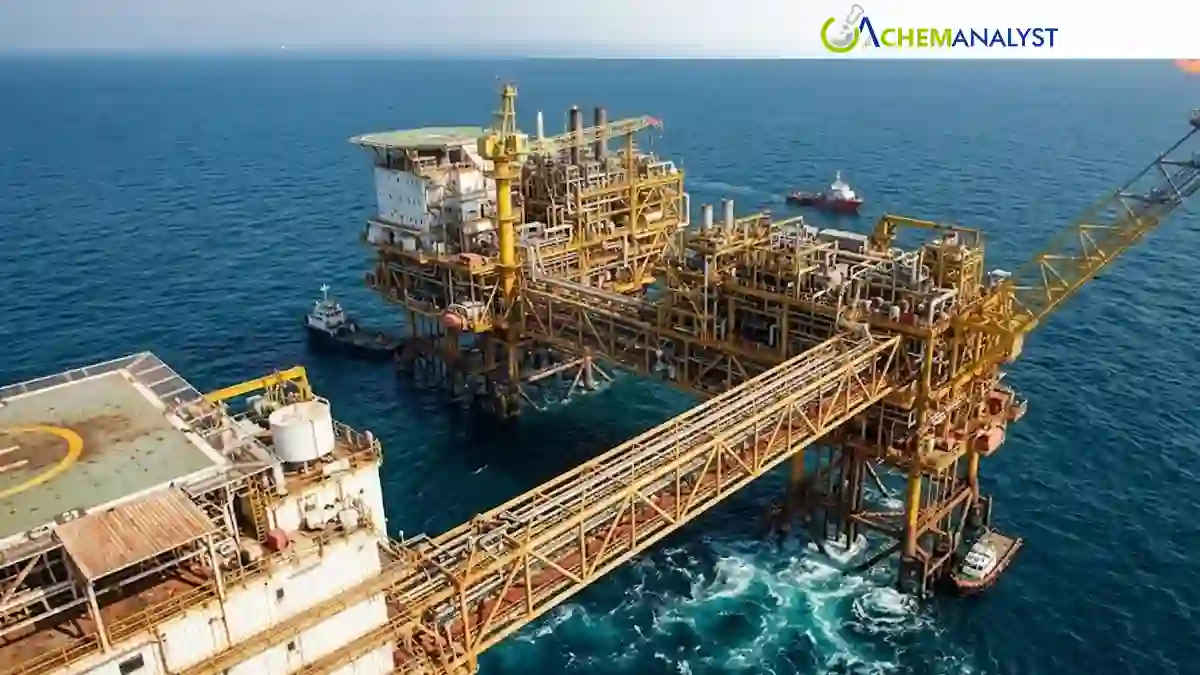
Ghana has resolved all outstanding disputes with upstream oil and gas companies, clearing the path for investment commitments worth a combined $3.5 billion. The development is expected to strengthen the country’s oil and gas sector, support production growth and improve its domestic energy supply.
Emeafa Hardcastle, director general of Ghana’s Petroleum Commission, announced the resolution on Aug. 21 in Accra while launching the regulator’s 2025 annual investment report. He said the government had fulfilled its commitment to settle disputes with upstream operators and create a more supportive environment for new investment.
The Petroleum Commission did not reveal details of the disputes that were resolved. However, the settlement follows Parliament’s decision in February to extend the operating licences for Ghana’s major Jubilee and TEN offshore fields until 2040.
Following the licence extensions, partners in the two fields — Tullow Oil, Kosmos Energy, PetroSA and Ghana National Petroleum Corporation (GNPC) — have committed up to $2 billion for the drilling of 20 additional wells over the extended licence period. Energy Minister John Jinapor has approved the development plan.
The agreement also includes an 18% reduction in the price of gas supplied from the Jubilee field. Ghana is expected to save around $300 million through the lower gas cost, potentially easing pressure on the country’s energy system.
A separate $1.5 billion commitment has been announced by the consortium operating the Offshore Cape Three Points project. The group, comprising Eni, Vitol and GNPC, plans to increase gas exports and develop the Eban-Akoma discoveries in OCTP’s Block 4.
The Eban-Akoma discoveries, declared commercially viable in July 2025, are estimated to contain between 500 million and 700 million barrels of oil equivalent. Their development could become an important contributor to Ghana’s future hydrocarbon output.
However, both investment commitments remain formal pledges under memoranda of understanding rather than finalized financing agreements. Their implementation will be important as Ghana faces declining reserves and concerns over long-term production.
According to the Public Interest and Accountability Committee, Ghana’s oil production declined from 71.44 million barrels in 2019 to 37.3 million barrels in 2025. Production has since improved, reaching 126,000 barrels per day in 2026 from 90,000 barrels per day at the beginning of the year.
The government is also preparing revisions to the Petroleum (Exploration and Production) Act, with Parliament expected to consider the legislation before year-end. The proposed changes could further shape Ghana’s investment environment.
With disruptions in global energy markets increasing the importance of reliable supply sources, Ghana’s efforts to expand oil and gas production could improve its position in regional and international energy markets.
Product Impact
The development is bullish for Ghana’s crude oil and natural gas production outlook. Additional drilling at Jubilee and TEN could increase crude output and extend the productive life of major offshore assets. The Eban-Akoma development and higher gas exports could also strengthen Ghana’s domestic and export gas availability. Lower Jubilee gas prices may reduce energy costs for domestic consumers and industrial users. However, the impact will depend on how quickly the investment pledges convert into actual drilling, infrastructure spending and production. In the near term, the announcement mainly improves Ghana’s medium- to long-term supply outlook.








 About ChemAnalyst
Leave a Comment
Comments (0)