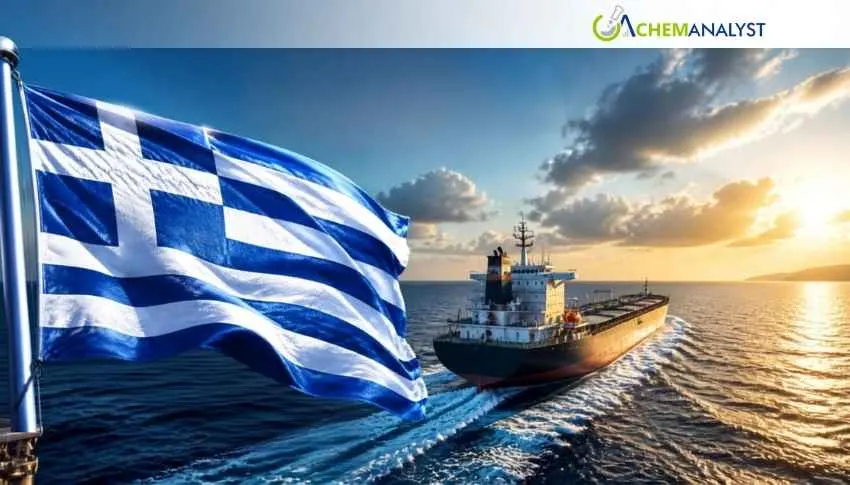
Greek shipowners are making significant investments in Very Large Ammonia Carriers (VLACs), primarily placing orders with China's Hengli Heavy Industry. This trend highlights a strategic shift towards accommodating the growing demand for ammonia and liquefied petroleum gas (LPG) transportation. These new orders position Greek shipping magnates at the forefront of an evolving segment of the maritime industry.
Several prominent Greek shipping companies have recently expanded their VLAC fleets. Capital Maritime & Trading, led by Evangelos Marinakis, ordered four 93,000 cubic meter (cbm) VLACs. These vessels are scheduled for delivery in late 2026 and early 2027. The company also secured options for two additional VLACs. George Procopiou's Evalend Shipping placed orders for two 93,000 cbm VLACs, with expected deliveries in late 2026 and early 2027. Additionally, Naftomar Shipping and Trading ordered two 93,000 cbm VLACs, anticipated for delivery in early 2027.
These new contracts significantly bolster Hengli Heavy Industry's orderbook. The Chinese shipyard, a newer entrant to the shipbuilding sector, now has at least 20 VLACs on order, all from Greek owners. Each 93,000 cbm VLAC commands a price between $115 million and $120 million. This substantial investment underscores the confidence Greek owners place in this vessel type and the shipyard.
The surge in VLAC orders is driven by a dual market demand. There is robust and increasing demand for transporting both ammonia and LPG. Crucially, ammonia is gaining traction as a potential clean marine fuel for the future. VLACs are highly versatile vessels, designed to carry both ammonia and LPG, offering operational flexibility to shipowners. This dual-cargo capability reduces risk and enhances the economic viability of these newbuilds.
The substantial orders from Greek companies demonstrate a clear strategic positioning within the shipping industry. Greek shipowners are actively investing in specialized vessels that cater to future energy transitions and growing global trade routes for gas and petrochemicals. Hengli Heavy Industry's emergence as a key builder of VLACs signals its growing influence in the global shipbuilding landscape. The shipyard, traditionally involved in petrochemicals and refining, has successfully leveraged its industrial background to enter the specialized vessel market. This trend indicates a strong outlook for the ammonia and LPG shipping sectors, with Greek owners leading the charge in fleet modernization and expansion.
Impact on Prices of Chemical Commodities Tracked by ChemAnalyst
The expansion of VLAC capacity is expected to have a gradually stabilizing effect on ammonia and LPG freight costs over the medium term, supporting more efficient global trade. Improved transportation availability could ease logistics constraints, reducing delivered costs for ammonia, LPG, and related downstream chemicals across importing markets. However, near-term commodity prices are unlikely to experience major changes because vessel deliveries are scheduled between late 2026 and early 2027. Over time, improved shipping efficiency may contribute to more balanced regional pricing for ammonia, fertilizers, petrochemical feedstocks, and LPG-derived chemicals, while supporting increased market liquidity and reducing freight-driven price volatility in ChemAnalyst-tracked commodities.








 About ChemAnalyst
Leave a Comment
Comments (0)