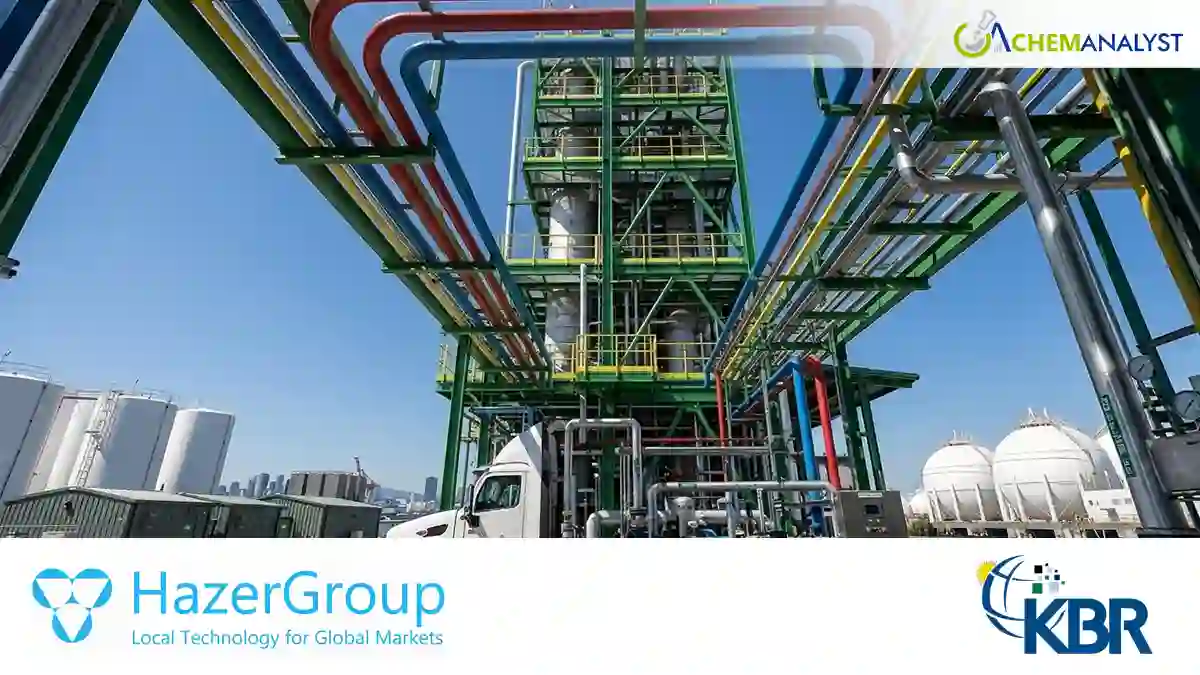
Hazer Group Ltd has announced that it has successfully completed a detailed Process Design Package (PDP) for its proprietary Hazer® Process, working in close partnership with Kellogg Brown & Root LLC. This achievement represents a significant step forward in the company’s strategy to bring its methane pyrolysis technology to global commercial markets.
According to Hazer’s CEO, Glenn Corrie, finalizing the PDP is a critical milestone that supports the company’s transition from development to commercialization. The package provides a standardized, large-scale plant design that can be readily adopted by industrial clients and project developers. This not only simplifies project planning but also creates a clear, economically viable pathway for customers to implement hydrogen production projects using the Hazer® Process. Corrie emphasized that, in collaboration with KBR, Hazer is positioning itself as a leader in methane pyrolysis by offering a scalable and cost-efficient solution at a time when global demand for secure energy and mineral supply chains is increasing.
From KBR’s perspective, Jay Ibrahim highlighted that completing the PDP marks a pivotal advancement in the collaboration between the two companies. He noted that the work demonstrates a strong commitment from both parties to push methane pyrolysis technology toward full commercial deployment. With a high level of engineering maturity now established, KBR is well positioned to adapt and customize the process to meet specific client requirements while maintaining high engineering standards.
The PDP itself plays a crucial role in enabling global deployment and licensing of the Hazer® Process. It has been developed to validate, optimize, and standardize the design of commercial-scale hydrogen production facilities. By establishing a consistent engineering foundation, the PDP supports implementation across different industries and geographic regions. The package includes a fully integrated process design, detailed equipment selection, and design philosophies aligned with internationally recognized engineering standards. This level of completeness indicates that the technology has reached a stage typically associated with advanced industrial solutions approaching widespread commercial use.
With this standardized framework now in place, both Hazer and KBR can efficiently create customized design packages for clients. These tailored versions will support feasibility studies, Licensor Basic Engineering Design (LBED), and Front-End Engineering Design (FEED) processes. Importantly, this approach allows customers to evaluate and integrate the Hazer® Process into their operations with confidence, supported by a robust and well-defined technical baseline. Conducting the PDP internally also reduces the risk of major changes during later project stages, helping control both operational (Opex) and capital (Capex) costs.
The reference design within the PDP is based on a hydrogen production facility capable of generating 30,000 tonnes per annum, confirming the scalability of the technology for large industrial applications. Furthermore, the design can be adapted for various plant sizes, ranging from smaller 10,000-tonne units to larger multi-train facilities exceeding 100,000 tonnes per annum.
Overall, this milestone strengthens the strategic alliance between Hazer and KBR by combining Hazer’s innovative technology with KBR’s global engineering and project delivery expertise. The PDP will serve as a foundational technical asset, supporting ongoing engineering work, licensing efforts, and project development activities. Its completion positions the Hazer® Process at the forefront of methane pyrolysis technologies and reinforces its credibility as a practical solution for industries seeking low-emission hydrogen production.








 About ChemAnalyst
Leave a Comment
Comments (0)