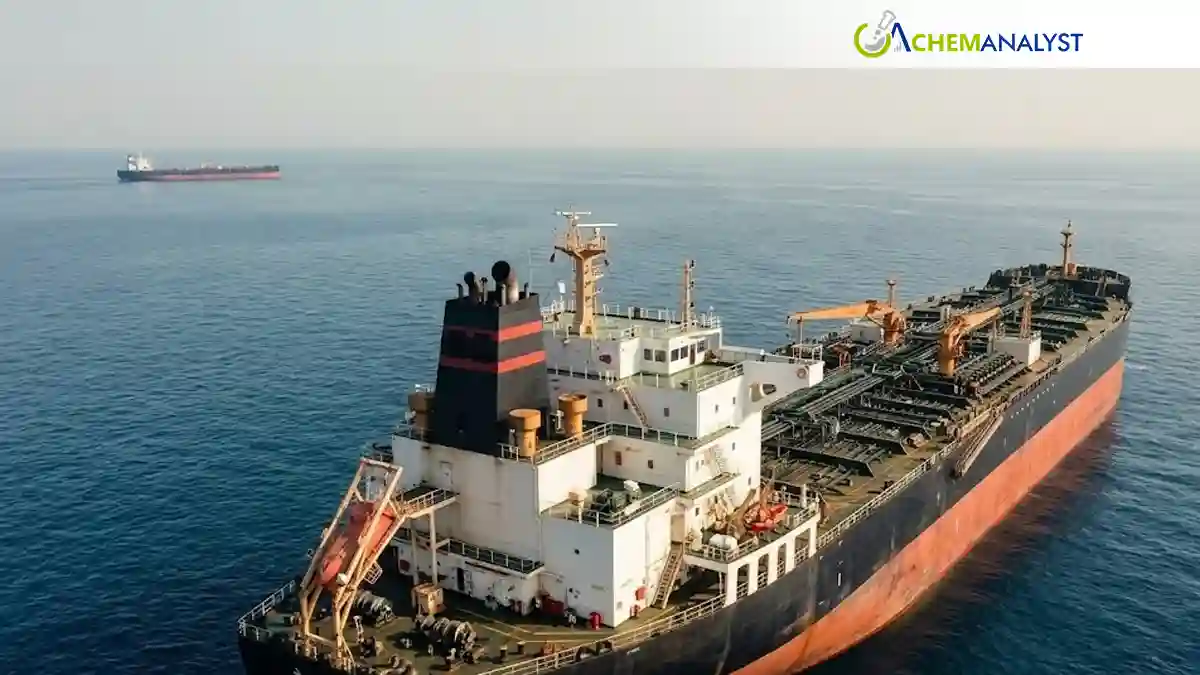
The arrival of the first India-bound liquefied natural gas (LNG) tanker through the Strait of Hormuz in more than two-and-a-half months has provided a significant boost to India’s energy supply outlook amid prolonged geopolitical tensions in West Asia. Ship-tracking data confirmed that the Liberia-flagged LNG carrier Al Hamra reached Gujarat’s Dahej port on Tuesday after successfully navigating the strategically sensitive Strait of Hormuz over the weekend, despite ongoing regional conflict and heightened security risks in the area.
The tanker, carrying nearly 62,000 tonnes of LNG sourced from Abu Dhabi National Oil Company’s (ADNOC) Das Island export facility in the Persian Gulf, docked at the Dahej LNG terminal operated by Petronet LNG. The Dahej facility is India’s largest LNG import terminal and plays a critical role in meeting the country’s growing natural gas demand. According to maritime intelligence platform MarineTraffic, the vessel had berthed at one of the terminal’s dedicated LNG unloading jetties by Tuesday afternoon.
Several reports suggested that the LNG cargo onboard belongs to state-run gas utility GAIL. The vessel itself is operated by ADNOC Logistics and Services, a subsidiary of Abu Dhabi National Oil Company. Although the shipment accounts for roughly one day of India’s LNG consumption, the successful delivery has renewed optimism regarding the resumption of regular LNG supplies from the Persian Gulf region, which had remained severely disrupted because of the conflict in West Asia and the effective shutdown of the Strait of Hormuz.
The Al Hamra reportedly employed a tactic commonly referred to in maritime circles as “going dark,” wherein ships switch off their transponders to avoid tracking and detection. Media reports indicated the vessel ceased transmitting its location data for several days while transiting the high-risk waters. This practice has become increasingly common among vessels attempting to pass through the Strait of Hormuz since tensions escalated in early March. Among the few LNG tankers that successfully crossed the chokepoint recently, many temporarily suspended tracking signals for security reasons.
The Al Hamra was among three LNG carriers that crossed the Strait over the weekend despite elevated geopolitical uncertainty. The other two ships—Fuwairit and Al Rayyan—were reportedly transporting cargoes from QatarEnergy destined for Pakistan and China, respectively. Industry estimates indicate that only seven LNG-laden vessels have traversed the Strait of Hormuz since the outbreak of the conflict involving the US, Israel, and Iran nearly three months ago.
While India has continued receiving some oil and liquefied petroleum gas (LPG) cargoes from the Persian Gulf during this period, Al Hamra became the first LNG tanker from the region to reach Indian shores since the crisis began. The Indian government has reportedly maintained diplomatic engagement with Tehran to ensure safe passage for Indian-bound vessels, particularly those carrying critical energy supplies.
The Strait of Hormuz remains one of the world’s most strategically important maritime chokepoints. Positioned between Iran and Oman, the narrow waterway connects the Persian Gulf to the Gulf of Oman and the Arabian Sea. Nearly one-fifth of global oil and LNG trade passes through this corridor, making any disruption there highly consequential for international energy markets.
India relies heavily on imported LNG to satisfy nearly half of its domestic natural gas demand. Approximately 60% of these imports typically pass through the Strait of Hormuz, primarily originating from Qatar and the UAE—two of the world’s leading LNG exporters. With shipments from the Gulf region sharply curtailed over recent months, Indian importers were forced to seek emergency cargoes from alternative suppliers amid rising global LNG prices.
To manage the supply disruption, India significantly increased LNG purchases from countries less dependent on the Strait of Hormuz. During March and April, imports from Oman surged substantially, averaging around 0.6 million tonnes per month compared to the usual 0.18 million tonnes monthly average earlier in the year. Oman’s geographic advantage, with access to the Arabian Sea and Gulf of Oman outside the Strait, enabled uninterrupted exports.
Similarly, LNG imports from the United States rose notably during the same period, averaging 0.31 million tonnes per month, up from the 2025 average of 0.24 million tonnes. African suppliers such as Nigeria and Angola also increased shipments to India, helping partially offset the supply gap left by Qatar and the UAE.
The rebound in India’s LNG imports during April was also supported by rising domestic gas consumption, particularly in the fertiliser sector. Following the disruption caused by the Strait’s closure, the Indian government had reduced natural gas allocations to fertiliser producers to about 70% of their average consumption levels as part of broader supply management efforts. However, allocations were gradually restored to nearly full capacity by May to ensure uninterrupted urea production ahead of the important Kharif agricultural season.








 About ChemAnalyst
Leave a Comment
Comments (0)