As Europe’s automotive and battery industries adapt to the increasingly demanding requirements of the EU Battery Regulation, stakeholders across the value chain are working to balance ambitious sustainability goals with the need for economic competitiveness and long-term operational viability. The new regulatory framework places significant emphasis on carbon reduction, resource efficiency, and battery traceability, compelling manufacturers and recyclers to develop innovative solutions that support a circular economy while remaining commercially feasible.
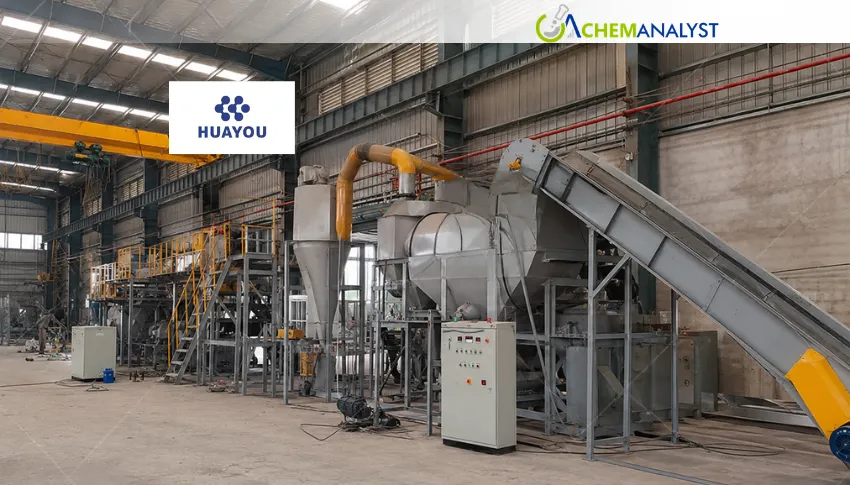
In response to these evolving market dynamics, Huayou Recycling, a global leader in lithium-ion battery lifecycle management and recycling solutions, has officially introduced its industrial-scale “Dual-Process & Dual-Chemistry” recycling matrix at the Battery Recycling Expo held in Frankfurt, Germany. The company’s latest solution is specifically designed to help Europe strengthen its battery circularity ecosystem by aligning environmental objectives with the practical realities of regional manufacturing and recycling networks.
One of the most pressing challenges facing the European battery recycling sector is the rapid diversification of battery chemistries. While lithium iron phosphate (LFP) batteries are gaining significant market traction due to their cost-effectiveness and safety advantages, recycling these batteries has traditionally been less economically attractive than processing nickel-cobalt-manganese (NCM) batteries, which contain higher-value metals. This imbalance has created a major obstacle for recyclers seeking profitable and scalable end-of-life battery management strategies.
Huayou Recycling’s newly unveiled dual-chemistry framework directly addresses this challenge by enabling the efficient processing of both LFP and NCM battery chemistries at industrial scale. The company has validated the technology’s capability to handle growing volumes of diverse battery waste streams, offering European manufacturers, recyclers, and policymakers a robust and adaptable solution for managing end-of-life batteries. By supporting both major battery chemistries, the platform provides greater flexibility and resilience to the region’s rapidly evolving battery value chain.
At the core of the solution is the integration of two complementary recycling approaches: direct recycling and hydrometallurgical processing. Rather than relying on a single methodology, Huayou Recycling dynamically selects the most appropriate process depending on the condition, degradation level, and composition of the battery cells being treated. This flexible approach helps maximize resource recovery while minimizing environmental impact.
The company notes that combining these two recycling pathways can significantly reduce carbon emissions, improve the circulation and reuse of valuable raw materials, and enhance overall cost efficiency throughout the battery lifecycle. These benefits are expected to support localized manufacturing ecosystems by ensuring a stable supply of recycled materials for future battery production while reducing dependence on virgin resources.
Huayou Recycling emphasized that collaboration remains central to its European growth strategy. According to Wei Bao, Executive Vice President of Huayou Recycling, successfully meeting the complex environmental, digital, and compliance requirements established under the EU Battery Regulation will require extensive cooperation among industry participants. He highlighted that no single organization can independently address all the challenges associated with battery circularity and sustainability.
To accelerate progress, the company is actively pursuing flexible partnership models with European stakeholders, including automotive manufacturers, battery cell producers, technology developers, and sustainability-focused organizations. These collaborations may encompass joint research initiatives, technology co-development programs, resource-sharing arrangements, and other forms of industrial cooperation aimed at establishing a fully closed-loop battery ecosystem.
By positioning itself as a sustainability-focused and adaptable partner, Huayou Recycling aims to deepen its integration within Europe’s industrial landscape. The company believes that fostering strong industrial partnerships and promoting circular resource management can transform regulatory obligations into strategic advantages, ultimately supporting the competitiveness and sustainability of Europe’s electric vehicle industry while accelerating the transition toward a low-carbon future.
Market Impact: Huayou Recycling’s introduction of its “Dual-Process & Dual-Chemistry” recycling matrix is expected to strengthen the availability of recycled battery materials across Europe, particularly for both LFP and NCM battery chemistries. The technology improves recovery rates of critical battery metals and enables more efficient recycling of end-of-life batteries, reducing dependence on virgin raw material extraction. For battery manufacturers, this could lead to a more stable and sustainable supply chain, supporting the production of electric vehicle (EV) batteries at lower lifecycle costs while helping companies comply with EU Battery Regulation requirements.
From a pricing perspective, the development is likely to exert moderate downward pressure on several battery-related commodities tracked by ChemAnalyst over the medium to long term. Increased recovery and circulation of materials such as lithium compounds, nickel sulfate, cobalt sulfate, and manganese sulfate could gradually supplement primary supply, reducing supply tightness and limiting sharp price increases. The impact may be particularly notable for cobalt and nickel-based materials used in NCM batteries.
For LFP-related value chains, greater recycling efficiency could improve the availability of lithium carbonate and lithium hydroxide, potentially contributing to price stabilization. However, the immediate market impact is expected to remain limited because recycled feedstock volumes will take time to scale. Overall, the announcement is bullish for Europe’s battery industry but mildly bearish to neutral for battery-metal prices as secondary raw material supply increases and supply-chain resilience improves.







Leave a Comment
Comments (0)