Hyundai Engineering has taken a significant step toward expanding its presence in the global critical minerals industry by officially entering the North American market through participation in the Rhyolite Ridge lithium-boron project in Nevada, United States. The company has signed a Memorandum of Understanding (MOU) with Australian critical minerals developer Ioneer to provide procurement services for the large-scale mining and processing project, reinforcing its commitment to supporting the rapidly growing electric vehicle (EV) battery and clean energy supply chains.
The agreement was signed in Washington, D.C., following a Letter of Intent (LOI) exchanged between the two companies in June. The MOU further clarifies the scope of collaboration and establishes Hyundai Engineering’s role in sourcing and procuring essential equipment and materials required for the development of the project. The signing ceremony brought together senior government and industry representatives from both South Korea and the United States, reflecting the strategic importance of the project for strengthening critical mineral supply chains. Attendees included officials from South Korea’s Ministry of Land, Infrastructure and Transport, the Korea Overseas Infrastructure and Urban Development Corporation (KIND), the U.S. Department of Energy (DOE), Hyundai Engineering, and Ioneer.
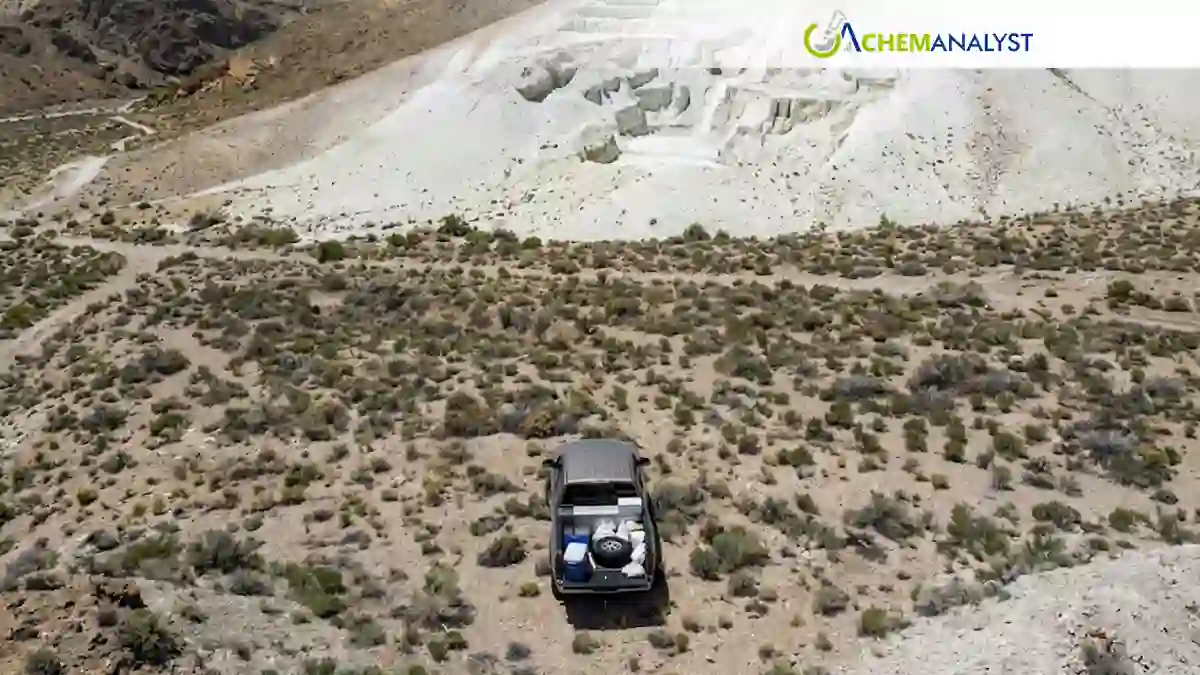
The Rhyolite Ridge project, valued at approximately $2 billion, is located in Nevada and is recognized as the largest known lithium-boron deposit in North America. Globally, it is considered one of the few deposits capable of commercially producing both lithium and boron from a single ore body, making it strategically valuable for the energy transition. Ioneer, headquartered in Sydney, Australia, owns the project entirely and plans to produce battery-grade lithium carbonate alongside boric acid directly at the mining site through advanced process optimization technologies. This integrated production approach is expected to improve operational efficiency while supporting the growing demand for critical minerals used in electric vehicle batteries, renewable energy storage systems, electronics, and industrial applications.
The project has already achieved several important milestones. In October 2024, it received its final federal permit from the U.S. Bureau of Land Management, completing the primary regulatory approval process after nearly a decade of environmental reviews and project planning. In addition, the U.S. Department of Energy has committed approximately $1 billion in financial assistance, underscoring the project's strategic importance in reducing dependence on imported critical minerals and strengthening domestic supply chains. With regulatory approvals secured and financing progressing, the project is transitioning into its construction and operational development phase.
As part of the partnership, Hyundai Engineering will oversee procurement activities for major equipment, industrial systems, and construction materials. The company views this project as an important gateway to expand its engineering and procurement expertise across North America's emerging critical minerals processing sector. Beyond supporting the Nevada development, Hyundai Engineering intends to leverage its experience to secure additional contracts in lithium, rare earths, and other strategic mineral processing projects worldwide.
The collaboration may also receive additional support from KIND, which is currently evaluating a potential equity investment in the project. Such participation would further strengthen cooperation between the South Korean government, policy finance institutions, and private companies while enhancing long-term access to essential raw materials for Korean industries.
According to Hyundai Engineering, participation in the Rhyolite Ridge development represents a major milestone because it aligns with the U.S. government's efforts to establish resilient and diversified critical mineral supply chains. The company emphasized its commitment to executing the project successfully while expanding its footprint in the global critical minerals infrastructure market.
Separately, Hyundai Engineering continues to strengthen its broader engineering portfolio. The company recently completed the Rene Square development in Seoul's Euljiro 3-ga District 6 redevelopment area, demonstrating its expertise in large-scale urban construction alongside its growing presence in industrial and energy infrastructure projects.
Impact on Product and ChemAnalyst-Tracked Chemical Commodities
The Rhyolite Ridge lithium-boron project is expected to strengthen the long-term supply outlook for lithium carbonate and boric acid in North America, supporting the region's growing electric vehicle, energy storage, glass, ceramics, fertilizer, and specialty chemicals industries. While the project will have little immediate impact during its construction phase, it is set to reduce reliance on imported lithium products and enhance regional supply security once operational. Increased domestic production is likely to improve supply chain resilience and ease future supply constraints. For chemical commodities tracked by ChemAnalyst, including lithium carbonate, lithium hydroxide, boric acid, and downstream battery materials, the project is expected to bring greater market stability over the medium to long term. As new production capacity comes online, supply risks may decline, reducing price volatility and procurement uncertainty. Overall, the project is expected to maintain stable to moderately bearish pricing trends for lithium-related chemicals while supporting a more resilient North American critical minerals supply chain.







 About ChemAnalyst
Leave a Comment
Comments (0)