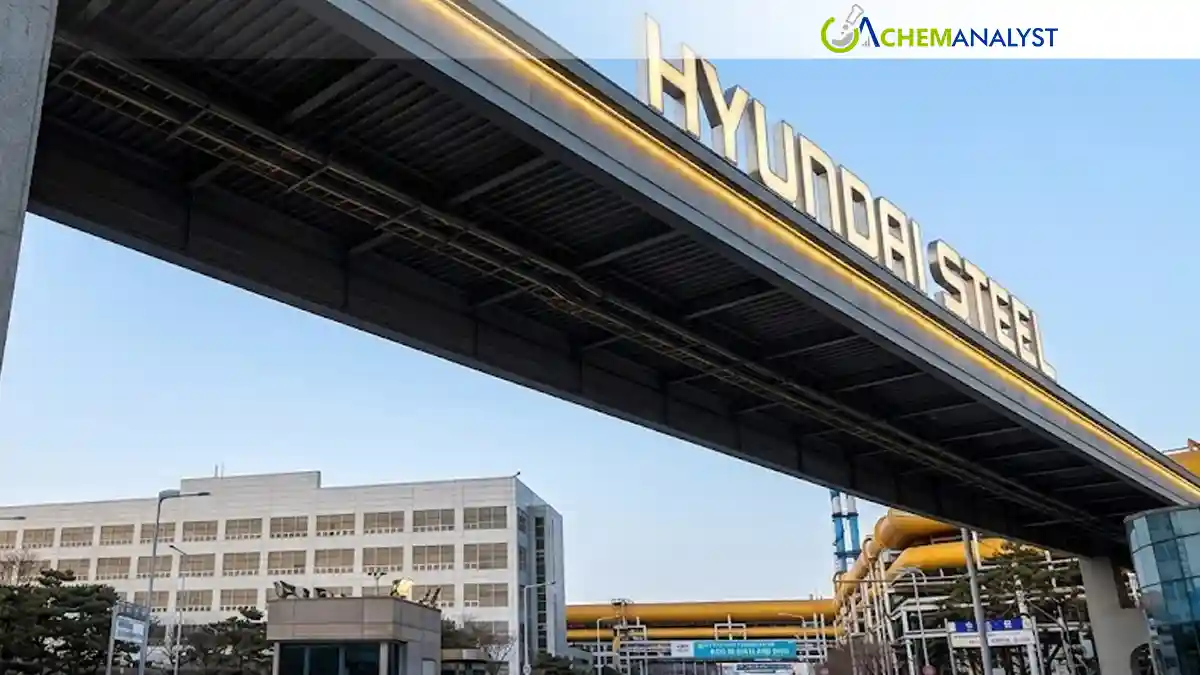
Hyundai Steel has partnered with Norwegian classification society DNV to strengthen the technological competitiveness of steel products designed for the transportation and storage of future energy sources. The collaboration is expected to support the growing demand for reliable materials used across hydrogen and ammonia infrastructure.
The companies signed a memorandum of understanding (MoU) on August 10 at DNV’s Korean headquarters for its classification business division in Busan’s Haeundae district. Under the agreement, Hyundai Steel and DNV will establish a certification framework for future-energy steel and welding technologies while jointly developing advanced evaluation and verification methods.
The partnership will focus on several key areas. These include developing technologies to evaluate and verify the performance of steel used in future-energy transportation and storage applications. The companies will also establish testing and assessment methods that reflect actual operating conditions, helping determine how steel performs under demanding service environments.
Another major focus will be the reliability of welded joints. Since welding plays a critical role in the construction of storage tanks, vessels, pipelines, offshore facilities, and other energy infrastructure, verifying the durability and safety of welded connections will be essential for commercial deployment.
The two companies also plan to expand a certification foundation aligned with international standards. Such certification could help manufacturers and energy companies demonstrate that steel products meet stringent safety and performance requirements for global applications.
The initiative comes as hydrogen and ammonia gain importance as lower-carbon energy carriers. Both commodities are expected to play a growing role in international energy transportation, particularly through specialized ships, storage facilities, offshore infrastructure, and related equipment. As these markets expand, demand for materials capable of operating safely under challenging conditions is likely to increase.
Hyundai Steel will contribute its research infrastructure and expertise in material development, testing, and evaluation. The company will conduct testing and analysis of steel products and welded joints. DNV will contribute its experience in international standards, classification, certification, and technical assessment to help establish appropriate evaluation criteria.
Through the partnership, Hyundai Steel aims to strengthen its capabilities across the entire value chain, from steel product development and performance testing to certification. The collaboration could also help the company respond more effectively to global demand for materials used in emerging energy systems.
Hyundai Steel said the partnership with DNV will help improve the performance and reliability of steel required by the global energy market while supporting the development of technologies aligned with international standards.
Product Impact & Chemical Commodity Price Impact
The partnership is likely to benefit specialized steel used in hydrogen and ammonia transport and storage by improving certification, reliability, and global market acceptance. Stronger testing and international certification could accelerate adoption of Hyundai Steel’s products in ships, tanks, offshore facilities, and related infrastructure. For chemical commodities tracked by ChemAnalyst, the direct price impact should remain limited initially because the agreement is technology- and certification-focused rather than a major capacity expansion. However, stronger infrastructure for hydrogen and ammonia transportation could support long-term demand for ammonia and hydrogen, potentially creating modest upward price pressure as energy-transition investment expands. Steel demand could also increase gradually.







Leave a Comment
Comments (0)