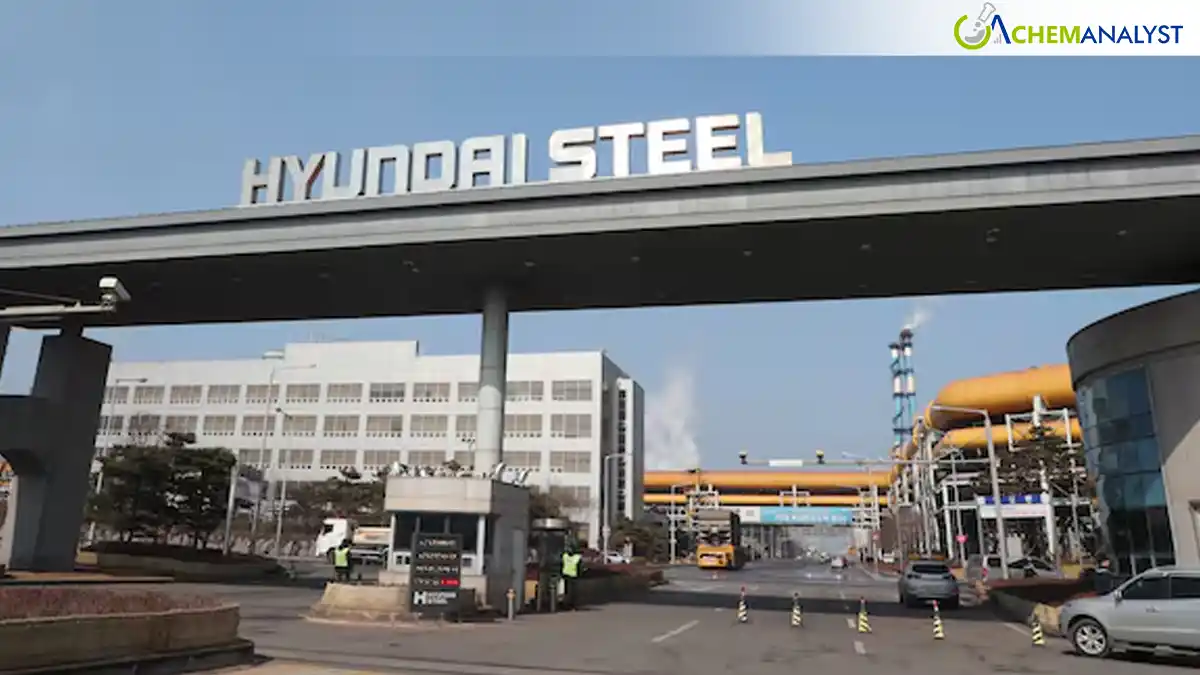
Hyundai Steel has announced plans to construct a pilot-scale facility for the production of direct reduced iron (DRI) at its Dangjin Steelworks, located in South Chungcheong Province. The move is aimed at accelerating the company’s transition toward low-carbon steelmaking and supporting preparations for a major steel mill project in the United States. DRI is produced by chemically removing oxygen from iron ore in a solid state, without melting the ore, making it a cleaner alternative to traditional blast furnace ironmaking.
According to sources within the steel industry, construction of the DRI pilot facility at Dangjin Steelworks has already begun. The pilot unit is designed to manufacture approximately 30 kilograms of reduced iron per hour. Hyundai Steel intends to commence trial operations of the facility next year, using it to test and refine multiple DRI production processes. Insights gained from these trials will be applied directly to the design, construction, and early-stage operation of its upcoming steel mill in Louisiana.
DRI technology relies on natural gas or hydrogen as reducing agents to strip oxygen from iron ore pellets. Compared with conventional blast furnace routes, the process can deliver iron with similarly high purity while significantly lowering carbon dioxide emissions. In addition, DRI-based steelmaking generally requires lower capital expenditure, making it an increasingly attractive option as steelmakers worldwide respond to tightening environmental regulations and decarbonization targets.
Hyundai Steel selected Dangjin as the location for the pilot facility because the site already hosts a hydrogen production plant that has been operating since 2016. The Dangjin hydrogen facility produces ultra-high-purity hydrogen at 99.999%, exceeding the typical 99.99% purity level achieved by many other hydrogen plants. Leveraging this capability, Hyundai Steel plans to intensively test hydrogen-based direct reduction methods, which are seen as a cornerstone technology for future low-emission steel production.
The large-scale steel mill planned for Louisiana, which is scheduled to break ground this year, will also employ the DRI process. With an investment of approximately $5.8 billion, the project is positioned as the world’s first fully integrated electric-arc-furnace steel mill of its kind. Once operational, the Louisiana facility is expected to produce around 2.7 million tons of steel products annually, primarily serving regional automotive manufacturers such as Hyundai Motor, Kia, Ford, and General Motors.
At the U.S. site, Hyundai Steel plans to construct a massive DRI reactor tower rising roughly 100 meters in height. In this unit, iron ore pellets—made by compressing and firing iron ore fines into spherical shapes—will react with reducing gases to produce DRI. Compared with traditional blast furnaces, which rely on carbon monoxide generated from coke, the DRI route can reduce carbon emissions by as much as 70%.
The Dangjin pilot facility will be approximately one-hundredth the scale of the equipment to be installed in Louisiana. Despite its smaller size, it will play a critical role in gathering operational data, including the cost and efficiency of reducing agent inputs, process stability, and methods for capturing and managing exhaust gases. By analyzing this data, Hyundai Steel aims to shorten the ramp-up period for stable operations at the Louisiana mill and ensure the consistent production of high-grade automotive steel sheets.
To support this expansion, Hyundai Steel last year doubled the size of its North American business division, which is responsible for overseeing the Louisiana project. The company has also strengthened its low-carbon technology office by increasing staffing levels to accelerate development of hydrogen-based reduction technologies.
A company official explained that the decision to build the Dangjin pilot facility was driven by the need to secure first-phase DRI production technologies and establish standardized manufacturing processes for the Louisiana mill. The official added that identifying potential technical challenges in advance will allow Hyundai Steel to prepare mitigation strategies and stabilize large-scale operations in the U.S. as quickly as possible.







Leave a Comment
Comments (0)