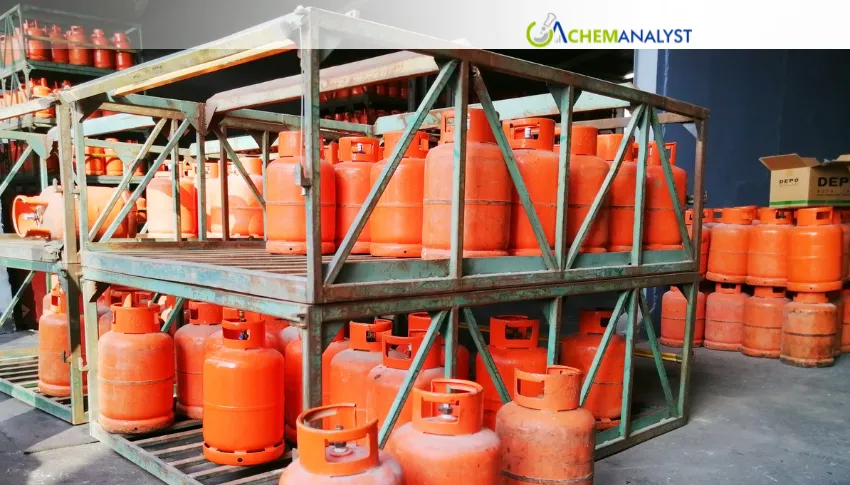
India has introduced daily production targets for state-owned and private-sector refiners to strengthen domestic liquefied petroleum gas (LPG) supplies amid disruptions caused by the Middle East conflict. The move aims to ensure adequate cooking gas availability and create supply buffers as disruptions to regional energy trade threaten India’s access to imported LPG.
According to a government order issued on August 13, India has established a maximum nationwide LPG production target of 63,810 metric tons per day. Refiners will be required to meet specified production levels and maintain sufficient infrastructure for storing and transporting LPG. Companies can use their own facilities or rely on railways and road tankers to ensure the required volumes reach domestic markets.
The government will review and update the production targets twice a year, in January and July. The revisions will account for additional production capacity as well as higher output from existing refineries. This mechanism is intended to provide greater flexibility as domestic LPG demand and refining capacity change.
India had been heavily dependent on imports from the Middle East to meet its cooking gas requirements. Before the disruption caused by the conflict involving the United States, Israel and Iran, around 90% of India’s LPG imports came from Middle Eastern suppliers. Disruptions to shipping through the Strait of Hormuz have since raised concerns about the availability and security of imported LPG supplies.
Under the new framework, individual refiners have been assigned specific production targets. Reliance Industries Ltd.’s refinery, which primarily serves the domestic market, has been given a target of 18,000 metric tons of LPG production per day. This makes Reliance one of the largest contributors to the government’s effort to increase domestic LPG availability.
State-owned energy companies Oil and Natural Gas Corp. (ONGC) and Oil India Ltd., along with gas utility GAIL India Ltd., are also expected to play a significant role. Together, these companies are expected to contribute around 10% of the nationwide production target.
The policy reflects India’s broader effort to strengthen energy security and reduce vulnerability to international supply disruptions. Higher domestic LPG production, improved storage capacity and reliable transportation networks could help cushion the impact of geopolitical tensions on cooking gas availability and prices.
The government’s decision also signals a stronger focus on domestic refining and distribution capabilities as India seeks to reduce its exposure to volatile international LPG markets.
Product and Chemical Commodity Price Impact
The policy is likely to support LPG availability in India and reduce the immediate impact of Middle Eastern supply disruptions. Higher domestic production and stronger inventories could limit sharp increases in LPG prices by reducing dependence on imports. However, international LPG prices may remain elevated if Strait of Hormuz disruptions persist, keeping import-linked costs under pressure. For chemical commodities tracked by ChemAnalyst, higher domestic LPG and refinery output could provide some relief for feedstock-sensitive products, particularly those linked to propane and related hydrocarbons. Conversely, sustained geopolitical risks and higher crude and gas prices could increase production costs for petrochemicals, potentially supporting chemical prices.







 About ChemAnalyst
Leave a Comment
Comments (0)