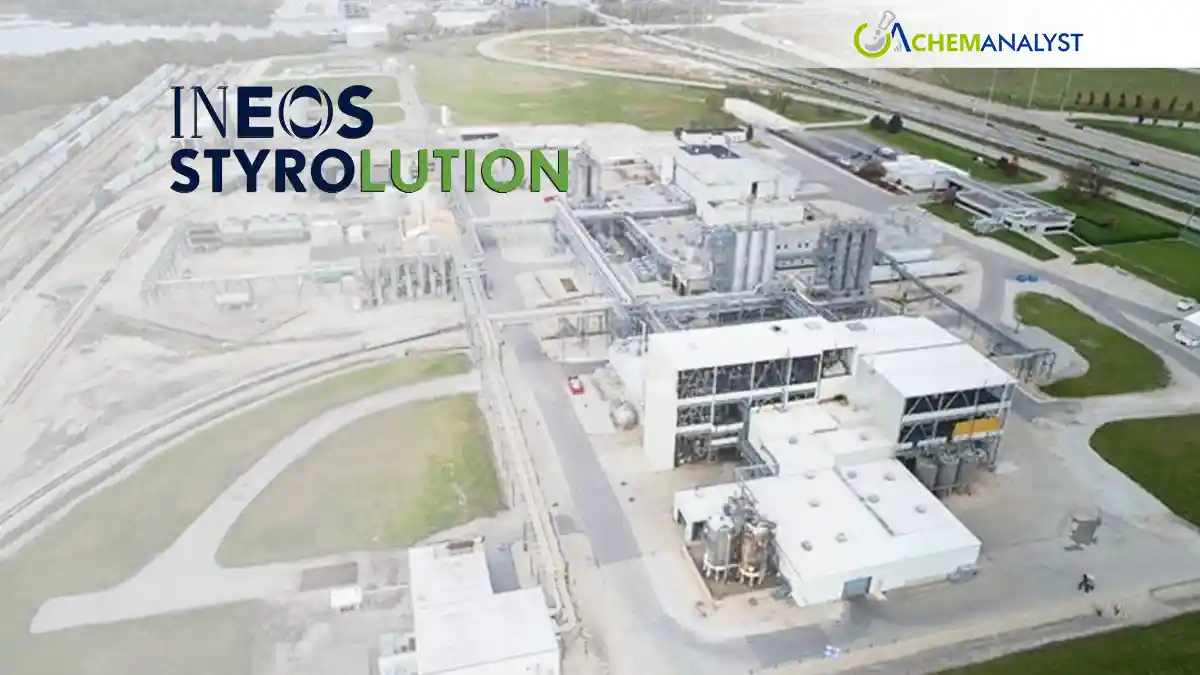
INEOS Styrolution has revealed plans to permanently shut down its polystyrene (PS) production facility located in Channahon, Illinois, as part of a broader restructuring initiative aimed at strengthening the competitiveness of its North American operations. The decision reflects the company's response to persistent economic pressures that have continued to impact profitability across the regional polystyrene market.
According to the company, shutdown and decommissioning activities at the Channahon site will proceed over the coming months and are expected to be fully completed by the fourth quarter of 2026. The facility currently employs approximately 100 people and has been an important part of the company’s manufacturing network for decades. Operating since 1960, the plant has an annual production capacity of roughly 400,000 metric tons of polystyrene, serving a variety of downstream industries.
The closure comes against the backdrop of prolonged industry challenges, particularly excess production capacity and weak profit margins that have significantly affected the economics of polystyrene manufacturing in North America. INEOS Styrolution indicated that these market conditions have necessitated difficult but strategic decisions regarding its production footprint.
Steve Harrington, Chief Executive Officer of INEOS Styrolution, stated that sustained margin pressure continues to threaten the long-term viability of the company’s North American operations. He explained that management conducted an extensive assessment of market trends, industry operating rates, production costs, and future business prospects before determining that maintaining operations at the Channahon facility was no longer financially sustainable. Despite the closure, Harrington emphasized the company’s continued confidence in the long-term relevance and value of polystyrene as a versatile material used across numerous applications.
Recognizing the human impact of the decision, Harrington expressed appreciation for the dedication and professionalism demonstrated by employees at the Channahon plant over many years. He stressed that the closure was driven solely by unfavorable market conditions and structural industry issues rather than any shortcomings in workforce performance or operational commitment.
As part of the restructuring effort, INEOS Styrolution will streamline its North American polystyrene manufacturing network by reducing the number of production sites from three to two. Future PS production will be concentrated at the company’s facilities in Decatur, Alabama, and Altamira, Mexico. Management believes that consolidating manufacturing activities into fewer, more efficient sites will improve operational reliability, enhance cost efficiency, and support the company’s long-term competitiveness in an increasingly challenging market environment.
The company also reaffirmed its commitment to serving customers throughout North America. It will continue supplying polystyrene products to key end-use sectors such as healthcare, packaging, household appliances, and construction. Greg Fordyce, President of INEOS Styrolution Americas, highlighted the importance of polystyrene, citing its versatility, performance characteristics, cost-effectiveness, and potential role in supporting circular economy initiatives. He noted that concentrating production within a more efficient asset base will strengthen the company’s ability to provide reliable supply while maintaining a competitive position in the marketplace.
Importantly, the company confirmed that its Americas Regional Development Center (RDC), currently situated at the Channahon location approximately 45 miles southwest of Chicago, will remain operational. The RDC will continue to play a critical role in research, innovation, product development, and market expansion activities across the company’s styrenics portfolio.
Throughout the transition process, INEOS Styrolution stated that employee assistance programs, workforce support measures, and strict safety standards will remain central priorities as the company manages the closure and decommissioning of the facility.
Market Impact: The closure of INEOS Styrolution’s 400,000 metric ton per year polystyrene (PS) facility in Channahon, Illinois, is expected to have a notable impact on the North American styrenics market. By removing a significant volume of PS production capacity, the company aims to address persistent oversupply conditions that have pressured margins across the industry. In the short term, the market is likely to remain adequately supplied as INEOS shifts production to its facilities in Alabama and Mexico. However, the reduction in overall regional capacity could gradually tighten supply-demand fundamentals, particularly during periods of strong seasonal demand.
For polystyrene products, the move is expected to improve operating rates at the remaining facilities, enhancing production efficiency and potentially supporting healthier margins. End-use sectors such as packaging, appliances, healthcare, and construction may experience a more balanced supply environment rather than the oversupplied conditions seen in recent years.
From a ChemAnalyst pricing perspective, Polystyrene (GPPS and HIPS) prices in North America could receive upward support over the medium term as capacity rationalization reduces excess supply. The impact is likely to be moderate rather than immediate, given the availability of alternative production sources within the region.
The announcement may also indirectly support prices of Styrene Monomer, the key feedstock for PS, by improving downstream demand utilization rates. However, any substantial increase in styrene prices will depend on broader supply-demand dynamics and feedstock benzene and ethylene costs. Other styrenic derivatives such as ABS and EPS are expected to see limited direct impact, though improved market sentiment across the styrenics value chain could lend modest price stability. Overall, the move is likely to be mildly bullish for North American PS pricing over the longer term.







Leave a Comment
Comments (0)