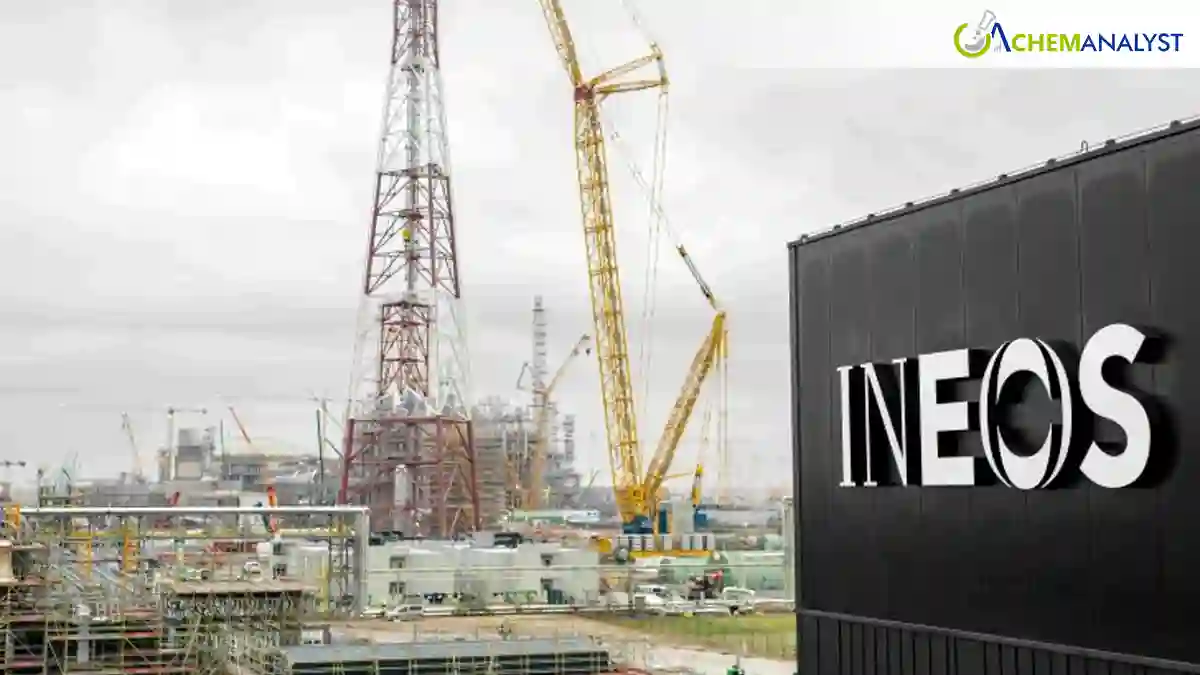
Sir Jim Ratcliffe has raised a critical question for the future of Europe’s petrochemical sector: could INEOS’ Project ONE become the final major investment in Europe’s petrochemicals industry? This concern comes at a time when the continent is witnessing widespread industrial decline, with manufacturing closures increasing and major companies shifting their focus toward regions like the United States and China.
INEOS is making a significant commitment to Europe by investing €4.5 billion in Project ONE, a world-scale and technologically advanced petrochemical complex being developed in Antwerp, Belgium. This facility represents one of the most important industrial investments in the region in recent decades and is expected to become the first new cracker built in Europe in the last 30 years. At a time when confidence in Europe’s industrial competitiveness is weakening, this project stands as a rare example of long-term commitment to the region’s manufacturing base.
The European chemical industry, valued at nearly one trillion euros, remains one of the continent’s most important economic pillars. It supports a wide range of sectors that are fundamental to everyday life and national resilience, including healthcare, pharmaceuticals, food production, clean water systems, technology, telecommunications, energy infrastructure, and defence. The production of ethylene, which will be the core output of Project ONE, is especially important because it serves as a key building block for countless downstream chemical products used across these industries.
Project ONE is designed to be Europe’s most energy-efficient ethylene cracker, significantly outperforming traditional facilities in terms of environmental performance. According to INEOS, the plant will reduce carbon emissions by approximately two-thirds compared to the average European cracker. This makes it not only an industrial investment but also a major step toward supporting Europe’s broader climate and decarbonisation goals.
However, despite its clear environmental benefits and strategic importance, the project has not received financial support from major European Union funding programs, including the Innovation Fund. This fund specifically aims to promote industrial decarbonisation, energy transition, and climate neutrality while strengthening Europe’s industrial competitiveness. INEOS argues that if a project like Project ONE does not qualify for support under such initiatives, it raises serious questions about how these funding programs define strategic climate investment.
Over the last three years alone, Europe has seen around 200 industrial closures in the petrochemical and related manufacturing sectors. Many companies are choosing to invest elsewhere due to lower energy costs, more favorable regulations, and stronger government support. This trend has created growing concern that Europe is gradually losing its position as a global industrial leader.
The European Commission has recently introduced a new initiative known as the ETS Investment Booster, aimed at encouraging industrial decarbonisation through financial backing. Sir Jim Ratcliffe believes this new fund must prioritize practical, high-impact projects already under development, such as Project ONE. Without meaningful support for real-world investments, industrial confidence in Europe may continue to decline.
Ratcliffe warns that if Europe fails to back strategic projects like this, it risks losing not only investment but also long-term security over essential raw materials. Petrochemicals are not optional—they are central to modern life and national security. Europe needs these materials to operate hospitals, maintain food supply chains, develop clean technologies, and strengthen defence capabilities.
Project ONE is therefore more than a single plant—it is a test of Europe’s willingness to protect its industrial future. Without proper institutional support, INEOS fears this landmark investment could become the last major petrochemical project Europe sees for decades.






Leave a Comment
Comments (0)