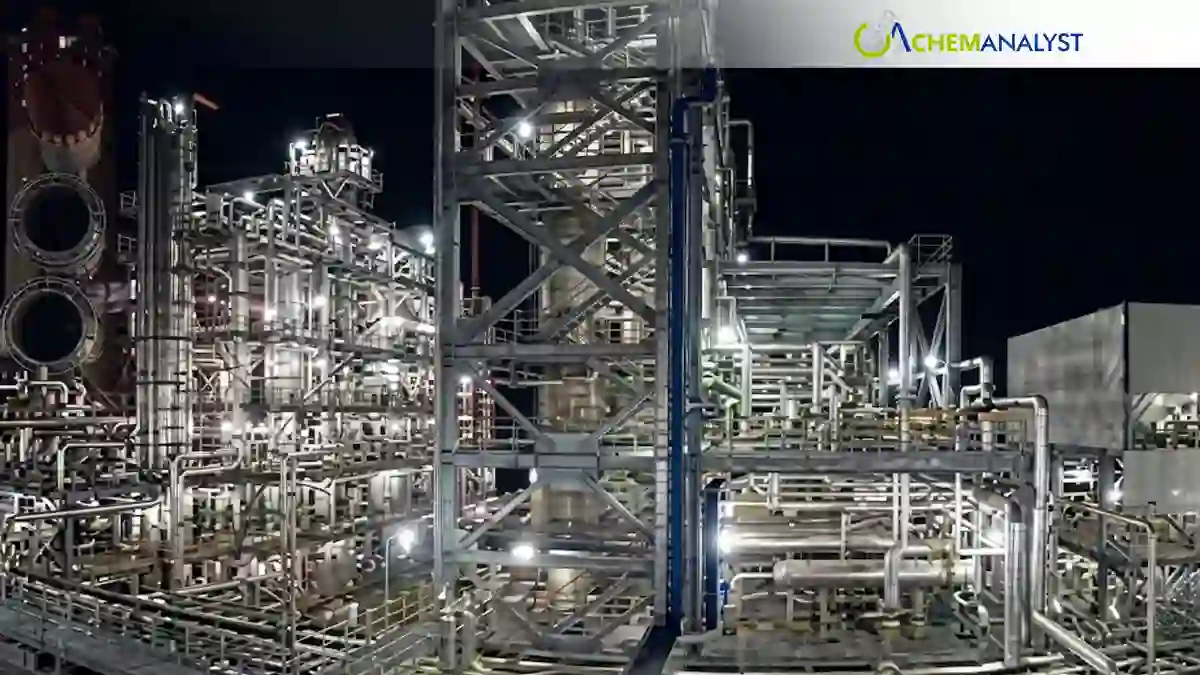
Kazakhstan is set to undertake one of its most significant industrial investments in recent memory with the approved construction of a large-scale ammonia and urea production complex in the Caspian port city of Aktau. The project, valued at approximately 804.2 billion tenge — equivalent to around US$1.6 billion — marks a pivotal moment in the country's ambition to achieve greater self-reliance in agricultural inputs and chemical manufacturing.
The initiative gained official momentum after Kazakhstan's Ministry of Industry and Construction entered into a formal investment agreement with KazAzot Prime, the project's primary developer. The venture was subsequently sanctioned at the highest levels of government when Prime Minister Olzhas Bektenov issued a formal decree, cementing the state's commitment to seeing the project through to completion. This dual endorsement from both the ministry and the office of the Prime Minister underscores the strategic importance placed on this facility by Kazakhstan's leadership.
Construction is anticipated to be completed and operations launched by 2030. During the building phase alone, the project is expected to generate approximately 1,500 jobs, providing a significant boost to the local economy in Aktau and the surrounding region. Once fully operational, the complex will sustain around 700 permanent employment positions, offering long-term economic benefits to the workforce.
In terms of production output, the facility has been designed with impressive capacity targets. It is projected to manufacture up to 660,000 tonnes per year of ammonia, around 580,000 tonnes of urea, and 500,000 tonnes of ammonium nitrate annually. These figures represent a substantial leap forward in Kazakhstan's domestic nitrogen fertilizer manufacturing capabilities.
One of the most pressing motivations behind this investment is Kazakhstan's current inability to produce urea domestically. At present, the country is entirely reliant on imports — primarily from neighboring nations — to satisfy the fertilizer demands of its agricultural sector. This dependency not only creates supply vulnerabilities but also increases costs for local farmers. The new complex is specifically intended to address this gap by supplying domestically produced fertilizer, thereby reducing reliance on foreign sources and cutting logistical costs for the agricultural community.
Beyond domestic supply, authorities anticipate that the facility will meaningfully enhance Kazakhstan's export potential in the global nitrogen fertilizer market. As the only nitrogen fertilizer producer currently operating in Kazakhstan, KazAzot holds a unique position, though this landscape is expected to evolve as KazESTA and KMG PetroChem — in collaboration with CNPC-Aktobemunaigas — advance their own urea development projects.
With all planned investments factored in, Kazakhstan is projected to reach a combined ammonia production capacity of 2.3 million tonnes per year by 2030, positioning the country as a meaningful regional player in fertilizer production.
Kazakhstan's $1.6B Ammonia-Urea Complex: Price Impact on Key Commodities
Kazakhstan's planned complex — producing 660,000 tpy of ammonia, 580,000 tpy of urea, and 500,000 tpy of ammonium nitrate — will meaningfully reshape nitrogen fertilizer markets, but only from 2030 onwards.
Ammonia: New Central Asian supply will offer APAC and South Asian buyers an alternative to Middle East sources, applying modest downward pressure on import prices.
Urea: Since Kazakhstan currently imports all its urea, adding 580,000 tpy of domestic production eliminates that demand and creates exportable surplus — a bearish signal for regional prices.
Ammonium Nitrate: Kazakhstan's entry as a large-scale producer intensifies Central Asian competition, likely pressuring export prices into South Asia and Europe.
Near-term prices remain driven by gas costs and geopolitics. The medium-to-long term outlook is moderately bearish across all three commodities as Kazakhstani supply hits global markets.







Leave a Comment
Comments (0)