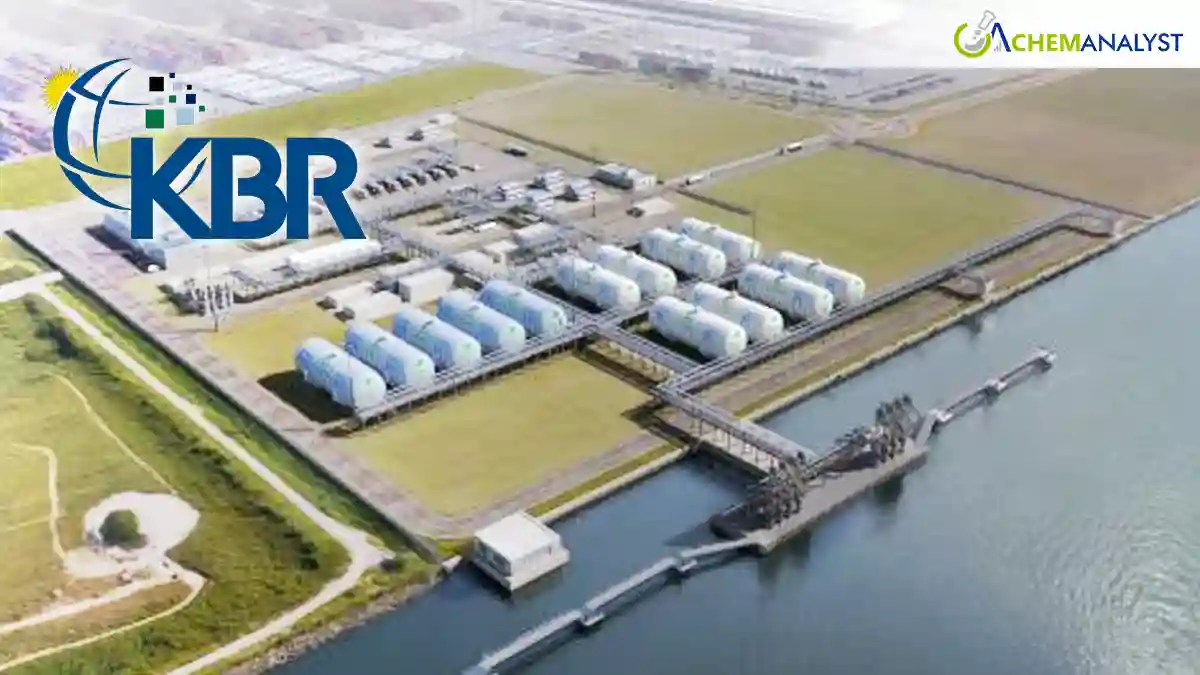
KBR has been appointed to carry out the Front-End Engineering Design (FEED) for the pioneering EcoLog Terminal in Amsterdam—a landmark project set to become the world’s first commercial-scale facility dedicated to importing liquid hydrogen (LH2) and exporting liquid carbon dioxide (LCO2). Currently under development at the Port of Amsterdam, the terminal represents a transformative step toward establishing large-scale hydrogen and carbon management infrastructure globally.
Positioned at one of Europe’s most critical logistics and energy hubs, the EcoLog Terminal is expected to play a central role in accelerating decarbonization across key industrial sectors. These include steel manufacturing, heavy-duty transportation, maritime operations, and data center energy systems throughout Northern Europe. By enabling access to cleaner energy carriers and efficient carbon handling, the facility will contribute significantly to Europe’s long-term net-zero ambitions.
Scheduled for completion by the end of 2030, the terminal will be equipped to receive, store, and distribute both liquid and gaseous hydrogen. In parallel, it will manage LCO2 streams, facilitating their reuse or permanent storage in offshore or international locations. The project’s initial operational capacity is projected at approximately 200,000 tonnes per year of LH2 and 1.8 million tonnes of LCO2. Future expansion phases could see these volumes increase substantially to 600,000 tonnes and 4.25 million tonnes respectively, reflecting the anticipated growth in hydrogen demand and carbon capture initiatives.
A key component of the project involves the development of specialized liquid hydrogen carriers. These next-generation vessels are being designed specifically to transport LH2 at scale and will directly connect to the terminal, forming a crucial link in the emerging hydrogen supply chain.
Under its FEED contract, KBR Inc. will establish the technical and engineering framework for the facility. This includes defining the terminal’s design basis, cryogenic storage systems, safety protocols, and operational parameters. The FEED phase, expected to conclude in 2026, will lay the groundwork for what is considered a first-of-its-kind commercial LH2 import system.
KBR brings extensive expertise to the project, including decades of experience in complex energy infrastructure and prior involvement in liquid hydrogen systems developed in collaboration with NASA. This technical background positions the company to set new global standards in hydrogen engineering and cryogenic technologies.
The EcoLog Terminal is also designed to create a fully integrated value chain for both hydrogen and carbon dioxide. It will connect future production hubs worldwide with industrial demand centers across Europe, enabling seamless cross-border energy and carbon flows. The infrastructure will support multiple transportation modes, including dual hydrogen pipelines (both high- and low-pressure), a dedicated CO2 pipeline, truck loading facilities, barge terminals, and rail connectivity.
One of the project’s most innovative features is the planned reuse of cold energy generated during the regasification of liquid hydrogen. This energy will be harnessed to liquefy CO2, significantly improving overall efficiency and sustainability of the system while reducing energy losses.
From EcoLog’s perspective, the initiation of the FEED phase marks a major milestone. The company views the terminal as a cornerstone project that will help unlock Europe’s decarbonization potential and strengthen its clean energy supply chains.
Beyond its immediate commercial value, the EcoLog Terminal presents a unique opportunity to establish international engineering standards for the safe transport, storage, and handling of liquid hydrogen. As global momentum toward low-carbon energy intensifies, this project reinforces KBR’s growing presence in hydrogen solutions, CO2 management, and advanced cryogenic infrastructure.







Leave a Comment
Comments (0)