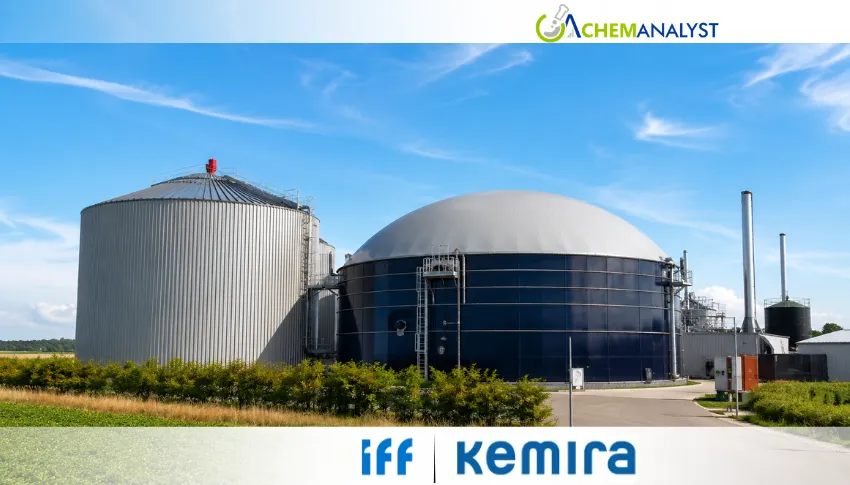
Kemira and IFF have jointly announced a significant update to their previously disclosed plans concerning the manufacturing footprint of their Alpha Bio joint venture, which is focused on the commercial-scale production of biobased materials. In a strategic revision to earlier communications, the two companies have confirmed that project engineering and permitting activities will now be redirected to Hanko, a location in Southern Finland, marking a departure from the originally designated site.
Following a comprehensive and detailed site evaluation process, the decision has been made to transition the planned manufacturing facility away from IFF's Kotka site and relocate it to another IFF-operated manufacturing plant situated in Hanko — both of which are located within the Southern Finland region. The IFF Hanko facility is an established and specialized production site, primarily serving the industrial enzymes segment across key sectors including home and personal care, as well as food and beverage. This existing infrastructure and operational expertise at the Hanko site were central considerations in the relocation decision.
The Alpha Bio joint venture, which was originally unveiled in 2025, represents a substantial combined capital commitment estimated at approximately EUR 130 million. Both Kemira and IFF will maintain equal ownership, each retaining a 50% equity stake in the venture, consistent with the terms established at its inception. However, as a consequence of the site transition and the associated re-engineering and permitting work now required, the anticipated timeline for the commencement of commercial production has been revised. The start of commercial-scale output is now projected for 2029, compared to the initial estimate of late 2027 — a delay of approximately two years attributed to the complexities involved in shifting the project's physical foundation to a new location.
Despite this timeline adjustment, the core technological and commercial strategy underpinning the joint venture remains firmly intact. The venture will continue to build upon and leverage IFF's proprietary Designed Enzymatic Biomaterial™ (DEB) technology platform — an innovative system that utilizes plant-based sugars as raw inputs to manufacture high-performance biobased materials suitable for a broad spectrum of industrial applications. This technology positions the joint venture at the forefront of sustainable materials innovation, addressing growing industry demand for environmentally responsible alternatives to conventional petroleum-derived materials.
In terms of market access and commercialization rights, Kemira retains its global exclusivity for the deployment and commercialization of DEB-based solutions specifically within the Paper, Board, and Water Treatment markets — a strategic arrangement that continues to define Kemira's differentiated role within the partnership and reinforces its commitment to advancing sustainable chemistry across these sectors.
Market Outlook: Implications for Chemical Commodities
Industry analysts indicate that the relocation and subsequent delay of the Kemira-IFF joint venture will have minimal immediate impact on the chemical commodity prices currently tracked by platforms like ChemAnalyst.
The primary commodities adjacent to this development are traditional, petroleum-based synthetic polymers—specifically Polyacrylamide (PAM) and its precursor, Acrylamide, which are heavily utilized in the paper, board, and water treatment sectors.
Market observers point to three key takeaways regarding the price outlook:
• No Short-Term Spot Disruption: Current pricing for PAM and acrylamide will remain entirely dictated by immediate macroeconomic factors, including volatile feedstock costs (such as acrylonitrile), global logistics/freight rates, and seasonal demand from municipal water treatment facilities.
• Extended Runway for Fossil-Based Synthetics: By pushing the commercial launch out from late 2027 to 2029, the delay removes any near-term substitution pressure on traditional petrochemical polymers. Conventional producers will not face biobased volume competition in these specific segments for the next three years.
• Long-Term Market Tiering: Even upon its projected 2029 launch, the €130 million Hanko facility is not expected to disrupt baseline commodity prices. Given the massive global scale of the PAM market, this biobased capacity will likely carve out a distinct, premium "green" pricing tier rather than diluting standard commodity values, catering primarily to buyers looking to meet strict corporate ESG mandates.






Leave a Comment
Comments (0)