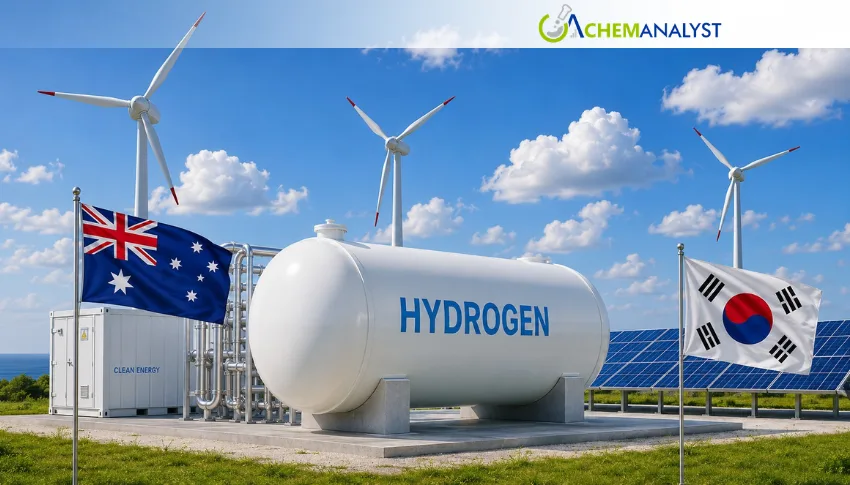
South Korea and Australia are strengthening their strategic partnership by balancing immediate energy security needs with long-term investments in clean energy technologies. This growing cooperation comes at a time when global supply chains face increasing uncertainty due to geopolitical tensions and disruptions in energy markets.
Recently, South Korean Foreign Minister Cho Hyun and Australian Foreign Minister Penny Wong issued a joint statement emphasizing the importance of energy security. Against the backdrop of rising concerns over global oil supplies caused by conflict in the Middle East, both countries reaffirmed their commitment to ensuring stable and reliable fuel supplies. Australia remains South Korea’s largest supplier of liquefied natural gas (LNG), while South Korea is a major supplier of refined petroleum products to Australia, including diesel fuel. Although maintaining fossil fuel trade remains crucial in the short term, both nations are simultaneously advancing a significant transition toward cleaner energy sources.
The discussions took place shortly before Australia announced a new policy requiring LNG producers on the country’s east coast to reserve 20 percent of their gas exports for domestic consumers beginning in July 2027. Importantly, existing export agreements signed before December 2025 are exempt from this requirement. This exemption offers reassurance to South Korean energy companies, particularly Korea Gas Corp., which holds a substantial interest in the Gladstone LNG project in Queensland. Additionally, South Korea welcomed Australia’s decision not to pursue a proposed 25 percent LNG export tax, which had previously raised concerns among international buyers.
While these developments enhance short-term fuel security, the broader significance lies in the expanding green energy partnership between the two countries. A major focus of this collaboration is the development of green hydrogen and related products such as green ammonia and environmentally sustainable metals.
South Korea has been actively investing in hydrogen technologies since 2008 under its Green Growth strategy. As part of its ambition to phase out coal use by around 2040, the country has become a global leader in fuel-cell technology, which converts hydrogen into electricity for transportation and power generation. Major corporations, including Doosan Fuel Cells, SK Ecoplant, HD Hydrogen, and Mico Power, are increasingly competing in international markets by exporting advanced hydrogen-based technologies and infrastructure solutions.
The country’s 2019 Hydrogen Economy Strategy identified Australia as a key future supplier of clean hydrogen. Under the administration of President Lee Jae Myung, South Korea continues to support hydrogen innovation and accelerate the integration of clean hydrogen into its energy system.
Australia has also embraced hydrogen as a cornerstone of its future energy strategy. Through its National Hydrogen Strategy launched in 2019, the country aims to become a leading producer and exporter of renewable hydrogen. The initiative is also expected to support the modernization of heavy industries such as steel and aluminum manufacturing while reducing dependence on fossil fuels.
Cooperation between the two nations expanded significantly with the signing of the Green Economy Partnership Arrangement on Climate and Energy in December 2024. The agreement promotes collaboration in hydrogen supply chains, critical minerals, carbon capture technologies, and clean energy research. Australia’s abundant renewable energy resources and vast iron ore reserves have attracted substantial Korean investment in green industrial projects.
One notable example is POSCO’s planned hot-briquetted iron production facility at Port Hedland in Western Australia. Supported by a government approval, the project will utilize LNG and green hydrogen and involves an investment of approximately 4.3 billion Australian dollars. The initiative is expected to help POSCO remain competitive in the emerging global market for low-carbon steel production.
Meanwhile, Korea Electric Power Corp. (KEPCO) is participating in the Western Green Energy Hub, a major project expected to produce up to 3.5 million tons of green hydrogen or green ammonia annually. These products are anticipated to play a crucial role in decarbonizing industries such as agriculture, transportation, and manufacturing.
Although challenges remain—including delays to South Korea’s Clean Hydrogen Power Generation Bidding system and funding setbacks for some Australian hydrogen projects—both governments continue to demonstrate strong commitment to advancing commercial-scale hydrogen trade. Rather than indicating reduced enthusiasm, these developments reflect efforts to establish sustainable and economically viable frameworks for the future hydrogen economy.
Ultimately, South Korea and Australia are building a forward-looking partnership that combines energy security with climate action. Their collaboration illustrates how middle-power nations can work together to enhance resilience, strengthen supply chains, and drive the global transition toward a cleaner and more sustainable energy future.








 About ChemAnalyst
Leave a Comment
Comments (0)