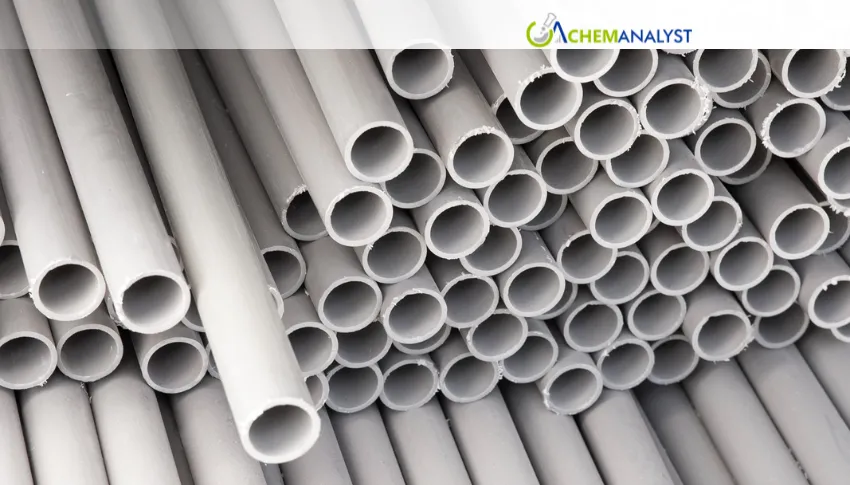
The PVC price trend during late July reflected consolidation following a sharp decline earlier in the month. Poly Vinyl Chloride (PVC) Suspension Flexible K60 has remained stable, with weekly assessments indicating little movement after the market experienced a substantial monthly correction. Throughout early and mid-July, PVC producers actively reduced offers to stimulate buying during the seasonal slowdown in construction activity. However, by the final week of July, sellers largely maintained existing quotations as discounting had already succeeded in clearing sufficient volumes. Market participants reported that comfortable inventories and cautious procurement continued to dominate purchasing behavior, resulting in stable weekly PVC pricing despite an overall bearish monthly backdrop. Buyers remained hesitant to build inventories beyond immediate production needs, preferring to monitor downstream demand before committing to larger purchases.
Supply-side fundamentals remained favorable for PVC availability throughout the assessment period. Domestic production continued without significant interruptions, supported by stable plant operating rates and uninterrupted logistics across key production and distribution hubs. Feedstock conditions also contributed to the balanced market. Falling Ethylene Dichloride (EDC) values reduced manufacturing costs for PVC producers, easing cost pressure and enabling suppliers to maintain competitive export offers while preserving production margins. Earlier stability in feedstock pricing had already weakened cost support, and the subsequent easing in EDC prices reinforced the ample supply situation. Domestic production remained sufficient to satisfy the majority of market requirements, while inventories stayed comfortable following several weeks of slower downstream consumption. The absence of notable maintenance shutdowns or transportation bottlenecks further ensured that PVC supply remained readily available throughout late July.
Demand for PVC continued to present a mixed picture across downstream industries. The non-residential construction sector remained the strongest source of consumption, supported by ongoing infrastructure projects and large-scale data center developments requiring significant volumes of PVC pipes, conduits, cable insulation, and related construction materials. These projects helped maintain baseline demand for PVC despite broader weakness elsewhere. In contrast, residential construction remained under pressure as elevated mortgage rates continued to suppress new housing activity, limiting consumption of PVC window profiles, plumbing systems, flooring products, and other building applications. Contractors generally maintained cautious procurement strategies, purchasing only for active projects rather than speculative inventory accumulation. Outside construction, steady demand from cable manufacturing and industrial fabrication provided additional support but was insufficient to fully offset sluggish residential activity.
Looking ahead, the near-term outlook for PVC remains cautiously bearish despite the recent stabilization. Ample domestic availability, comfortable inventories, easing EDC feedstock costs, and restrained residential construction activity are expected to continue weighing on market sentiment. Nevertheless, sustained investment in infrastructure projects and expanding non-residential construction should help prevent a sharper decline by providing consistent underlying demand for PVC products. Market participants will continue monitoring feedstock movements, construction indicators, and procurement trends to determine whether the current period of stability evolves into a broader recovery or gives way to renewed competitive pricing pressure during the coming weeks.







Leave a Comment
Comments (0)